

494
12 Species Case Studies
fi shers once cash markets for this species develop. In many locations stocks are now
greatly depleted but B. muricatum continues to be harvested opportunistically by
night spear fi shers who are primarily spearing smaller reef fi shes and harvesting sea
cucumbers. In some very remote areas that lack well-developed fi sh markets,
B. muricatum aggregations continue to be targeted for subsistence purposes when
large amounts of food are required for cultural events such as feasts.
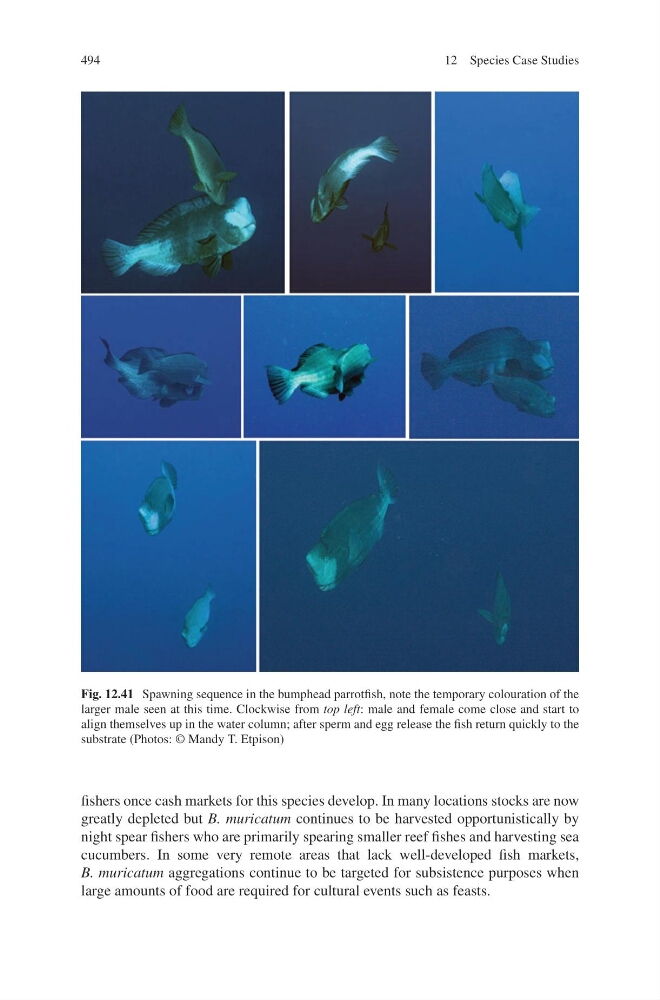
Fig. 12.41 Spawning sequence in the bumphead parrotfi sh, note the temporary colouration of the
larger male seen at this time. Clockwise from top left : male and female come close and start to
align themselves up in the water column; after sperm and egg release the fi sh return quickly to the
substrate (Photos: © Mandy T. Etpison)
12 Species Case Studies
fi shers once cash markets for this species develop. In many locations stocks are now
greatly depleted but B. muricatum continues to be harvested opportunistically by
night spear fi shers who are primarily spearing smaller reef fi shes and harvesting sea
cucumbers. In some very remote areas that lack well-developed fi sh markets,
B. muricatum aggregations continue to be targeted for subsistence purposes when
large amounts of food are required for cultural events such as feasts.
Fig. 12.41 Spawning sequence in the bumphead parrotfi sh, note the temporary colouration of the
larger male seen at this time. Clockwise from top left : male and female come close and start to
align themselves up in the water column; after sperm and egg release the fi sh return quickly to the
substrate (Photos: © Mandy T. Etpison)