

481
12 Species Case Studies
off the reef on the falling tide after spawning, then moved parallel to the reef with
prevailing currents for several hours. Where aggregations have been eliminated,
such as the Layang Layang site in Malaysia (below), the impact on recruitment and
population maintenance is unknown, but it seems diffi cult for a population to be
reestablished, particularly if nearby reefs were similarly overfi shed.
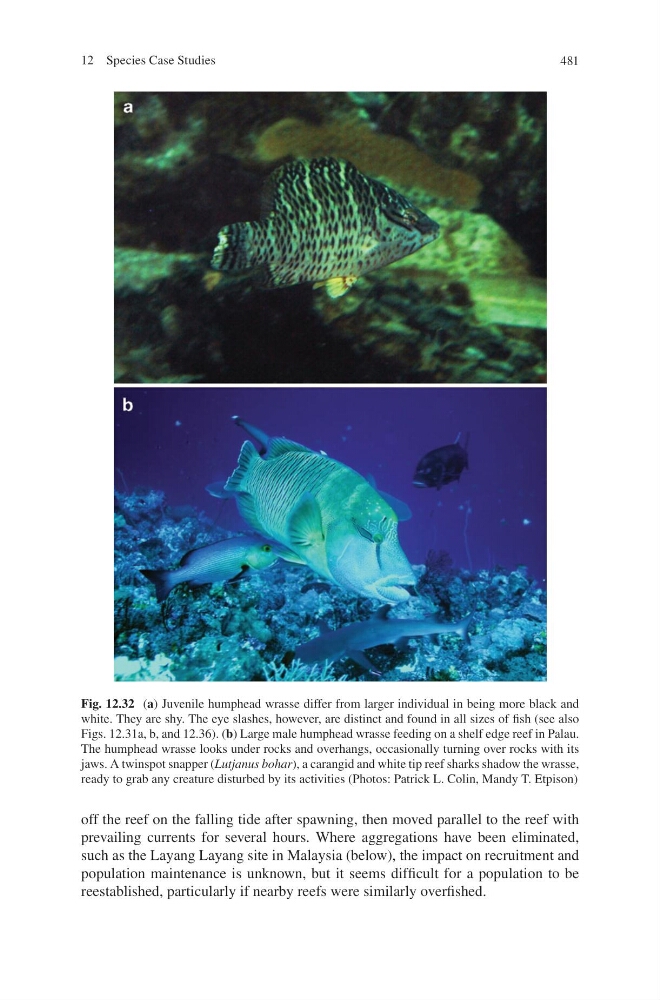
Fig. 12.32 ( a ) Juvenile humphead wrasse differ from larger individual in being more black and
white. They are shy. The eye slashes, however, are distinct and found in all sizes of fi sh (see also
Figs. 12.31a, b, and 12.36). ( b ) Large male humphead wrasse feeding on a shelf edge reef in Palau.
The humphead wrasse looks under rocks and overhangs, occasionally turning over rocks with its
jaws. A twinspot snapper ( Lutjanus bohar ), a carangid and white tip reef sharks shadow the wrasse,
ready to grab any creature disturbed by its activities (Photos: Patrick L. Colin, Mandy T. Etpison)
12 Species Case Studies
off the reef on the falling tide after spawning, then moved parallel to the reef with
prevailing currents for several hours. Where aggregations have been eliminated,
such as the Layang Layang site in Malaysia (below), the impact on recruitment and
population maintenance is unknown, but it seems diffi cult for a population to be
reestablished, particularly if nearby reefs were similarly overfi shed.
Fig. 12.32 ( a ) Juvenile humphead wrasse differ from larger individual in being more black and
white. They are shy. The eye slashes, however, are distinct and found in all sizes of fi sh (see also
Figs. 12.31a, b, and 12.36). ( b ) Large male humphead wrasse feeding on a shelf edge reef in Palau.
The humphead wrasse looks under rocks and overhangs, occasionally turning over rocks with its
jaws. A twinspot snapper ( Lutjanus bohar ), a carangid and white tip reef sharks shadow the wrasse,
ready to grab any creature disturbed by its activities (Photos: Patrick L. Colin, Mandy T. Etpison)