

473
12 Species Case Studies
or no mixing of juvenile, sub-adult and adult snapper between oceanic waters outside
Shark Bay and the inner gulfs, or between the separate inner gulf areas (Jackson 2007 )
(Fig. 12.29 ). Consequently, four separate stocks are recognised: an ‘oceanic’ stock
that supports a major commercial line-based fi shery outside the Bay and separate
‘Eastern Gulf’, ‘Denham Sound’ and ‘Freycinet Estuary’ stocks that support an
important recreational boat-based fi shery in the gulfs (Stephenson and Jackson 2005 ) .
Research on snapper in these inner gulfs has been particularly instructive because it
has revealed considerable variation in life history characteristics within a relatively
small geographic area and it has been able to track how the separate stocks have
responded to management intervention over the last 15 or so years (Jackson 2007 ) .
12.12.2 Reproductive Biology
Snapper are functional gonochorists with prematurational sex change (Francis and
Pankhurst 1988 ) . Spawning in the Shark Bay region occurs from April–October
(Wakefi eld 2006 ; Jackson et al. 2010 ) . Peak spawning in the inner gulfs occurs
around May–July in the Eastern Gulf and Denham Sound and around AugustOctober in the Freycinet Estuary (Table 12.4 ). Females reach 50% maturity at
35–42 cm fork length (FL) and 3–5 years of age, and males at 24–33 cm FL and
2–3 years of age (Table 12.4 ). Snapper are batch spawners that display asynchronous gonadal development and indeterminate fecundity (Mackie et al. 2009 ) .
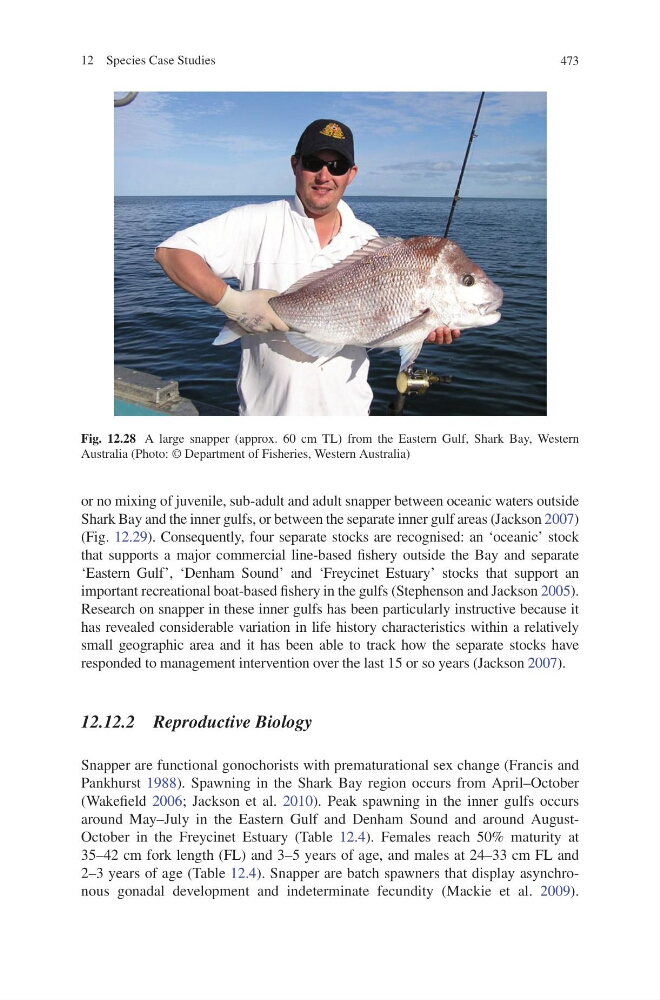
Fig. 12.28 A large snapper (approx. 60 cm TL) from the Eastern Gulf, Shark Bay, Western
Australia (Photo: © Department of Fisheries, Western Australia)
12 Species Case Studies
or no mixing of juvenile, sub-adult and adult snapper between oceanic waters outside
Shark Bay and the inner gulfs, or between the separate inner gulf areas (Jackson 2007 )
(Fig. 12.29 ). Consequently, four separate stocks are recognised: an ‘oceanic’ stock
that supports a major commercial line-based fi shery outside the Bay and separate
‘Eastern Gulf’, ‘Denham Sound’ and ‘Freycinet Estuary’ stocks that support an
important recreational boat-based fi shery in the gulfs (Stephenson and Jackson 2005 ) .
Research on snapper in these inner gulfs has been particularly instructive because it
has revealed considerable variation in life history characteristics within a relatively
small geographic area and it has been able to track how the separate stocks have
responded to management intervention over the last 15 or so years (Jackson 2007 ) .
12.12.2 Reproductive Biology
Snapper are functional gonochorists with prematurational sex change (Francis and
Pankhurst 1988 ) . Spawning in the Shark Bay region occurs from April–October
(Wakefi eld 2006 ; Jackson et al. 2010 ) . Peak spawning in the inner gulfs occurs
around May–July in the Eastern Gulf and Denham Sound and around AugustOctober in the Freycinet Estuary (Table 12.4 ). Females reach 50% maturity at
35–42 cm fork length (FL) and 3–5 years of age, and males at 24–33 cm FL and
2–3 years of age (Table 12.4 ). Snapper are batch spawners that display asynchronous gonadal development and indeterminate fecundity (Mackie et al. 2009 ) .
Fig. 12.28 A large snapper (approx. 60 cm TL) from the Eastern Gulf, Shark Bay, Western
Australia (Photo: © Department of Fisheries, Western Australia)