

471
12 Species Case Studies
Reports (non-validated by fi eld observations) from fi sher interviews at two sites
in Papua New Guinea (Hamilton et al. 2004 ) suggested similar movements to and
from aggregation areas as reported by the present study. Day time aggregation sites
were located at a passage wall and large rocky outcrop with caves while night time
sites were on a seaward facing reef slope. Aggregations lasted about 3–5 days and
were reported to form monthly in one location and for only 3 months at the other.
Observations were provided by spearfi shers who claimed that their fl ashlights and
spearing disturbed the fi sh ‘fl oating’ up in the water column. Fish aggregations
numbered 100–200 and daytime aggregations had been known for decades, while
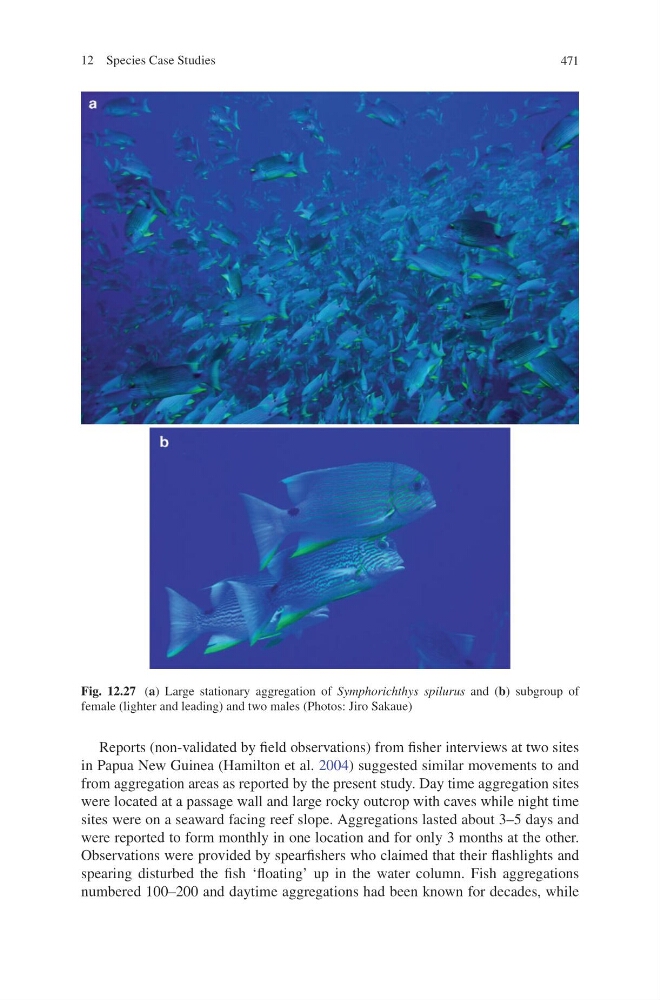
Fig. 12.27 ( a ) Large stationary aggregation of Symphorichthys spilurus and ( b ) subgroup of
female (lighter and leading) and two males (Photos: Jiro Sakaue)
12 Species Case Studies
Reports (non-validated by fi eld observations) from fi sher interviews at two sites
in Papua New Guinea (Hamilton et al. 2004 ) suggested similar movements to and
from aggregation areas as reported by the present study. Day time aggregation sites
were located at a passage wall and large rocky outcrop with caves while night time
sites were on a seaward facing reef slope. Aggregations lasted about 3–5 days and
were reported to form monthly in one location and for only 3 months at the other.
Observations were provided by spearfi shers who claimed that their fl ashlights and
spearing disturbed the fi sh ‘fl oating’ up in the water column. Fish aggregations
numbered 100–200 and daytime aggregations had been known for decades, while
Fig. 12.27 ( a ) Large stationary aggregation of Symphorichthys spilurus and ( b ) subgroup of
female (lighter and leading) and two males (Photos: Jiro Sakaue)