

434
12 Species Case Studies
particularly in insular and offshore areas of the Caribbean (Sadovy and Eklund
1999 ) . However, due to over-fi shing and lack of fi shery management over the last 4
decades, the species is widely considered to be commercially extinct. Historically
the biggest fi sheries were probably in The Bahamas, Cuba and Belize because of
their naturally large reef areas. In The Bahamas, one of the few countries where a
Nassau grouper fi shery is still active, the species once accounted for about 50% of
the total annual fi nfi sh landings in the country, but the Nassau grouper has declined
substantially (Sadovy 1997 ; Sadovy and Eklund 1999 ; Ehrhardt and Deleveaux
2007 ; Sadovy de Mitcheson et al. 2008 ) . In Cuba the Nassau grouper fi shery has
evidently collapsed, relative to its former abundance (Claro et al. 2009 ) and in
Belize landings are a tiny proportion of previous landings (Sala et al. 2001 ; Janet
Gibson, personal communication 2007)
Only where the species is managed, or not subjected to signifi cant commercial
fi sheries (as in the Turks and Caicos Islands and Cayman Islands and possibly in
parts of The Bahamas) do viable fi sheries apparently persist. Even in locations
where they are currently managed, however, such as the Cayman Islands, there are
no total quota controls, aggregation protection is not necessarily permanent, and
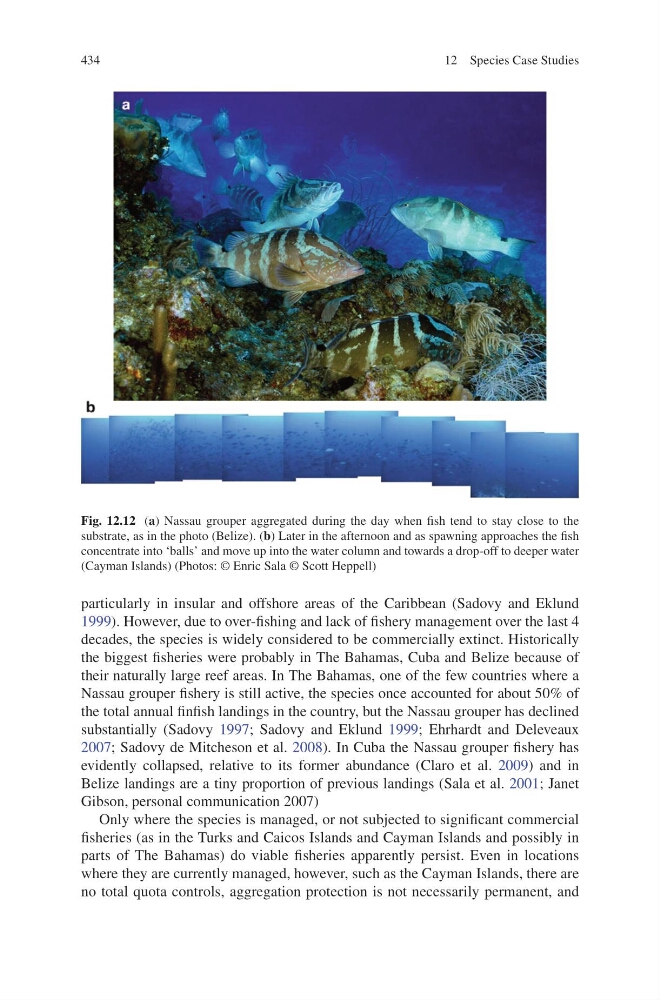
Fig. 12.12 ( a ) Nassau grouper aggregated during the day when fi sh tend to stay close to the
substrate, as in the photo (Belize). ( b ) Later in the afternoon and as spawning approaches the fi sh
concentrate into ‘balls’ and move up into the water column and towards a drop-off to deeper water
(Cayman Islands) (Photos: © Enric Sala © Scott Heppell)
12 Species Case Studies
particularly in insular and offshore areas of the Caribbean (Sadovy and Eklund
1999 ) . However, due to over-fi shing and lack of fi shery management over the last 4
decades, the species is widely considered to be commercially extinct. Historically
the biggest fi sheries were probably in The Bahamas, Cuba and Belize because of
their naturally large reef areas. In The Bahamas, one of the few countries where a
Nassau grouper fi shery is still active, the species once accounted for about 50% of
the total annual fi nfi sh landings in the country, but the Nassau grouper has declined
substantially (Sadovy 1997 ; Sadovy and Eklund 1999 ; Ehrhardt and Deleveaux
2007 ; Sadovy de Mitcheson et al. 2008 ) . In Cuba the Nassau grouper fi shery has
evidently collapsed, relative to its former abundance (Claro et al. 2009 ) and in
Belize landings are a tiny proportion of previous landings (Sala et al. 2001 ; Janet
Gibson, personal communication 2007)
Only where the species is managed, or not subjected to signifi cant commercial
fi sheries (as in the Turks and Caicos Islands and Cayman Islands and possibly in
parts of The Bahamas) do viable fi sheries apparently persist. Even in locations
where they are currently managed, however, such as the Cayman Islands, there are
no total quota controls, aggregation protection is not necessarily permanent, and
Fig. 12.12 ( a ) Nassau grouper aggregated during the day when fi sh tend to stay close to the
substrate, as in the photo (Belize). ( b ) Later in the afternoon and as spawning approaches the fi sh
concentrate into ‘balls’ and move up into the water column and towards a drop-off to deeper water
(Cayman Islands) (Photos: © Enric Sala © Scott Heppell)