

323
9 Studying and Monitoring Aggregating Species
9.6.17 Sociological Considerations
In some ways examining the relationship of humans to reef fi sh aggregations is
relatively simple compared to dealing with what is happening in the ocean between
biological entities and the physical environment. Examination of fi sheries on aggregations is a common type of sociological consideration. Diffi culties arise when fi sheries
are widely scattered, secretive (illegal?), destructive or information is considered proprietary. The Live Reef Fish Trade (LRFT) has been particularly diffi cult to gather
meaningful data on, as it is lucrative for the top traders, often environmentally destructive and able to operate in remote areas because of the cruising range of the large vessels (Sadovy et al. 2003 ) . Most participants do not want to draw attention to what they
are doing. Aspects of this trade are considered in further detail in Chaps. 8 , 10 and 11 .
9.7 New Technology – Potential New Methods
of Use in Studying Reef Fish Aggregations
Digital technology promises to provide new and added capabilities for data collection from aggregations. It is normally up to the researcher to comprehend the usefulness of these and fi gure out how to apply their capabilities to research work, as such
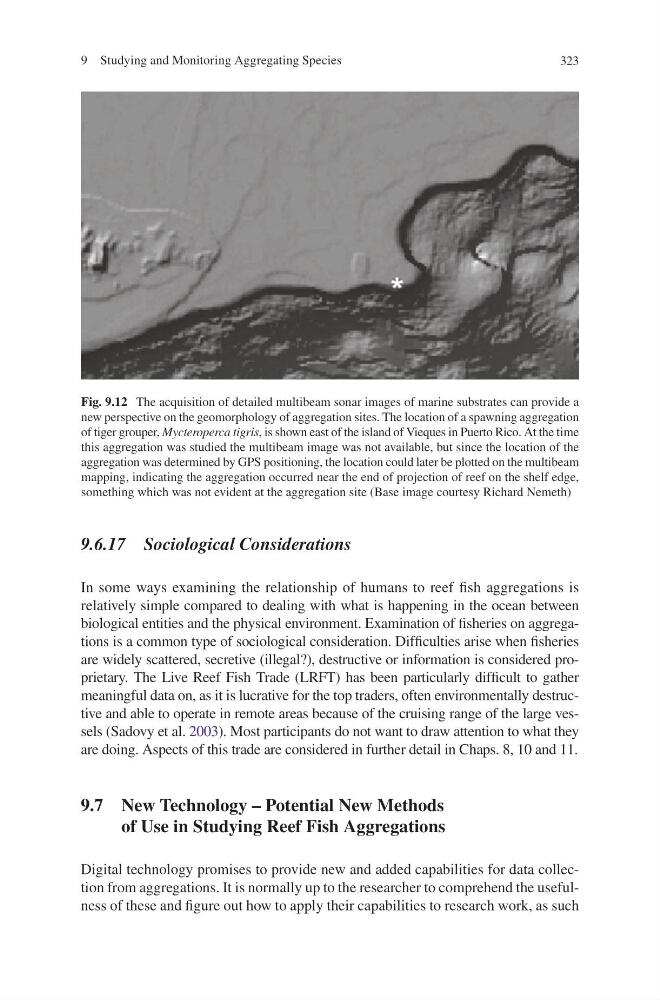
Fig. 9.12 The acquisition of detailed multibeam sonar images of marine substrates can provide a
new perspective on the geomorphology of aggregation sites. The location of a spawning aggregation
of tiger grouper, Mycteroperca tigris , is shown east of the island of Vieques in Puerto Rico. At the time
this aggregation was studied the multibeam image was not available, but since the location of the
aggregation was determined by GPS positioning, the location could later be plotted on the multibeam
mapping, indicating the aggregation occurred near the end of projection of reef on the shelf edge,
something which was not evident at the aggregation site (Base image courtesy Richard Nemeth)
9 Studying and Monitoring Aggregating Species
9.6.17 Sociological Considerations
In some ways examining the relationship of humans to reef fi sh aggregations is
relatively simple compared to dealing with what is happening in the ocean between
biological entities and the physical environment. Examination of fi sheries on aggregations is a common type of sociological consideration. Diffi culties arise when fi sheries
are widely scattered, secretive (illegal?), destructive or information is considered proprietary. The Live Reef Fish Trade (LRFT) has been particularly diffi cult to gather
meaningful data on, as it is lucrative for the top traders, often environmentally destructive and able to operate in remote areas because of the cruising range of the large vessels (Sadovy et al. 2003 ) . Most participants do not want to draw attention to what they
are doing. Aspects of this trade are considered in further detail in Chaps. 8 , 10 and 11 .
9.7 New Technology – Potential New Methods
of Use in Studying Reef Fish Aggregations
Digital technology promises to provide new and added capabilities for data collection from aggregations. It is normally up to the researcher to comprehend the usefulness of these and fi gure out how to apply their capabilities to research work, as such
Fig. 9.12 The acquisition of detailed multibeam sonar images of marine substrates can provide a
new perspective on the geomorphology of aggregation sites. The location of a spawning aggregation
of tiger grouper, Mycteroperca tigris , is shown east of the island of Vieques in Puerto Rico. At the time
this aggregation was studied the multibeam image was not available, but since the location of the
aggregation was determined by GPS positioning, the location could later be plotted on the multibeam
mapping, indicating the aggregation occurred near the end of projection of reef on the shelf edge,
something which was not evident at the aggregation site (Base image courtesy Richard Nemeth)