

308
P.L. Colin
approaches to estimating numbers should be used, as agreement between several
methods provides some confi dence that the data approach actual values. There is a
need to balance simplicity of methods with reliability of data and consider planning
for repeated evaluations in the long-term. Methods can be divided into “visual” and
“non-visual”.
Visual estimates of individual fi sh numbers in an aggregation can be accurate if
an aggregation consists of less than 50–100 fi sh. An observer could feasibly count
all individuals present with high accuracy if they are in clear water (so most or all
can be seen at one time), the entire site is comprehensively searched, and if they do
not move signifi cantly or hide during the count. Such situations are uncommon, but
do occur (Samoilys 1997 , Chap. 12.9). If fi sh are constantly in motion or hide on
observers approach, accurate counts are diffi cult. For small aggregations multiple
successive counts, each attempting to survey all fi sh, should be attempted. If the
numbers are consistent between counts, this provides some confi dence the total
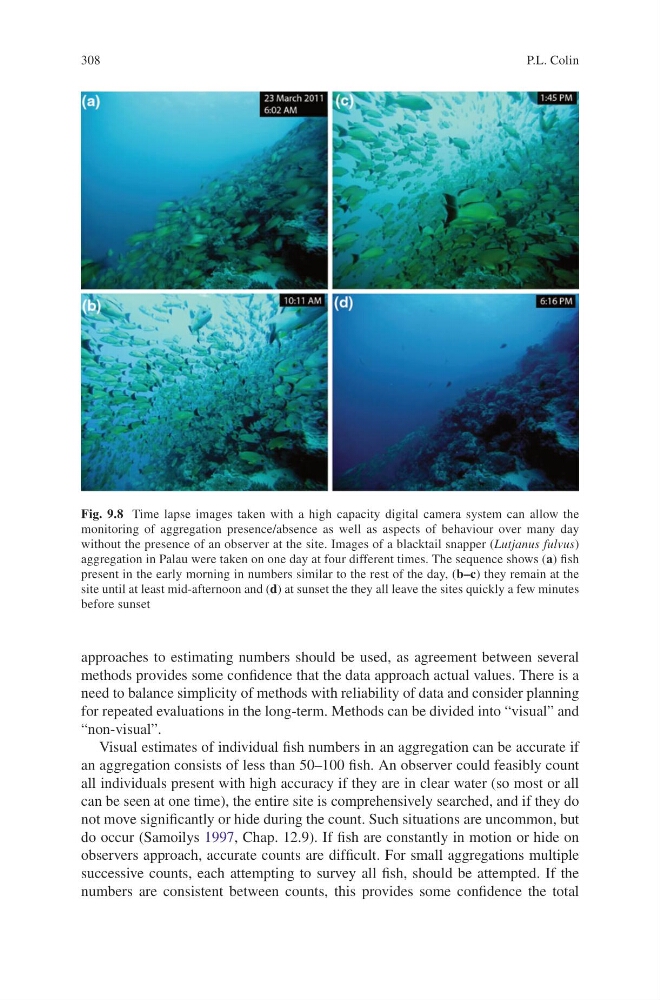
Fig. 9.8 Time lapse images taken with a high capacity digital camera system can allow the
monitoring of aggregation presence/absence as well as aspects of behaviour over many day
without the presence of an observer at the site. Images of a blacktail snapper ( Lutjanus fulvus )
aggregation in Palau were taken on one day at four different times. The sequence shows ( a ) fi sh
present in the early morning in numbers similar to the rest of the day, ( b–c ) they remain at the
site until at least mid-afternoon and ( d ) at sunset the they all leave the sites quickly a few minutes
before sunset
P.L. Colin
approaches to estimating numbers should be used, as agreement between several
methods provides some confi dence that the data approach actual values. There is a
need to balance simplicity of methods with reliability of data and consider planning
for repeated evaluations in the long-term. Methods can be divided into “visual” and
“non-visual”.
Visual estimates of individual fi sh numbers in an aggregation can be accurate if
an aggregation consists of less than 50–100 fi sh. An observer could feasibly count
all individuals present with high accuracy if they are in clear water (so most or all
can be seen at one time), the entire site is comprehensively searched, and if they do
not move signifi cantly or hide during the count. Such situations are uncommon, but
do occur (Samoilys 1997 , Chap. 12.9). If fi sh are constantly in motion or hide on
observers approach, accurate counts are diffi cult. For small aggregations multiple
successive counts, each attempting to survey all fi sh, should be attempted. If the
numbers are consistent between counts, this provides some confi dence the total
Fig. 9.8 Time lapse images taken with a high capacity digital camera system can allow the
monitoring of aggregation presence/absence as well as aspects of behaviour over many day
without the presence of an observer at the site. Images of a blacktail snapper ( Lutjanus fulvus )
aggregation in Palau were taken on one day at four different times. The sequence shows ( a ) fi sh
present in the early morning in numbers similar to the rest of the day, ( b–c ) they remain at the
site until at least mid-afternoon and ( d ) at sunset the they all leave the sites quickly a few minutes
before sunset