

288
P.L. Colin
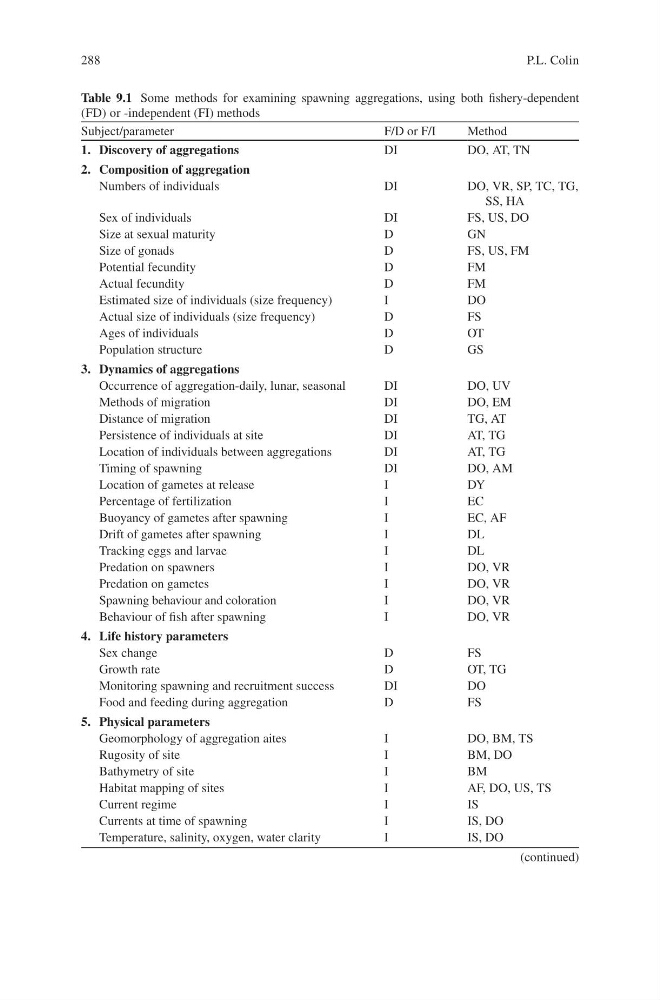
Table 9.1 Some methods for examining spawning aggregations, using both fi shery-dependent
(FD) or -independent (FI) methods
Subject/parameter
F/D or F/I
Method
1. Discovery of aggregations
DI
DO, AT, TN
2. Composition of aggregation
Numbers of individuals
DI
DO, VR, SP, TC, TG,
SS, HA
Sex of individuals
DI
FS, US, DO
Size at sexual maturity
D
GN
Size of gonads
D
FS, US, FM
Potential fecundity
D
FM
Actual fecundity
D
FM
Estimated size of individuals (size frequency)
I
DO
Actual size of individuals (size frequency)
D
FS
Ages of individuals
D
OT
Population structure
D
GS
3. Dynamics of aggregations
Occurrence of aggregation-daily, lunar, seasonal
DI
DO, UV
Methods of migration
DI
DO, EM
Distance of migration
DI
TG, AT
Persistence of individuals at site
DI
AT, TG
Location of individuals between aggregations
DI
AT, TG
Timing of spawning
DI
DO, AM
Location of gametes at release
I
DY
Percentage of fertilization
I
EC
Buoyancy of gametes after spawning
I
EC, AF
Drift of gametes after spawning
I
DL
Tracking eggs and larvae
I
DL
Predation on spawners
I
DO, VR
Predation on gametes
I
DO, VR
Spawning behaviour and coloration
I
DO, VR
Behaviour of fi sh after spawning
I
DO, VR
4. Life history parameters
Sex change
D
FS
Growth rate
D
OT, TG
Monitoring spawning and recruitment success
DI
DO
Food and feeding during aggregation
D
FS
5. Physical parameters
Geomorphology of aggregation aites
I
DO, BM, TS
Rugosity of site
I
BM, DO
Bathymetry of site
I
BM
Habitat mapping of sites
I
AF, DO, US, TS
Current regime
I
IS
Currents at time of spawning
I
IS, DO
Temperature, salinity, oxygen, water clarity
I
IS, DO
(continued)
P.L. Colin
Table 9.1 Some methods for examining spawning aggregations, using both fi shery-dependent
(FD) or -independent (FI) methods
Subject/parameter
F/D or F/I
Method
1. Discovery of aggregations
DI
DO, AT, TN
2. Composition of aggregation
Numbers of individuals
DI
DO, VR, SP, TC, TG,
SS, HA
Sex of individuals
DI
FS, US, DO
Size at sexual maturity
D
GN
Size of gonads
D
FS, US, FM
Potential fecundity
D
FM
Actual fecundity
D
FM
Estimated size of individuals (size frequency)
I
DO
Actual size of individuals (size frequency)
D
FS
Ages of individuals
D
OT
Population structure
D
GS
3. Dynamics of aggregations
Occurrence of aggregation-daily, lunar, seasonal
DI
DO, UV
Methods of migration
DI
DO, EM
Distance of migration
DI
TG, AT
Persistence of individuals at site
DI
AT, TG
Location of individuals between aggregations
DI
AT, TG
Timing of spawning
DI
DO, AM
Location of gametes at release
I
DY
Percentage of fertilization
I
EC
Buoyancy of gametes after spawning
I
EC, AF
Drift of gametes after spawning
I
DL
Tracking eggs and larvae
I
DL
Predation on spawners
I
DO, VR
Predation on gametes
I
DO, VR
Spawning behaviour and coloration
I
DO, VR
Behaviour of fi sh after spawning
I
DO, VR
4. Life history parameters
Sex change
D
FS
Growth rate
D
OT, TG
Monitoring spawning and recruitment success
DI
DO
Food and feeding during aggregation
D
FS
5. Physical parameters
Geomorphology of aggregation aites
I
DO, BM, TS
Rugosity of site
I
BM, DO
Bathymetry of site
I
BM
Habitat mapping of sites
I
AF, DO, US, TS
Current regime
I
IS
Currents at time of spawning
I
IS, DO
Temperature, salinity, oxygen, water clarity
I
IS, DO
(continued)