

256
Y. Sadovy de Mitcheson and B. Erisman
Allee Effect (Allee 1931 ) whereby reduced populations show unexpectedly low
rates of recovery (see Sect. 8.4.2 ).
Spawning aggregations have evolved for reasons that have yet to be fully understood and that may well vary among species and lineages (Chaps. 2 and 4 ). Such
reasons are important to consider, not just for academic interest but for understanding the impact of fi shing. Possible adaptive advantages to spawning in large temporary groups include conditions important for fertilization, encountering mates and
synchronizing spawning, sexual selection and related behaviours such as stimulation of spawning by conspecifi cs and anti-predator reasons. The specifi c times and
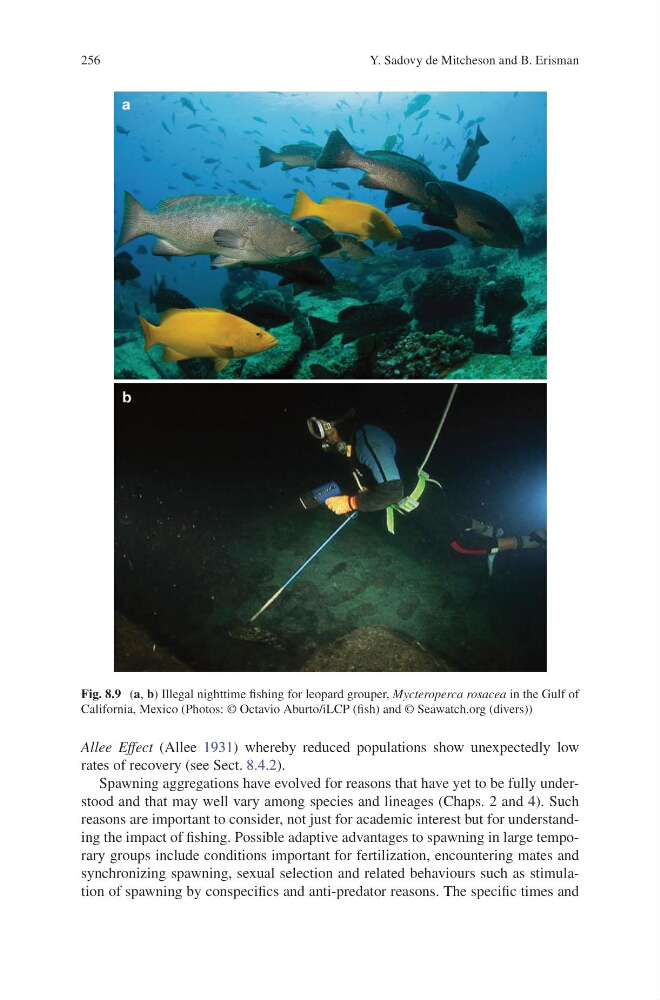
Fig. 8.9 ( a , b ) Illegal nighttime fi shing for leopard grouper, Mycteroperca rosacea in the Gulf of
California, Mexico (Photos: © Octavio Aburto/iLCP (fi sh) and © Seawatch.org (divers))
Y. Sadovy de Mitcheson and B. Erisman
Allee Effect (Allee 1931 ) whereby reduced populations show unexpectedly low
rates of recovery (see Sect. 8.4.2 ).
Spawning aggregations have evolved for reasons that have yet to be fully understood and that may well vary among species and lineages (Chaps. 2 and 4 ). Such
reasons are important to consider, not just for academic interest but for understanding the impact of fi shing. Possible adaptive advantages to spawning in large temporary groups include conditions important for fertilization, encountering mates and
synchronizing spawning, sexual selection and related behaviours such as stimulation of spawning by conspecifi cs and anti-predator reasons. The specifi c times and
Fig. 8.9 ( a , b ) Illegal nighttime fi shing for leopard grouper, Mycteroperca rosacea in the Gulf of
California, Mexico (Photos: © Octavio Aburto/iLCP (fi sh) and © Seawatch.org (divers))