

173
6 Oceanography of the Planktonic Stages of Aggregation Spawning Reef Fishes
across the reef on fl ood tides), as well as CBL currents that moved both north and
south along the face of the barrier reef (Hamner et al. 2007 ) . One east-side drifter
(out of nearly 20) did not remain in the CBL, but ran east on both ebb and fl ood tides
toward the open sea, illustrating the “leaky” nature of retention zones. Drifters
released in a similar embayment off the western barrier reef (Fig. 6.5 , unpublished
data) moved a short distance seaward from the reef on the falling tide, then moved
in whatever direction the CBL was going, remaining relatively close to the barrier
reef throughout ebb tide. Most drifters reversed direction after 6 h, returning toward
the barrier reef or crossing the reef into the lagoon on fl ood tide. We expect that
rugged and sinuous coral reefs and tropical islands similarly will have many retention
zones, wherever the length scale of coral reef embayments exceeds the 6-h alongshore tidal excursion (Geyer and Signell 1992 ) .
While one may consider relatively small embayments as part of the coastal
boundary layer, these bays also sequester a signifi cant volume of water, plankton
and fi sh larvae from the overall alongshore fl ow in a process called lateral trapping
(Wolanski 2001 ) . Most recently, Jessopp et al. ( 2008 ) investigated eight bays of
various size and confi guration along the Irish coast and demonstrated that the largest,
deepest bays had the slowest fl ushing rates, the longest retention times, and the
greatest larval diversities. The potential for detrainment from the coastal current and
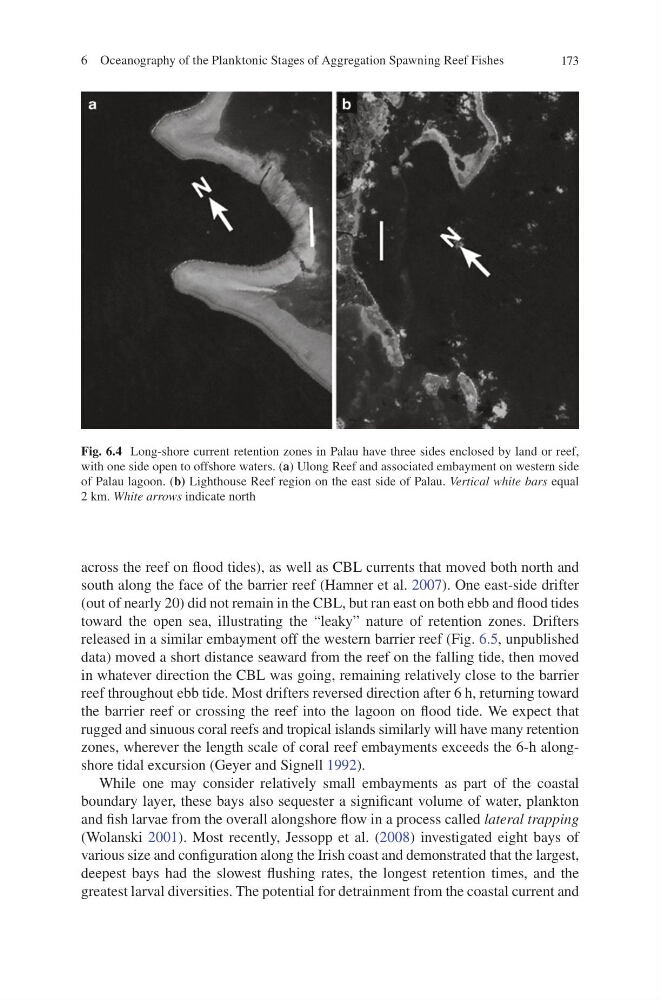
Fig. 6.4 Long-shore current retention zones in Palau have three sides enclosed by land or reef,
with one side open to offshore waters. ( a ) Ulong Reef and associated embayment on western side
of Palau lagoon. ( b) Lighthouse Reef region on the east side of Palau. Vertical white bars equal
2 km. White arrows indicate north
6 Oceanography of the Planktonic Stages of Aggregation Spawning Reef Fishes
across the reef on fl ood tides), as well as CBL currents that moved both north and
south along the face of the barrier reef (Hamner et al. 2007 ) . One east-side drifter
(out of nearly 20) did not remain in the CBL, but ran east on both ebb and fl ood tides
toward the open sea, illustrating the “leaky” nature of retention zones. Drifters
released in a similar embayment off the western barrier reef (Fig. 6.5 , unpublished
data) moved a short distance seaward from the reef on the falling tide, then moved
in whatever direction the CBL was going, remaining relatively close to the barrier
reef throughout ebb tide. Most drifters reversed direction after 6 h, returning toward
the barrier reef or crossing the reef into the lagoon on fl ood tide. We expect that
rugged and sinuous coral reefs and tropical islands similarly will have many retention
zones, wherever the length scale of coral reef embayments exceeds the 6-h alongshore tidal excursion (Geyer and Signell 1992 ) .
While one may consider relatively small embayments as part of the coastal
boundary layer, these bays also sequester a signifi cant volume of water, plankton
and fi sh larvae from the overall alongshore fl ow in a process called lateral trapping
(Wolanski 2001 ) . Most recently, Jessopp et al. ( 2008 ) investigated eight bays of
various size and confi guration along the Irish coast and demonstrated that the largest,
deepest bays had the slowest fl ushing rates, the longest retention times, and the
greatest larval diversities. The potential for detrainment from the coastal current and
Fig. 6.4 Long-shore current retention zones in Palau have three sides enclosed by land or reef,
with one side open to offshore waters. ( a ) Ulong Reef and associated embayment on western side
of Palau lagoon. ( b) Lighthouse Reef region on the east side of Palau. Vertical white bars equal
2 km. White arrows indicate north