

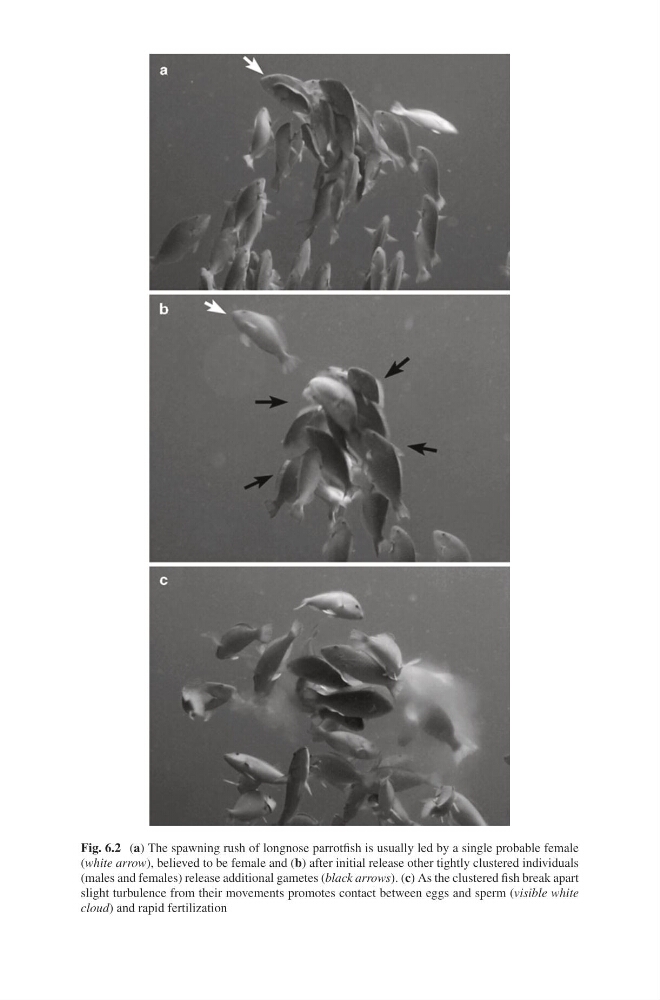
Fig. 6.2 ( a ) The spawning rush of longnose parrotfi sh is usually led by a single probable female
( white arrow ), believed to be female and ( b ) after initial release other tightly clustered individuals
(males and females) release additional gametes ( black arrows ). ( c ) As the clustered fi sh break apart
slight turbulence from their movements promotes contact between eggs and sperm ( visible white
cloud ) and rapid fertilization
( white arrow ), believed to be female and ( b ) after initial release other tightly clustered individuals
(males and females) release additional gametes ( black arrows ). ( c ) As the clustered fi sh break apart
slight turbulence from their movements promotes contact between eggs and sperm ( visible white
cloud ) and rapid fertilization