

137
5 Timing and Location of Aggregation and Spawning in Reef Fishes
(Colin et al. 1987 ; Colin 1992 ; Sadovy et al. 1994 ) . For RAs in the TWA currents
seems to play a relatively small role in spawning as many RA species in the region
aggregate and spawn in the late afternoon, without exact relationship to the currents (Randall and Randall 1963 ; Colin and Clavijo 1978, 1988 ; Warner 1995 ) .
The relationship of TAs and currents is different in the IWP. Three groupers
(brown-marbled grouper – Epinephelus. fuscoguttatus , camouflage grouper –
E. polyphekadion and squaretail coralgrouper – Plectropomus. areolatus ) commonly aggregate simultaneously near the ocean end of channels where tidal currents
exist (Sadovy 2005 ) . In Palau the currents were examined at two barrier reef channels
with these aggregations (PLC unpublished data) and they had fl ow from lagoon to
ocean about 60% of the time, with 40% infl ow to the lagoon for a net export of water
through them (Fig. 9.3). The camoufl age grouper was observed spawning just after
dawn as the current starting moving offshore (Chap. 12.5 ), while spawning time of
the other two species is not known. Drifters released at the aggregation site at different times starting after high tide indicate eggs were carried in a tidal jet no more
than about 1–2 km (Fig. 5.16 ) off the reef and then carried in the direction of the
along reef current.
Other IWP large TA’s are on outer reef faces, rather than in or near tidal channels,
and the currents relative to spawning are unknown. The FSA’s of blue-lined sea
bream, as well as the possible FSA’s of twin-spot snapper, Lutjanus bohar , occur on
outer reef slopes close to promontories, exposed to along-reef currents, which are
occasionally quite strong (1 m s
−1 or more). Sakuae et al. (Chap. 12 ) indicate a close
relationship between current direction and spawning in blue-lined sea bream with
eggs potentially being transported into open water. Spawning by twin-spot snapper
occurred near the same site, but with nearly opposite current conditions that still
appeared to carry eggs into open ocean (Chap. 12 ). Samoilys ( 1997 ) reported little
current at dusk during periods when leopard coralgrouper, Plectropomus leopardus ,
were aggregated to spawn on continental shelf reefs of the Great Barrier Reef.
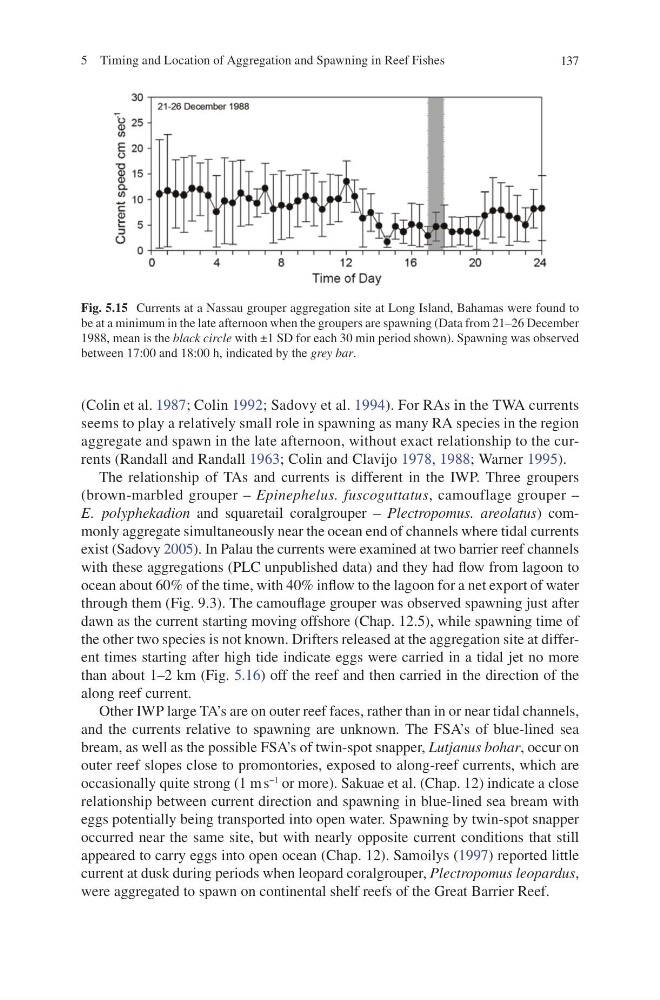
Fig. 5.15 Currents at a Nassau grouper aggregation site at Long Island, Bahamas were found to
be at a minimum in the late afternoon when the groupers are spawning (Data from 21–26 December
1988, mean is the black circle with ±1 SD for each 30 min period shown). Spawning was observed
between 17:00 and 18:00 h, indicated by the grey bar .
5 Timing and Location of Aggregation and Spawning in Reef Fishes
(Colin et al. 1987 ; Colin 1992 ; Sadovy et al. 1994 ) . For RAs in the TWA currents
seems to play a relatively small role in spawning as many RA species in the region
aggregate and spawn in the late afternoon, without exact relationship to the currents (Randall and Randall 1963 ; Colin and Clavijo 1978, 1988 ; Warner 1995 ) .
The relationship of TAs and currents is different in the IWP. Three groupers
(brown-marbled grouper – Epinephelus. fuscoguttatus , camouflage grouper –
E. polyphekadion and squaretail coralgrouper – Plectropomus. areolatus ) commonly aggregate simultaneously near the ocean end of channels where tidal currents
exist (Sadovy 2005 ) . In Palau the currents were examined at two barrier reef channels
with these aggregations (PLC unpublished data) and they had fl ow from lagoon to
ocean about 60% of the time, with 40% infl ow to the lagoon for a net export of water
through them (Fig. 9.3). The camoufl age grouper was observed spawning just after
dawn as the current starting moving offshore (Chap. 12.5 ), while spawning time of
the other two species is not known. Drifters released at the aggregation site at different times starting after high tide indicate eggs were carried in a tidal jet no more
than about 1–2 km (Fig. 5.16 ) off the reef and then carried in the direction of the
along reef current.
Other IWP large TA’s are on outer reef faces, rather than in or near tidal channels,
and the currents relative to spawning are unknown. The FSA’s of blue-lined sea
bream, as well as the possible FSA’s of twin-spot snapper, Lutjanus bohar , occur on
outer reef slopes close to promontories, exposed to along-reef currents, which are
occasionally quite strong (1 m s
−1 or more). Sakuae et al. (Chap. 12 ) indicate a close
relationship between current direction and spawning in blue-lined sea bream with
eggs potentially being transported into open water. Spawning by twin-spot snapper
occurred near the same site, but with nearly opposite current conditions that still
appeared to carry eggs into open ocean (Chap. 12 ). Samoilys ( 1997 ) reported little
current at dusk during periods when leopard coralgrouper, Plectropomus leopardus ,
were aggregated to spawn on continental shelf reefs of the Great Barrier Reef.
Fig. 5.15 Currents at a Nassau grouper aggregation site at Long Island, Bahamas were found to
be at a minimum in the late afternoon when the groupers are spawning (Data from 21–26 December
1988, mean is the black circle with ±1 SD for each 30 min period shown). Spawning was observed
between 17:00 and 18:00 h, indicated by the grey bar .