

128
P.L. Colin
a promontory along a barrier reef, having water fl owing down both sides of the island
merging into a single stream at the end of the island reef. If the axis is oriented
parallel to oceanic currents, it is almost like a vessel cleaving the water, leaving
relatively little turbulent fl ow in their down-current “wake”. In most situations oceanic
currents hit islands at an angle to the island axis of the island, with currents forming
eddy fi elds at the island’s downcurrent end and eddying circulation induced on the
“back” side of the island (Hamner and Hauri 1981 ; Rissik et al. 1997 ) . The eddies
produced in the wake of a small island may assist in retaining eggs and larvae nearby
at times (Fig. 5.10a ), but often are of limited extent compared to a larger island,
reducing the time propagules bearing water might be retained (Fig. 5.10b ).
“Bank reefs”, where the reef does not reach close to the surface and is exposed
to current on all sides, are another geomorphologic confi guration associated with
spawning aggregations. Two such areas (Fig. 5.11a, b ) in the TWA region, Saba
Bank (red hind, Epinephelus guttatus , Nemeth et al. 2008 ) and “Riley’s Hump”,
Dry Tortugas (mutton snappers, Lutjanus analis , Burton et al. 2005 ) can have water
fl ow across the bank area. There is less tendency for bank reefs to have “island
effect” circulation on their down-current side and lower prospects for retention of
eggs and larvae. Domeier ( 2004 ) used drifter vials to examine potential dispersal of
larvae from Riley’s Hump and found rapid transport of drifters to SE Florida over
time periods similar to larval development of snappers. If the end of an island reef,
perhaps as a shallower reef area, is far enough away from the island, its environment
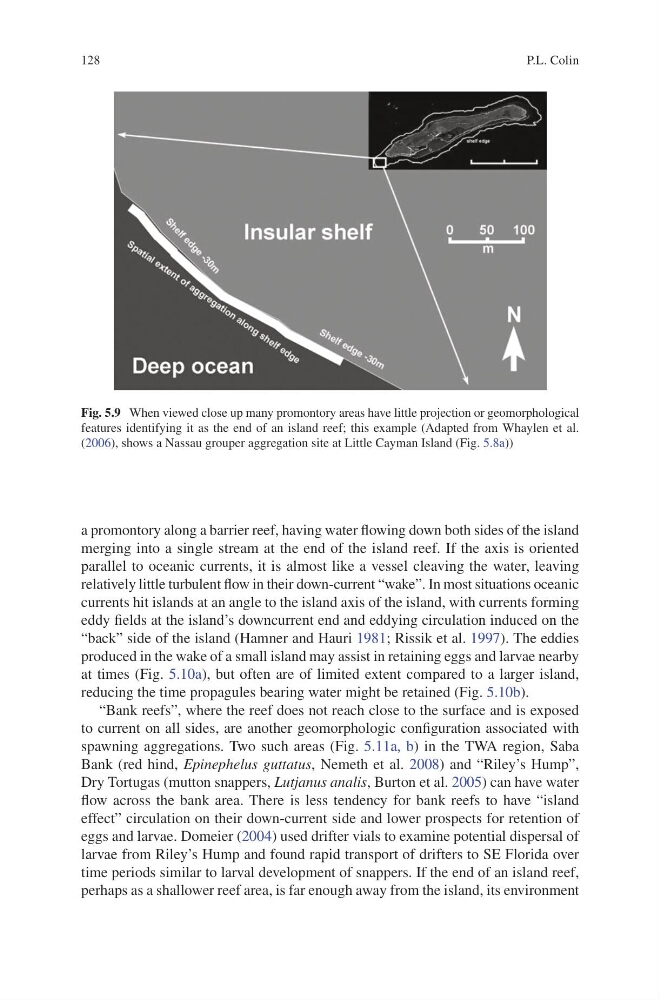
Fig. 5.9 When viewed close up many promontory areas have little projection or geomorphological
features identifying it as the end of an island reef; this example (Adapted from Whaylen et al.
( 2006 ) , shows a Nassau grouper aggregation site at Little Cayman Island (Fig. 5.8a ))
P.L. Colin
a promontory along a barrier reef, having water fl owing down both sides of the island
merging into a single stream at the end of the island reef. If the axis is oriented
parallel to oceanic currents, it is almost like a vessel cleaving the water, leaving
relatively little turbulent fl ow in their down-current “wake”. In most situations oceanic
currents hit islands at an angle to the island axis of the island, with currents forming
eddy fi elds at the island’s downcurrent end and eddying circulation induced on the
“back” side of the island (Hamner and Hauri 1981 ; Rissik et al. 1997 ) . The eddies
produced in the wake of a small island may assist in retaining eggs and larvae nearby
at times (Fig. 5.10a ), but often are of limited extent compared to a larger island,
reducing the time propagules bearing water might be retained (Fig. 5.10b ).
“Bank reefs”, where the reef does not reach close to the surface and is exposed
to current on all sides, are another geomorphologic confi guration associated with
spawning aggregations. Two such areas (Fig. 5.11a, b ) in the TWA region, Saba
Bank (red hind, Epinephelus guttatus , Nemeth et al. 2008 ) and “Riley’s Hump”,
Dry Tortugas (mutton snappers, Lutjanus analis , Burton et al. 2005 ) can have water
fl ow across the bank area. There is less tendency for bank reefs to have “island
effect” circulation on their down-current side and lower prospects for retention of
eggs and larvae. Domeier ( 2004 ) used drifter vials to examine potential dispersal of
larvae from Riley’s Hump and found rapid transport of drifters to SE Florida over
time periods similar to larval development of snappers. If the end of an island reef,
perhaps as a shallower reef area, is far enough away from the island, its environment
Fig. 5.9 When viewed close up many promontory areas have little projection or geomorphological
features identifying it as the end of an island reef; this example (Adapted from Whaylen et al.
( 2006 ) , shows a Nassau grouper aggregation site at Little Cayman Island (Fig. 5.8a ))