

296
E. A. G. Vidal and S. von Boletzky
Villanueva (1994) exposed L. vulgaris paralarvae to prey densities from 100 to
300 zoeae L
−1
after addition of food and with two to six feedings per day. Yang et al.
(1983a, 1986) provided information on the number of different prey organisms fed
to D. opalescens paralarvae per litre per day and reported prey densities values of
nearly 0–60 prey L
−1
. Vidal et al. (2002a) recommended as minimum prey density
as 50 prey L
−1
and exposed paralarvae to prey densities of 50–150 L
−1
in four to five
feedings per day during the first 2 months after hatching. Increasing prey density
was proven to increase encounters between squid and prey, improving feeding and
survival.
Even when prey density is already high, the addition of food stimulates the predatory behaviour of paralarvae. Thus, several small feedings during the day at consistent time intervals can improve feeding rate when compared to a single feeding,
even if the same amount of food is offered. When prey organisms are added to the
tanks, they are patchily distributed, representing visual, probably chemical and mechanical stimuli that instigate attack responses (Vidal et al. 2002a).
Care has to be taken not to overfeed, as the addition of excess food can reduce
subsequent feedings and uneaten prey remaining in the tanks will have reduced nutritional quality if no food is provided for them, thereby decreasing survival (Vidal
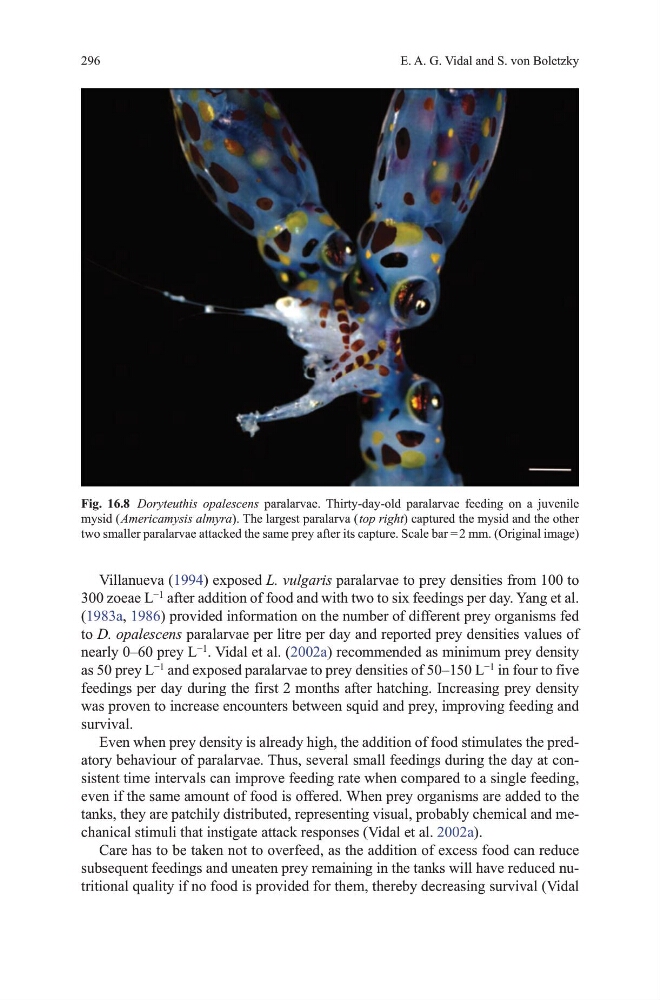
Fig. 16.8 Doryteuthis opalescens paralarvae. Thirty-day-old paralarvae feeding on a juvenile
mysid ( Americamysis almyra). The largest paralarva ( top right) captured the mysid and the other
two smaller paralarvae attacked the same prey after its capture. Scale bar = 2 mm. (Original image)
E. A. G. Vidal and S. von Boletzky
Villanueva (1994) exposed L. vulgaris paralarvae to prey densities from 100 to
300 zoeae L
−1
after addition of food and with two to six feedings per day. Yang et al.
(1983a, 1986) provided information on the number of different prey organisms fed
to D. opalescens paralarvae per litre per day and reported prey densities values of
nearly 0–60 prey L
−1
. Vidal et al. (2002a) recommended as minimum prey density
as 50 prey L
−1
and exposed paralarvae to prey densities of 50–150 L
−1
in four to five
feedings per day during the first 2 months after hatching. Increasing prey density
was proven to increase encounters between squid and prey, improving feeding and
survival.
Even when prey density is already high, the addition of food stimulates the predatory behaviour of paralarvae. Thus, several small feedings during the day at consistent time intervals can improve feeding rate when compared to a single feeding,
even if the same amount of food is offered. When prey organisms are added to the
tanks, they are patchily distributed, representing visual, probably chemical and mechanical stimuli that instigate attack responses (Vidal et al. 2002a).
Care has to be taken not to overfeed, as the addition of excess food can reduce
subsequent feedings and uneaten prey remaining in the tanks will have reduced nutritional quality if no food is provided for them, thereby decreasing survival (Vidal
Fig. 16.8 Doryteuthis opalescens paralarvae. Thirty-day-old paralarvae feeding on a juvenile
mysid ( Americamysis almyra). The largest paralarva ( top right) captured the mysid and the other
two smaller paralarvae attacked the same prey after its capture. Scale bar = 2 mm. (Original image)