

82
D. Johnson
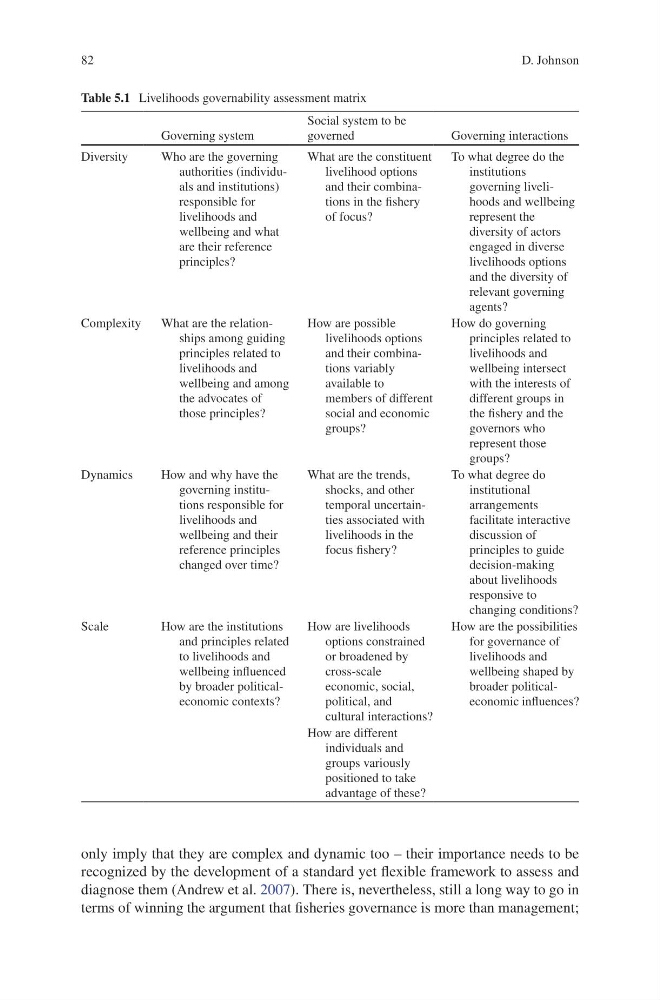
Table 5.1 Livelihoods governability assessment matrix
Governing system
Social system to be
governed
Governing interactions
Diversity
Who are the governing
authorities (individuals and institutions)
responsible for
livelihoods and
wellbeing and what
are their reference
principles?
What are the constituent
livelihood options
and their combinations in the fi shery
of focus?
To what degree do the
institutions
governing livelihoods and wellbeing
represent the
diversity of actors
engaged in diverse
livelihoods options
and the diversity of
relevant governing
agents?
Complexity
What are the relationships among guiding
principles related to
livelihoods and
wellbeing and among
the advocates of
those principles?
How are possible
livelihoods options
and their combinations variably
available to
members of different
social and economic
groups?
How do governing
principles related to
livelihoods and
wellbeing intersect
with the interests of
different groups in
the fi shery and the
governors who
represent those
groups?
Dynamics
How and why have the
governing institutions responsible for
livelihoods and
wellbeing and their
reference principles
changed over time?
What are the trends,
shocks, and other
temporal uncertainties associated with
livelihoods in the
focus fi shery?
To what degree do
institutional
arrangements
facilitate interactive
discussion of
principles to guide
decision-making
about livelihoods
responsive to
changing conditions?
Scale
How are the institutions
and principles related
to livelihoods and
wellbeing in fl uenced
by broader politicaleconomic contexts?
How are livelihoods
options constrained
or broadened by
cross-scale
economic, social,
political, and
cultural interactions?
How are the possibilities
for governance of
livelihoods and
wellbeing shaped by
broader politicaleconomic in fl uences?
How are different
individuals and
groups variously
positioned to take
advantage of these?
only imply that they are complex and dynamic too – their importance needs to be
recognized by the development of a standard yet fl exible framework to assess and
diagnose them (Andrew et al. 2007 ) . There is, nevertheless, still a long way to go in
terms of winning the argument that fi sheries governance is more than management;
D. Johnson
Table 5.1 Livelihoods governability assessment matrix
Governing system
Social system to be
governed
Governing interactions
Diversity
Who are the governing
authorities (individuals and institutions)
responsible for
livelihoods and
wellbeing and what
are their reference
principles?
What are the constituent
livelihood options
and their combinations in the fi shery
of focus?
To what degree do the
institutions
governing livelihoods and wellbeing
represent the
diversity of actors
engaged in diverse
livelihoods options
and the diversity of
relevant governing
agents?
Complexity
What are the relationships among guiding
principles related to
livelihoods and
wellbeing and among
the advocates of
those principles?
How are possible
livelihoods options
and their combinations variably
available to
members of different
social and economic
groups?
How do governing
principles related to
livelihoods and
wellbeing intersect
with the interests of
different groups in
the fi shery and the
governors who
represent those
groups?
Dynamics
How and why have the
governing institutions responsible for
livelihoods and
wellbeing and their
reference principles
changed over time?
What are the trends,
shocks, and other
temporal uncertainties associated with
livelihoods in the
focus fi shery?
To what degree do
institutional
arrangements
facilitate interactive
discussion of
principles to guide
decision-making
about livelihoods
responsive to
changing conditions?
Scale
How are the institutions
and principles related
to livelihoods and
wellbeing in fl uenced
by broader politicaleconomic contexts?
How are livelihoods
options constrained
or broadened by
cross-scale
economic, social,
political, and
cultural interactions?
How are the possibilities
for governance of
livelihoods and
wellbeing shaped by
broader politicaleconomic in fl uences?
How are different
individuals and
groups variously
positioned to take
advantage of these?
only imply that they are complex and dynamic too – their importance needs to be
recognized by the development of a standard yet fl exible framework to assess and
diagnose them (Andrew et al. 2007 ) . There is, nevertheless, still a long way to go in
terms of winning the argument that fi sheries governance is more than management;