

323
17 Working with Principles and Visions
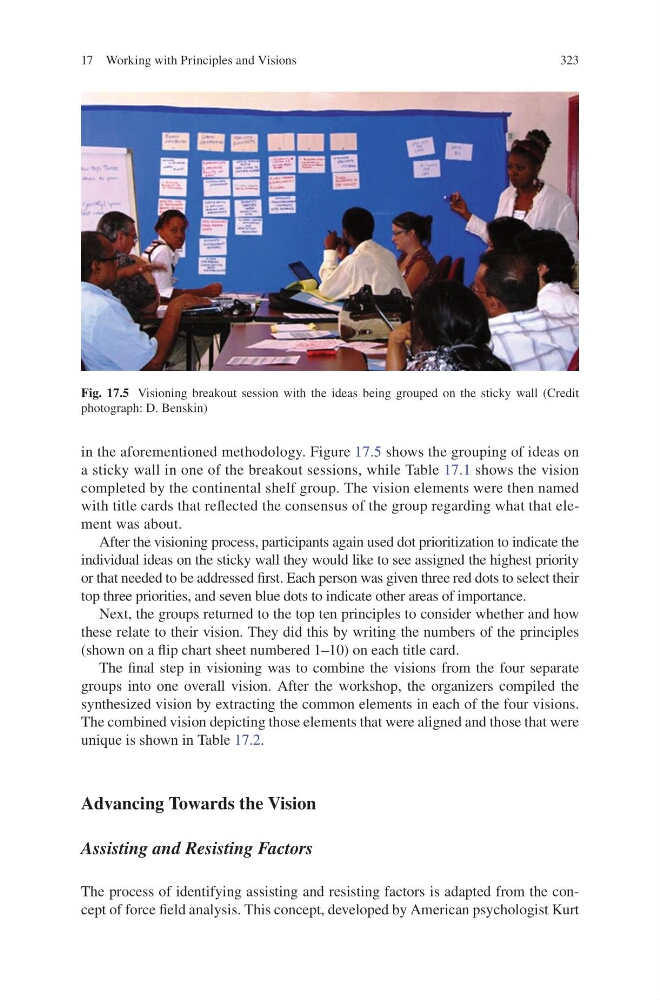
in the aforementioned methodology. Figure 17.5 shows the grouping of ideas on
a sticky wall in one of the breakout sessions, while Table 17.1 shows the vision
completed by the continental shelf group. The vision elements were then named
with title cards that re fl ected the consensus of the group regarding what that element was about.
After the visioning process, participants again used dot prioritization to indicate the
individual ideas on the sticky wall they would like to see assigned the highest priority
or that needed to be addressed fi rst. Each person was given three red dots to select their
top three priorities, and seven blue dots to indicate other areas of importance.
Next, the groups returned to the top ten principles to consider whether and how
these relate to their vision. They did this by writing the numbers of the principles
(shown on a fl ip chart sheet numbered 1–10) on each title card.
The fi nal step in visioning was to combine the visions from the four separate
groups into one overall vision. After the workshop, the organizers compiled the
synthesized vision by extracting the common elements in each of the four visions.
The combined vision depicting those elements that were aligned and those that were
unique is shown in Table 17.2 .
Advancing Towards the Vision
Assisting and Resisting Factors
The process of identifying assisting and resisting factors is adapted from the concept of force fi eld analysis. This concept, developed by American psychologist Kurt
Fig. 17.5 Visioning breakout session with the ideas being grouped on the sticky wall (Credit
photograph: D. Benskin)
17 Working with Principles and Visions
in the aforementioned methodology. Figure 17.5 shows the grouping of ideas on
a sticky wall in one of the breakout sessions, while Table 17.1 shows the vision
completed by the continental shelf group. The vision elements were then named
with title cards that re fl ected the consensus of the group regarding what that element was about.
After the visioning process, participants again used dot prioritization to indicate the
individual ideas on the sticky wall they would like to see assigned the highest priority
or that needed to be addressed fi rst. Each person was given three red dots to select their
top three priorities, and seven blue dots to indicate other areas of importance.
Next, the groups returned to the top ten principles to consider whether and how
these relate to their vision. They did this by writing the numbers of the principles
(shown on a fl ip chart sheet numbered 1–10) on each title card.
The fi nal step in visioning was to combine the visions from the four separate
groups into one overall vision. After the workshop, the organizers compiled the
synthesized vision by extracting the common elements in each of the four visions.
The combined vision depicting those elements that were aligned and those that were
unique is shown in Table 17.2 .
Advancing Towards the Vision
Assisting and Resisting Factors
The process of identifying assisting and resisting factors is adapted from the concept of force fi eld analysis. This concept, developed by American psychologist Kurt
Fig. 17.5 Visioning breakout session with the ideas being grouped on the sticky wall (Credit
photograph: D. Benskin)