

321
17 Working with Principles and Visions
reality, will therefore have the attractive effect of a ‘rubber band’ pulling toward
positive change (Senge 1990 ; Harrison 1995 ) .
The tension created between what is desired – the vision – and what currently
exists – the current reality – becomes a creative tension that can make things happen
(Wilson et al. 2003 ) . Creative tension is present when the vision is easily seen and
clearly stated and the current reality is also clear. The questions to ask are, “What
would we see and hear, or what would be in place if we reached our vision?” rather
than simply querying, “What do we want in the future?”
It is important that the tension between vision and current reality remains taught,
steady and forward-thinking and that it is not allowed to slacken or oscillate between
competing goals such as change and stability or short- and long-term goals. If there
is advancement toward the vision, the tendency is to consistently move forward with
each achievement serving as a foundation for further achievements. (Fisk 1999 ) .
The ICA Participatory Strategic Planning shared vision process used in the symposium is designed to capture the emerging wisdom of the group (Spencer 1989 ;
Stan fi eld 1995 ; Holman et al. 2007 ) . The method presupposes that the vision is
latent in the group in the form of hopes and desired outcomes for the future. These
consist of various ideas, pictures and scenarios that individual group members have
of what they hoped for. The process pulls these together into a synthesis that creates
an appealing vision to the group.
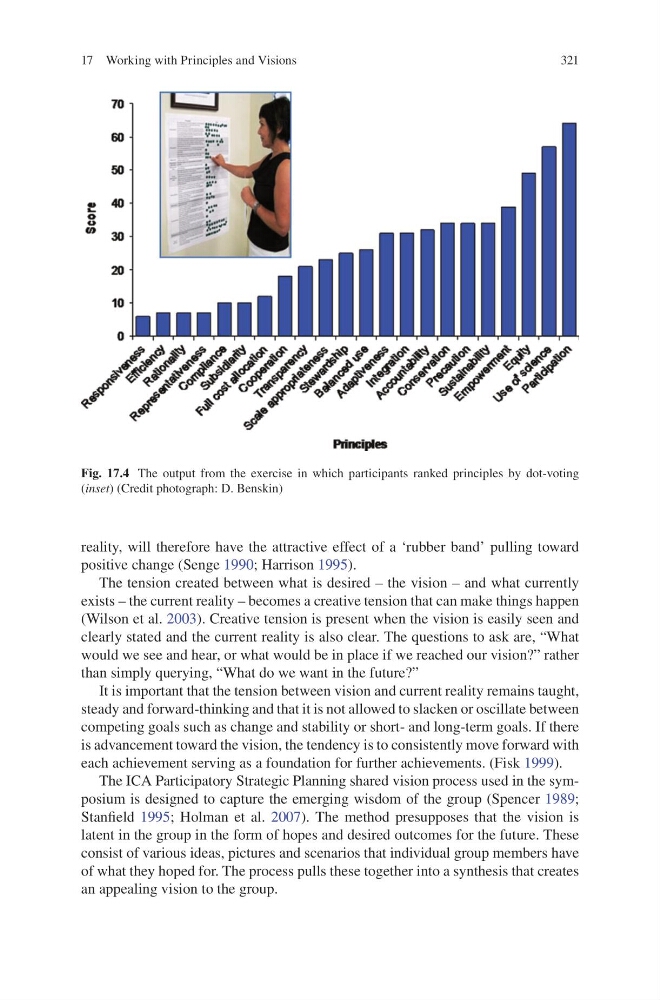
Fig. 17.4 The output from the exercise in which participants ranked principles by dot-voting
( inset ) (Credit photograph: D. Benskin)
17 Working with Principles and Visions
reality, will therefore have the attractive effect of a ‘rubber band’ pulling toward
positive change (Senge 1990 ; Harrison 1995 ) .
The tension created between what is desired – the vision – and what currently
exists – the current reality – becomes a creative tension that can make things happen
(Wilson et al. 2003 ) . Creative tension is present when the vision is easily seen and
clearly stated and the current reality is also clear. The questions to ask are, “What
would we see and hear, or what would be in place if we reached our vision?” rather
than simply querying, “What do we want in the future?”
It is important that the tension between vision and current reality remains taught,
steady and forward-thinking and that it is not allowed to slacken or oscillate between
competing goals such as change and stability or short- and long-term goals. If there
is advancement toward the vision, the tendency is to consistently move forward with
each achievement serving as a foundation for further achievements. (Fisk 1999 ) .
The ICA Participatory Strategic Planning shared vision process used in the symposium is designed to capture the emerging wisdom of the group (Spencer 1989 ;
Stan fi eld 1995 ; Holman et al. 2007 ) . The method presupposes that the vision is
latent in the group in the form of hopes and desired outcomes for the future. These
consist of various ideas, pictures and scenarios that individual group members have
of what they hoped for. The process pulls these together into a synthesis that creates
an appealing vision to the group.
Fig. 17.4 The output from the exercise in which participants ranked principles by dot-voting
( inset ) (Credit photograph: D. Benskin)