

317
17 Working with Principles and Visions
recognized geopolitical entity de fi ned by the Cartagena Convention and is covered
by the Caribbean Environmental Programme of the United Nations Environmental
Programme Regional Seas Programme. It encompasses 32 countries, as well as 12
territories that are dependencies of France, United Kingdom, United States and
The Netherlands. The Exclusive Economic Zones of the Wider Caribbean Region
cover the entire region. Consequently, there is a high incidence of transboundary
resource management issues, even at relatively small spatial scales.
The marine ecosystems of the region and the fi sheries dependent on them further
contribute to complexity (Mahon et al. 2011 ) . There is great diversity in the number
of mainly small-scale fi sheries that operate in a variety of marine ecosystems. Most
resources are shared in one way or another. This requires a great deal of cooperation
in living marine resource governance. The nature of the resources is such that cooperation is required at multiple scales. Diversity also exists in the range of regional
and subregional organizations that have an interest in and deal with living marine
resources. This means that interactions are needed among the organizations, as well
as among the countries (Fanning et al. 2007 ) .
The diversity of the region increases the need to explore the extent to which
stakeholders operate from common principles and are aligned in their vision for the
governance of their living marine resources prior to embarking on the reform or
establishment of institutions and actions. The Caribbean Large Marine Ecosystem
Project is a multiyear Global Environment Facility-funded initiative to promote
marine EBM in the Wider Caribbean Region (Fanning et al. 2009 ). It includes the
marine ecosystems, resources and resource use systems in all of the 44 states in the
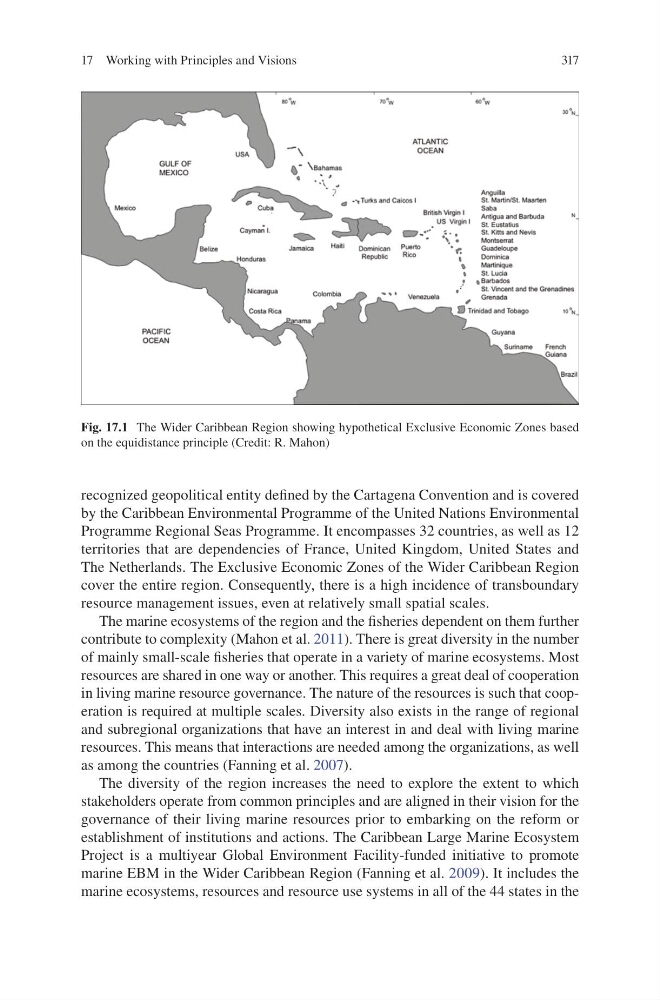
Fig. 17.1 The Wider Caribbean Region showing hypothetical Exclusive Economic Zones based
on the equidistance principle (Credit: R. Mahon)
17 Working with Principles and Visions
recognized geopolitical entity de fi ned by the Cartagena Convention and is covered
by the Caribbean Environmental Programme of the United Nations Environmental
Programme Regional Seas Programme. It encompasses 32 countries, as well as 12
territories that are dependencies of France, United Kingdom, United States and
The Netherlands. The Exclusive Economic Zones of the Wider Caribbean Region
cover the entire region. Consequently, there is a high incidence of transboundary
resource management issues, even at relatively small spatial scales.
The marine ecosystems of the region and the fi sheries dependent on them further
contribute to complexity (Mahon et al. 2011 ) . There is great diversity in the number
of mainly small-scale fi sheries that operate in a variety of marine ecosystems. Most
resources are shared in one way or another. This requires a great deal of cooperation
in living marine resource governance. The nature of the resources is such that cooperation is required at multiple scales. Diversity also exists in the range of regional
and subregional organizations that have an interest in and deal with living marine
resources. This means that interactions are needed among the organizations, as well
as among the countries (Fanning et al. 2007 ) .
The diversity of the region increases the need to explore the extent to which
stakeholders operate from common principles and are aligned in their vision for the
governance of their living marine resources prior to embarking on the reform or
establishment of institutions and actions. The Caribbean Large Marine Ecosystem
Project is a multiyear Global Environment Facility-funded initiative to promote
marine EBM in the Wider Caribbean Region (Fanning et al. 2009 ). It includes the
marine ecosystems, resources and resource use systems in all of the 44 states in the
Fig. 17.1 The Wider Caribbean Region showing hypothetical Exclusive Economic Zones based
on the equidistance principle (Credit: R. Mahon)