

159
9 Poverty in Lake Victorian Fisheries – Understanding Governability
lake affords its proximate residents would lead one to expect that communities
around the lake would, as a result, enjoy improved economic welfare and suffer less
poverty than communities located further away. These bene fi ts, however, have been
contested. There are, in fact, observations that the fi sh export is leading to poverty,
manifesting itself in less nutritious food for local people (Sauper 2005 ) , and deforestation where fi shers have cut trees to make boats and smoke fi sh to export (Jambiya
2004 ) . In addition, Kurien ( 2005 ) has argued that the growing export of Nile perch
fi sheries has posed a threat to the food security and livelihoods of the lake’s riparian
communities. This is because the fi sh exported reduces its availability to the local
communities. Moreover many people have joined the lucrative Nile perch fi sheries
from the poorly performing agricultural sector, implying that production from agriculture has further declined. Due to the increased effort in fi sheries, its production
has also decreased and is, consequently, affecting fi shers’ livelihoods.
Banana farming is a key feature in Kasheno, having virtually covered a substantial part of the village. Nyakasenge, in contrast, is barely covered by any
crop, let alone bananas. Both villages are accessible only by dirt road. Residents
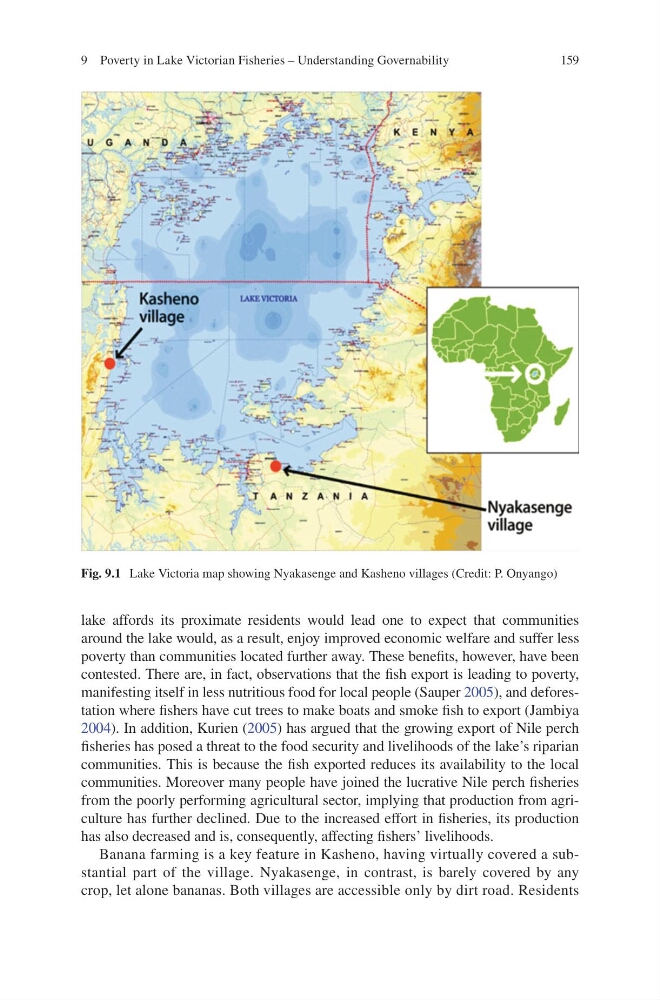
Fig. 9.1 Lake Victoria map showing Nyakasenge and Kasheno villages (Credit: P. Onyango)
9 Poverty in Lake Victorian Fisheries – Understanding Governability
lake affords its proximate residents would lead one to expect that communities
around the lake would, as a result, enjoy improved economic welfare and suffer less
poverty than communities located further away. These bene fi ts, however, have been
contested. There are, in fact, observations that the fi sh export is leading to poverty,
manifesting itself in less nutritious food for local people (Sauper 2005 ) , and deforestation where fi shers have cut trees to make boats and smoke fi sh to export (Jambiya
2004 ) . In addition, Kurien ( 2005 ) has argued that the growing export of Nile perch
fi sheries has posed a threat to the food security and livelihoods of the lake’s riparian
communities. This is because the fi sh exported reduces its availability to the local
communities. Moreover many people have joined the lucrative Nile perch fi sheries
from the poorly performing agricultural sector, implying that production from agriculture has further declined. Due to the increased effort in fi sheries, its production
has also decreased and is, consequently, affecting fi shers’ livelihoods.
Banana farming is a key feature in Kasheno, having virtually covered a substantial part of the village. Nyakasenge, in contrast, is barely covered by any
crop, let alone bananas. Both villages are accessible only by dirt road. Residents
Fig. 9.1 Lake Victoria map showing Nyakasenge and Kasheno villages (Credit: P. Onyango)