

Basic Biological Processes
Reaction rate constants, aerobic heterotrophic conversions
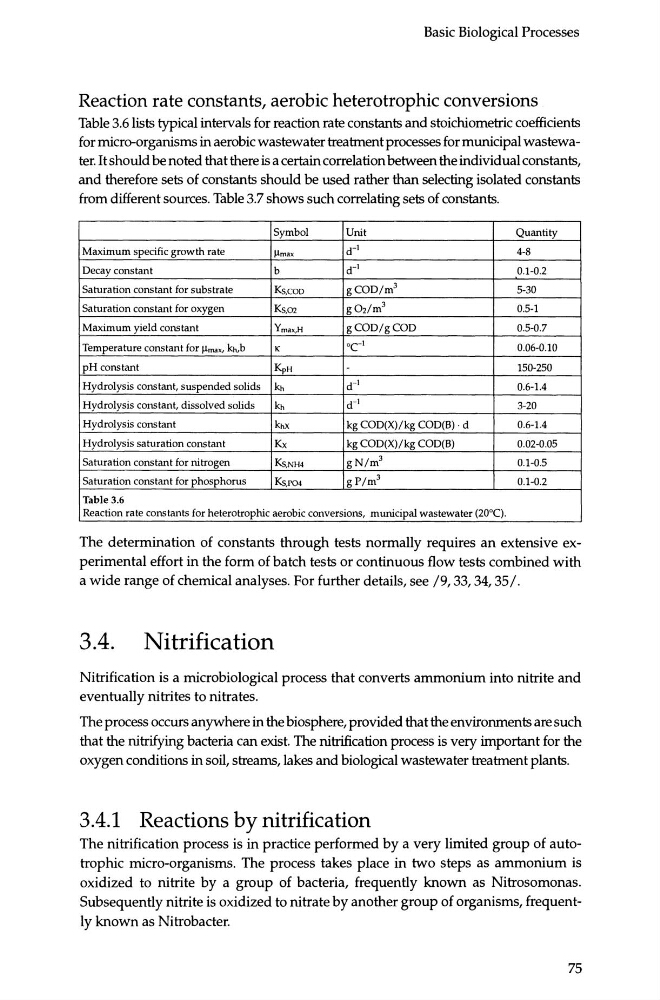
Table 3.6lists typical intervals for reaction rate constants and stoichiometric coefficients
for micro-organisms in aerobic wastewater treatment processes for municipal wastewater. It should be noted that there is a certain correlation between the individual constants,
and therefore sets of constants should be used rather than selecting isolated constants
from different sources. Table 3.7 shows such correlating sets of constants.
Symbol
Unit
Quantity
Maximum specific growth rate
llmax
d-1
4-8
Decay constant
b
d-1
0.1-Q.2
Saturation constant for substrate
I
5-30
Saturation constant for oxygen
l
0.5-1
Maximum yield constant
Ymax,H
gCOD/gCOD
0.5-0.7
Temperature constant for jlmax, k~t,b
1(
oLI
0.06-Q.lO
pH constant
KpH
-
150-250
Hydrolysis constant, suspended solids ktt
d-1
0.6-1.4
Hydrolysis constant, dissolved solids
ktt
d-1
3-20
Hydrolysis constant
khX
kg COD(X)/kg COD(B) · d
0.6-1.4
Hydrolysis saturation constant
Kx
kg COD(X)/kg COD(B)
0.02-0.05
Saturation constant for nitrogen
l
0.1-0.5
Saturation constant for phosphorus
l
0.1-Q.2
Table3.6
Reaction rate constants for heterotrophic aerobic conversions, municipal wastewater (20°C).
The determination of constants through tests normally requires an extensive experimental effort in the form of batch tests or continuous flow tests combined with
a wide range of chemical analyses. For further details, see /9, 33, 34,35/.
3.4. Nitrification
Nitrification is a microbiological process that converts ammonium into nitrite and
eventually nitrites to nitrates.
The process occurs anywhere in the biosphere, provided that the environments are such
that the nitrifying bacteria can exist. The nitrification process is very important for the
oxygen conditions in soil, streams, lakes and biological wastewater treatment plants.
3.4.1 Reactions by nitrification
The nitrification process is in practice performed by a very limited group of autotrophic micro-organisms. The process takes place in two steps as ammonium is
oxidized to nitrite by a group of bacteria, frequently known as Nitrosomonas.
Subsequently nitrite is oxidized to nitrate by another group of organisms, frequently known as Nitrobacter.
75
Reaction rate constants, aerobic heterotrophic conversions
Table 3.6lists typical intervals for reaction rate constants and stoichiometric coefficients
for micro-organisms in aerobic wastewater treatment processes for municipal wastewater. It should be noted that there is a certain correlation between the individual constants,
and therefore sets of constants should be used rather than selecting isolated constants
from different sources. Table 3.7 shows such correlating sets of constants.
Symbol
Unit
Quantity
Maximum specific growth rate
llmax
d-1
4-8
Decay constant
b
d-1
0.1-Q.2
Saturation constant for substrate
I
5-30
Saturation constant for oxygen
l
0.5-1
Maximum yield constant
Ymax,H
gCOD/gCOD
0.5-0.7
Temperature constant for jlmax, k~t,b
1(
oLI
0.06-Q.lO
pH constant
KpH
-
150-250
Hydrolysis constant, suspended solids ktt
d-1
0.6-1.4
Hydrolysis constant, dissolved solids
ktt
d-1
3-20
Hydrolysis constant
khX
kg COD(X)/kg COD(B) · d
0.6-1.4
Hydrolysis saturation constant
Kx
kg COD(X)/kg COD(B)
0.02-0.05
Saturation constant for nitrogen
l
0.1-0.5
Saturation constant for phosphorus
l
0.1-Q.2
Table3.6
Reaction rate constants for heterotrophic aerobic conversions, municipal wastewater (20°C).
The determination of constants through tests normally requires an extensive experimental effort in the form of batch tests or continuous flow tests combined with
a wide range of chemical analyses. For further details, see /9, 33, 34,35/.
3.4. Nitrification
Nitrification is a microbiological process that converts ammonium into nitrite and
eventually nitrites to nitrates.
The process occurs anywhere in the biosphere, provided that the environments are such
that the nitrifying bacteria can exist. The nitrification process is very important for the
oxygen conditions in soil, streams, lakes and biological wastewater treatment plants.
3.4.1 Reactions by nitrification
The nitrification process is in practice performed by a very limited group of autotrophic micro-organisms. The process takes place in two steps as ammonium is
oxidized to nitrite by a group of bacteria, frequently known as Nitrosomonas.
Subsequently nitrite is oxidized to nitrate by another group of organisms, frequently known as Nitrobacter.
75