

Anaerobic Wastewater Treatment
9 .2.4 Layout of an anaerobic treatment plant
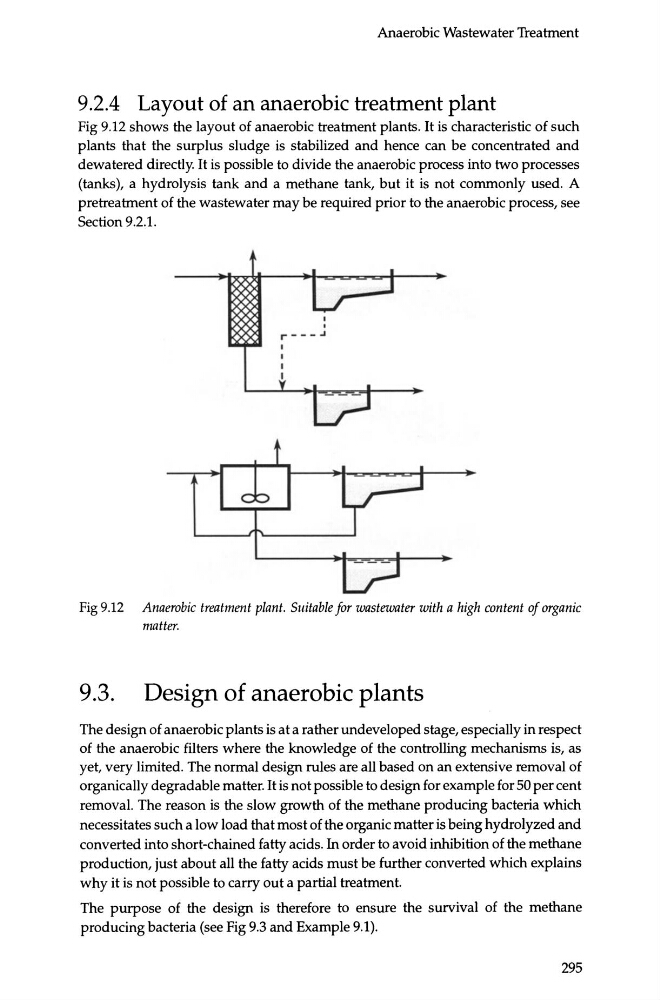
Fig 9.12 shows the layout of anaerobic treatment plants. It is characteristic of such
plants that the surplus sludge is stabilized and hence can be concentrated and
dewatered directly. It is possible to divide the anaerobic process into two processes
(tanks), a hydrolysis tank and a methane tank, but it is not commonly used. A
pretreatment of the wastewater may be required prior to the anaerobic process, see
Section 9.2.1.
I
I
r---..1
Fig 9.12 Anaerobic treatment plant. Suitable for wastewater with a high content of organic
matter.
9.3. Design of anaerobic plants
The design of anaerobic plants is at a rather undeveloped stage, especially in respect
of the anaerobic filters where the knowledge of the controlling mechanisms is, as
yet, very limited. The normal design rules are all based on an extensive removal of
organically degradable matter. It is not possible to design for example for 50 per cent
removal. The reason is the slow growth of the methane producing bacteria which
necessitates such a low load that most of the organic matter is being hydrolyzed and
converted into short-chained fatty acids. In order to avoid inhibition of the methane
production, just about all the fatty acids must be further converted which explains
why it is not possible to carry out a partial treatment.
The purpose of the design is therefore to ensure the survival of the methane
producing bacteria (see Fig 9.3 and Example 9.1).
295
9 .2.4 Layout of an anaerobic treatment plant
Fig 9.12 shows the layout of anaerobic treatment plants. It is characteristic of such
plants that the surplus sludge is stabilized and hence can be concentrated and
dewatered directly. It is possible to divide the anaerobic process into two processes
(tanks), a hydrolysis tank and a methane tank, but it is not commonly used. A
pretreatment of the wastewater may be required prior to the anaerobic process, see
Section 9.2.1.
I
I
r---..1
Fig 9.12 Anaerobic treatment plant. Suitable for wastewater with a high content of organic
matter.
9.3. Design of anaerobic plants
The design of anaerobic plants is at a rather undeveloped stage, especially in respect
of the anaerobic filters where the knowledge of the controlling mechanisms is, as
yet, very limited. The normal design rules are all based on an extensive removal of
organically degradable matter. It is not possible to design for example for 50 per cent
removal. The reason is the slow growth of the methane producing bacteria which
necessitates such a low load that most of the organic matter is being hydrolyzed and
converted into short-chained fatty acids. In order to avoid inhibition of the methane
production, just about all the fatty acids must be further converted which explains
why it is not possible to carry out a partial treatment.
The purpose of the design is therefore to ensure the survival of the methane
producing bacteria (see Fig 9.3 and Example 9.1).
295