

8. Plants for Biological Phosphorus
Removal
By Mogens Henze
Phosphorus stimulates plant growth (eutrophication) in streams, lakes, rivers, and
in the ocean. A large part of the phosphorus which is discharged into the receiving
waters derives from wastewater. Due to increasing eutrophication problems all over
the world, the demand for phosphorus removal from wastewater is increasing.
Biological phosphorus removal is a process which can be fully or partly used for the
solution of the problem. It will sometimes be necessary to combine the process with
chemical precipitation of some of the phosphorus. Sludge from treatment plants
with biological phosphorus removal will be well-suited as fertilizer if it is not
overloaded with metals or organic toxins which are poisonous to the environment.
8.1. Mass balances, biological phosphorus
removal plants with activated sludge
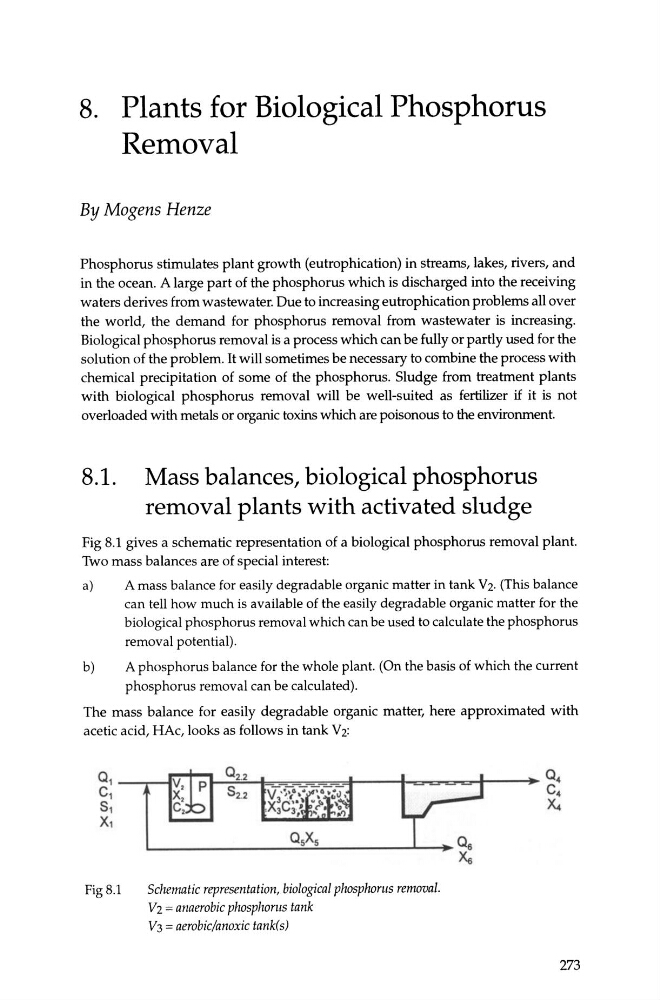
Fig 8.1 gives a schematic representation of a biological phosphorus removal plant.
Two mass balances are of special interest:
a)
A mass balance for easily degradable organic matter in tank V2. (This balance
can tell how much is available of the easily degradable organic matter for the
biological phosphorus removal which can be used to calculate the phosphorus
removal potential).
b)
A phosphorus balance for the whole plant. (On the basis of which the current
phosphorus removal can be calculated).
The mass balance for easily degradable organic matter, here approximated with
acetic acid, HAc, looks as follows in tank V2:
Fig8.1
Schematic representation, biological phosphorus removal.
V2 = anaerobic phosphonts tank
V3 =aerobic/anoxic tank(s)
273
Removal
By Mogens Henze
Phosphorus stimulates plant growth (eutrophication) in streams, lakes, rivers, and
in the ocean. A large part of the phosphorus which is discharged into the receiving
waters derives from wastewater. Due to increasing eutrophication problems all over
the world, the demand for phosphorus removal from wastewater is increasing.
Biological phosphorus removal is a process which can be fully or partly used for the
solution of the problem. It will sometimes be necessary to combine the process with
chemical precipitation of some of the phosphorus. Sludge from treatment plants
with biological phosphorus removal will be well-suited as fertilizer if it is not
overloaded with metals or organic toxins which are poisonous to the environment.
8.1. Mass balances, biological phosphorus
removal plants with activated sludge
Fig 8.1 gives a schematic representation of a biological phosphorus removal plant.
Two mass balances are of special interest:
a)
A mass balance for easily degradable organic matter in tank V2. (This balance
can tell how much is available of the easily degradable organic matter for the
biological phosphorus removal which can be used to calculate the phosphorus
removal potential).
b)
A phosphorus balance for the whole plant. (On the basis of which the current
phosphorus removal can be calculated).
The mass balance for easily degradable organic matter, here approximated with
acetic acid, HAc, looks as follows in tank V2:
Fig8.1
Schematic representation, biological phosphorus removal.
V2 = anaerobic phosphonts tank
V3 =aerobic/anoxic tank(s)
273