

Removal of particulate organic matter
trickling filter will contain most biomass in the early spring which makes the risk of
clogging correspondingly higher.
5.11. Removal of particulate organic matter
As discussed in the previous sections, we do not today have an applicable hypothesis for the removal of organic matter which cannot diffuse into a biofilm. Until
such a hypothesis has been found, we have to rely on empericalload norms, but
new knowledge is on its way.
A distinction should be made between two types of substrates:
diffusible
non-diffusible
Diffusible means that the substrate can be carried into the biofilm by molecular
diffusion. There is no well-defined analyzeable limit, but genuine soluble substances such as oxygen, acetic acid, methanol and glucose clearly belong to the
diffusible category whereas suspended solids as defined for the filtering through a
filter (GF I A filter, pore size 1 - 1.6 Jlm) definitely belong to the non-diffusible
category. In this connection it is misleading that the substance running through the
filter mentioned above is traditionally called "dissolved" (Chapter 1).
A major part of organic matter in municipal wastewater consists of fractions which
pass a 1- 1.6 Jlm filter, but which are not genuinely soluble.
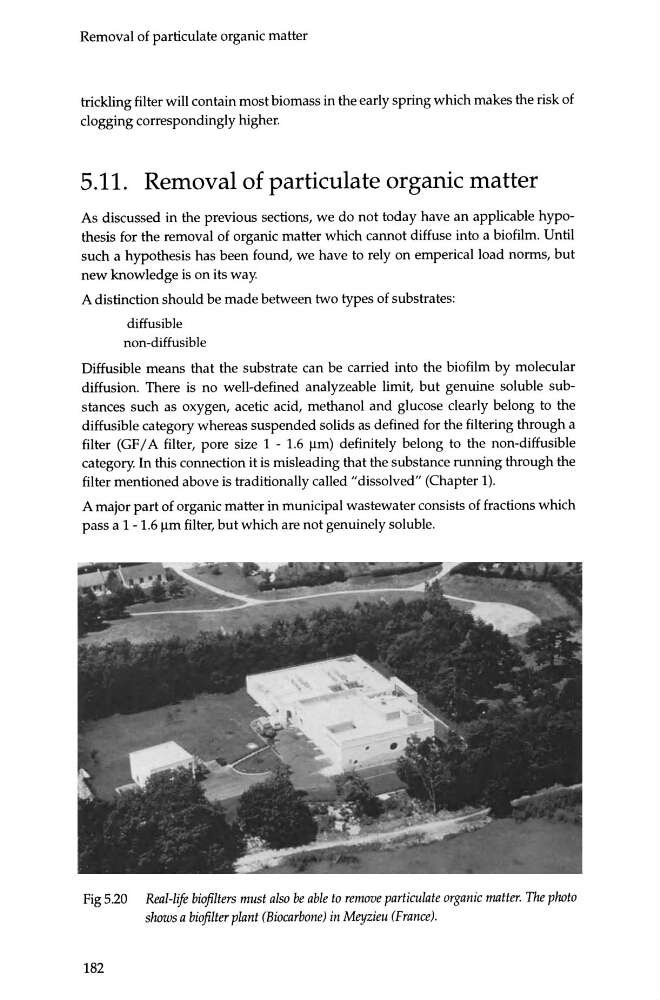
Fig 5.20 Real-life biofilters must also be able to remove particulate organic matter. The photo
shows a biofilter plant (Biocarbone) in Meyzieu (France).
182
trickling filter will contain most biomass in the early spring which makes the risk of
clogging correspondingly higher.
5.11. Removal of particulate organic matter
As discussed in the previous sections, we do not today have an applicable hypothesis for the removal of organic matter which cannot diffuse into a biofilm. Until
such a hypothesis has been found, we have to rely on empericalload norms, but
new knowledge is on its way.
A distinction should be made between two types of substrates:
diffusible
non-diffusible
Diffusible means that the substrate can be carried into the biofilm by molecular
diffusion. There is no well-defined analyzeable limit, but genuine soluble substances such as oxygen, acetic acid, methanol and glucose clearly belong to the
diffusible category whereas suspended solids as defined for the filtering through a
filter (GF I A filter, pore size 1 - 1.6 Jlm) definitely belong to the non-diffusible
category. In this connection it is misleading that the substance running through the
filter mentioned above is traditionally called "dissolved" (Chapter 1).
A major part of organic matter in municipal wastewater consists of fractions which
pass a 1- 1.6 Jlm filter, but which are not genuinely soluble.
Fig 5.20 Real-life biofilters must also be able to remove particulate organic matter. The photo
shows a biofilter plant (Biocarbone) in Meyzieu (France).
182