

professional judgment to guide the choice of equipment. As temporal patterns were
a priority, the decision was made to pursue automated monitoring to allow for
collection of high-frequency data. Capturing the spatial patterns of dripwater rates
in the cave was initially a priority, but the goal was impractical as there are only a
few regions in the cave that have actively dripping stalactites.
During the planning stages, there was careful consideration given to the type of
equipment to be installed, as both equipment and supplies had to withstand the
continuous 100 % humidity and splashy conditions of a cave environment. Preference was given to off-the-shelf equipment, as equipment could then be easily
modified, serviced, or replaced as needed. Also during planning, standard operating
procedures for maintaining equipment, sampling, sample analysis, and data management were developed. These procedures are periodically revised and updated to
reflect current conditions and evolving project objectives.
The final design for monitoring stations included a total of five stations with
automated monitoring equipment: one surface station to collect climate data, three
in-cave stations to collect dripwater data, and one stream station to collect stream
data. Equipment was installed to collect continuous and grab water samples for
geochemical analysis. Water samples were collected for precipitation, soil water,
dripwater, and the stream. Table 1 shows the location of instrumentation and the
parameters measured at James Cave. Table 2 provides details on the instrumentation, including manufacturer and part/model numbers. Table 3 presents the
chronology of instrumentation from 2007 to 2012. The instrumentation has not
changed since July 2012. Table 4 shows the data types for the data collected using
the automated instrumentation. To date (2014), 7 years of hydrologic and geochemical data have been collected at the James Cave site. The discussion below
provides details of the instrumentation and of instrument maintenance.
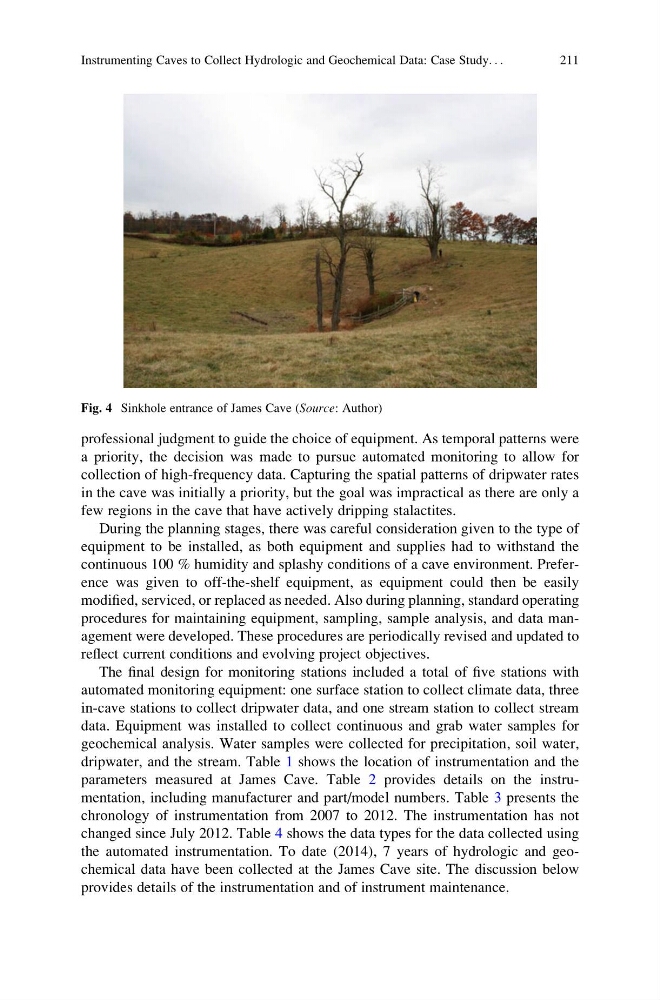
Fig. 4 Sinkhole entrance of James Cave (Source: Author)
Instrumenting Caves to Collect Hydrologic and Geochemical Data: Case Study. . .
211
a priority, the decision was made to pursue automated monitoring to allow for
collection of high-frequency data. Capturing the spatial patterns of dripwater rates
in the cave was initially a priority, but the goal was impractical as there are only a
few regions in the cave that have actively dripping stalactites.
During the planning stages, there was careful consideration given to the type of
equipment to be installed, as both equipment and supplies had to withstand the
continuous 100 % humidity and splashy conditions of a cave environment. Preference was given to off-the-shelf equipment, as equipment could then be easily
modified, serviced, or replaced as needed. Also during planning, standard operating
procedures for maintaining equipment, sampling, sample analysis, and data management were developed. These procedures are periodically revised and updated to
reflect current conditions and evolving project objectives.
The final design for monitoring stations included a total of five stations with
automated monitoring equipment: one surface station to collect climate data, three
in-cave stations to collect dripwater data, and one stream station to collect stream
data. Equipment was installed to collect continuous and grab water samples for
geochemical analysis. Water samples were collected for precipitation, soil water,
dripwater, and the stream. Table 1 shows the location of instrumentation and the
parameters measured at James Cave. Table 2 provides details on the instrumentation, including manufacturer and part/model numbers. Table 3 presents the
chronology of instrumentation from 2007 to 2012. The instrumentation has not
changed since July 2012. Table 4 shows the data types for the data collected using
the automated instrumentation. To date (2014), 7 years of hydrologic and geochemical data have been collected at the James Cave site. The discussion below
provides details of the instrumentation and of instrument maintenance.
Fig. 4 Sinkhole entrance of James Cave (Source: Author)
Instrumenting Caves to Collect Hydrologic and Geochemical Data: Case Study. . .
211