

3.3.5 CDOM Sensors
Fluorescence-based optical sensors are designed to measure the fluorescent fraction
of colored dissolved organic matter (CDOM). Therefore, these sensors are typically
referred to as FDOM sensors. FDOM sensors can be used to assess terrestrial
influences in streams and rivers, to track pollution discharge, to map plumes of
high or low dissolved organic carbon (DOC) in adjacent waters, to assess the
amount of light absorbed by dissolved constituents in the water, and to assess the
dispersion of point source pollution from anthropogenic wastes. Similar in design to
chlorophyll and cyanobacteria sensors, FDOM sensors use a UV light source to
excite organic matter particles and measure the emission. Some FDOM sensors are
available that have been specifically tuned to both refined and crude hydrocarbons.
3.4 Biosensors
A biosensor is a device that detects, records, and transmits information regarding a
physiological change or the presence of various chemical or biological materials in
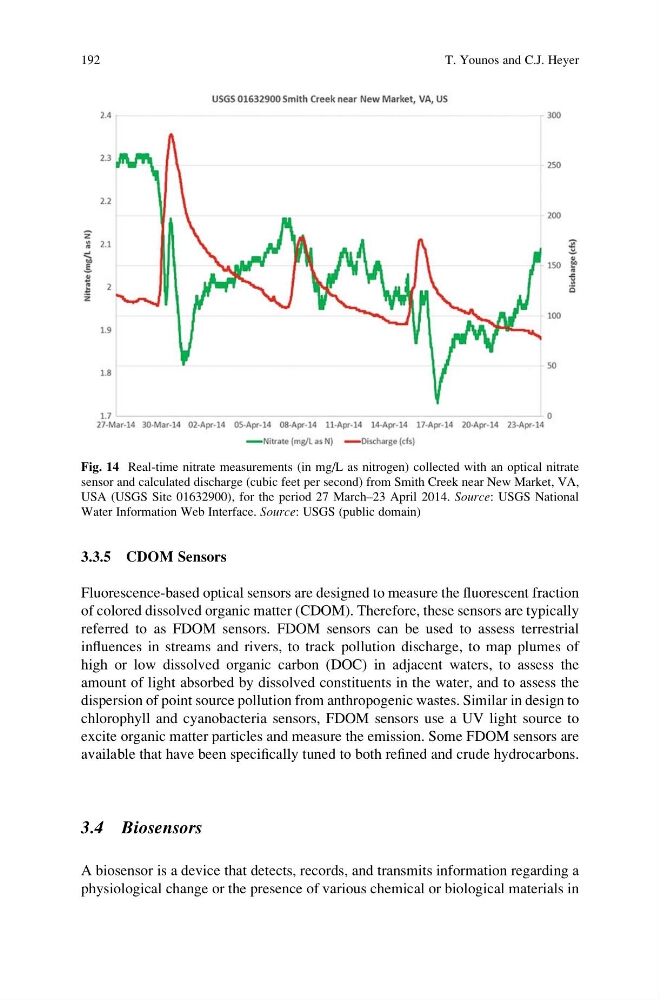
Fig. 14 Real-time nitrate measurements (in mg/L as nitrogen) collected with an optical nitrate
sensor and calculated discharge (cubic feet per second) from Smith Creek near New Market, VA,
USA (USGS Site 01632900), for the period 27 March–23 April 2014. Source: USGS National
Water Information Web Interface. Source: USGS (public domain)
192
T. Younos and C.J. Heyer
Fluorescence-based optical sensors are designed to measure the fluorescent fraction
of colored dissolved organic matter (CDOM). Therefore, these sensors are typically
referred to as FDOM sensors. FDOM sensors can be used to assess terrestrial
influences in streams and rivers, to track pollution discharge, to map plumes of
high or low dissolved organic carbon (DOC) in adjacent waters, to assess the
amount of light absorbed by dissolved constituents in the water, and to assess the
dispersion of point source pollution from anthropogenic wastes. Similar in design to
chlorophyll and cyanobacteria sensors, FDOM sensors use a UV light source to
excite organic matter particles and measure the emission. Some FDOM sensors are
available that have been specifically tuned to both refined and crude hydrocarbons.
3.4 Biosensors
A biosensor is a device that detects, records, and transmits information regarding a
physiological change or the presence of various chemical or biological materials in
Fig. 14 Real-time nitrate measurements (in mg/L as nitrogen) collected with an optical nitrate
sensor and calculated discharge (cubic feet per second) from Smith Creek near New Market, VA,
USA (USGS Site 01632900), for the period 27 March–23 April 2014. Source: USGS National
Water Information Web Interface. Source: USGS (public domain)
192
T. Younos and C.J. Heyer