

2.1.2 Bubbler Systems
Bubbler systems consist of three major components: a pressurized air source to
push air through an orifice tube, an orifice tube whose open end is mounted at a
fixed depth, and a pressure sensor (Fig. 2). Bubblers force a bubble or air through
the orifice line and measure the pressure it takes to expel the air bubble out the
submerged end of the line. The pressure required to move the air directly corresponds to water depth. Bubbler systems simultaneously compensate to changes in
barometric pressure to ensure the highest accuracy measurement.
While bubbler systems have been in use for several decades, modern systems are
self-contained and typically include a small compressor to generate the pressure
needed and ensure a continuous flow of air through the orifice line. Some bubbler
systems on the market today contain built-in data loggers, while others require
connection to a separate data logger. Because only an orifice line is exposed to the
water and the other major components can be protected in a gauge house, these
sensors tend to last longer than submersible sensors.
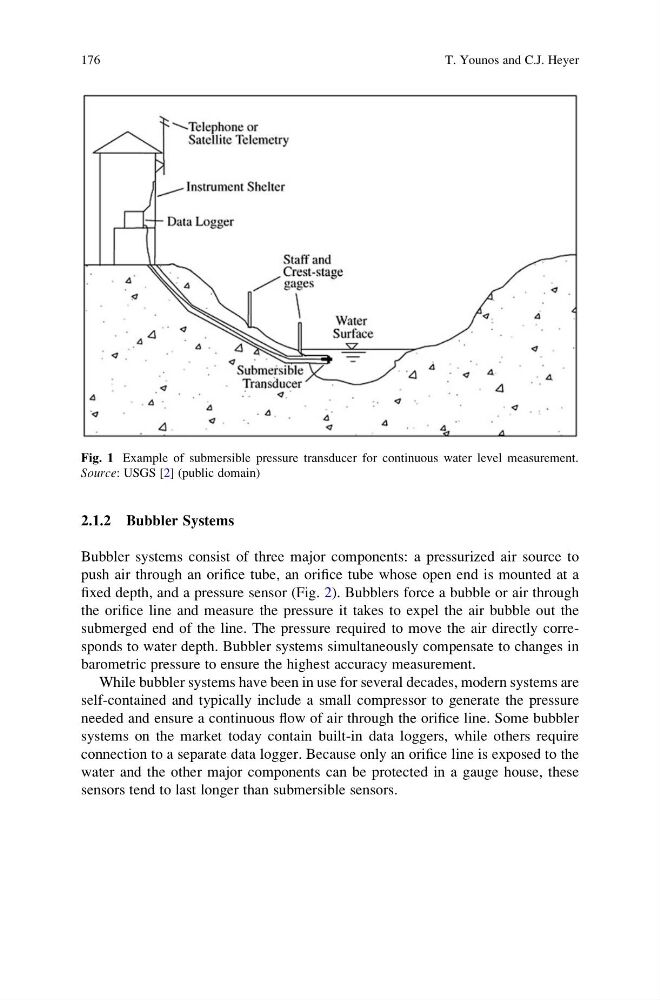
Fig. 1 Example of submersible pressure transducer for continuous water level measurement.
Source: USGS [2] (public domain)
176
T. Younos and C.J. Heyer
Bubbler systems consist of three major components: a pressurized air source to
push air through an orifice tube, an orifice tube whose open end is mounted at a
fixed depth, and a pressure sensor (Fig. 2). Bubblers force a bubble or air through
the orifice line and measure the pressure it takes to expel the air bubble out the
submerged end of the line. The pressure required to move the air directly corresponds to water depth. Bubbler systems simultaneously compensate to changes in
barometric pressure to ensure the highest accuracy measurement.
While bubbler systems have been in use for several decades, modern systems are
self-contained and typically include a small compressor to generate the pressure
needed and ensure a continuous flow of air through the orifice line. Some bubbler
systems on the market today contain built-in data loggers, while others require
connection to a separate data logger. Because only an orifice line is exposed to the
water and the other major components can be protected in a gauge house, these
sensors tend to last longer than submersible sensors.
Fig. 1 Example of submersible pressure transducer for continuous water level measurement.
Source: USGS [2] (public domain)
176
T. Younos and C.J. Heyer