

624
29.2.2.4 Problems with Regard
to Hydrological Alteration
Alterations in the hydrology may change the
character, functions, values and appearance of
wetlands. The changes in hydrology include
either the removal of water from wetlands or raising the land, surface elevation, such that it no longer fl oods. Canal dredging operations have been
conducted in India from the 1800s, due to which
3,044 km
2 of irrigated land has increased to
4,550 km
2 in 1990. An initial increase in the crop
productivity has given way to reduced fertility
and salt accumulations in soil due to irrigated
farming of arid soils. India has c 32,000 ha of
peatland remaining, and drainage of these
lands will lead to rapid subsidence of the soil
surface.
Further, watershed conditions infl uence the
wetlands. The condition of the land where precipitation falls, collects and runs off into the soil
will infl uence the character and hydrological
regime of the downstream wetlands. When agriculture, deforestation or overgrazing decreases
the water-holding capacity of the soil, then soil
erosion becomes more pronounced. Large areas
of India’s watershed area are being physically
stripped of their vegetation for human use.
Groundwater Depletion
Draining of wetlands may deplete the groundwater recharge. Recent estimate indicates that in
rural India, about 6,000 villages are without a
source for drinking water due to the rapid depletion of groundwater.
29.2.3 Problems of Biological Nature
These include the problems of biological nature,
like eutrophication.
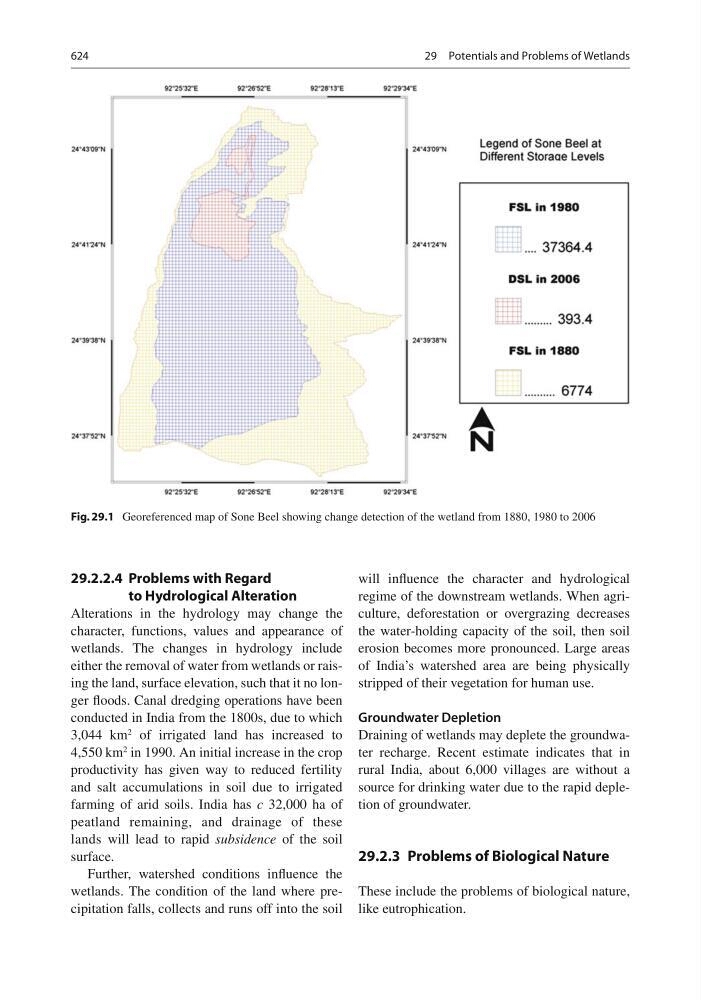
Fig. 29.1 Georeferenced map of Sone Beel showing change detection of the wetland from 1880, 1980 to 2006
29 Potentials and Problems of Wetlands