

622
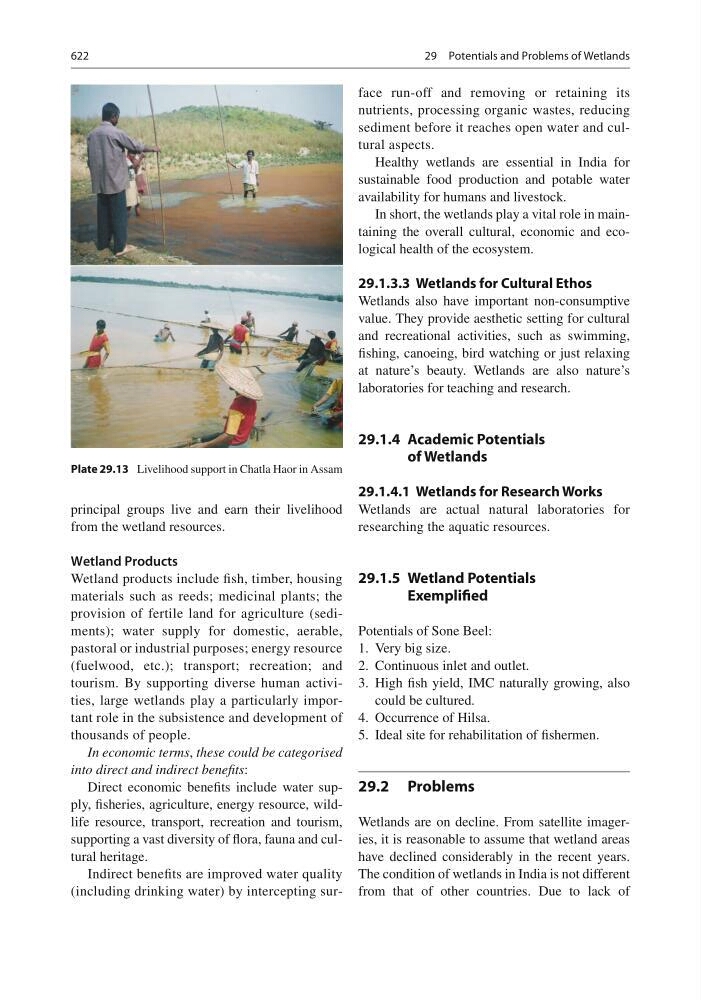
principal groups live and earn their livelihood
from the wetland resources.
Wetland Products
Wetland products include fi sh, timber, housing
materials such as reeds; medicinal plants; the
provision of fertile land for agriculture (sediments); water supply for domestic, aerable,
pastoral or industrial purposes; energy resource
(fuelwood, etc.); transport; recreation; and
tourism. By supporting diverse human activities, large wetlands play a particularly important role in the subsistence and development of
thousands of people.
In economic terms , these could be categorised
into direct and indirect benefi ts :
Direct economic benefi ts include water supply, fi sheries, agriculture, energy resource, wildlife resource, transport, recreation and tourism,
supporting a vast diversity of fl ora, fauna and cultural heritage.
Indirect benefi ts are improved water quality
(including drinking water) by intercepting surface run-off and removing or retaining its
nutrients, processing organic wastes, reducing
sediment before it reaches open water and cultural aspects.
Healthy wetlands are essential in India for
sustainable food production and potable water
availability for humans and livestock.
In short, the wetlands play a vital role in maintaining the overall cultural, economic and ecological health of the ecosystem.
29.1.3.3 Wetlands for Cultural Ethos
Wetlands also have important non-consumptive
value. They provide aesthetic setting for cultural
and recreational activities, such as swimming,
fi shing, canoeing, bird watching or just relaxing
at nature’s beauty. Wetlands are also nature’s
laboratories for teaching and research.
29.1.4 Academic Potentials
of Wetlands
29.1.4.1 Wetlands for Research Works
Wetlands are actual natural laboratories for
researching the aquatic resources.
29.1.5 Wetland Potentials
Exemplifi ed
Potentials of Sone Beel:
1. Very big size.
2. Continuous inlet and outlet.
3. High fi sh yield, IMC naturally growing, also
could be cultured.
4. Occurrence of Hilsa.
5. Ideal site for rehabilitation of fi shermen.
29.2 Problems
Wetlands are on decline. From satellite imageries, it is reasonable to assume that wetland areas
have declined considerably in the recent years.
The condition of wetlands in India is not different
from that of other countries. Due to lack of
Plate 29.13 Livelihood support in Chatla Haor in Assam
29 Potentials and Problems of Wetlands