

429
wetlands commenced in 1865 and it still continues.
At present, these wetlands sustain the world’s
oldest integrated resource recovery practice that
combines agriculture with aquaculture in order to
utilise garbage and waste waters of Calcutta
metropolis. However, in course of time, large
area of the wetland was drained and fi lled up for
the development of a growing suburb called the
Salt Lake City during 1962–1967. Moreover, the
Eastern Metropolitan (EM) Bypass was constructed in the 1980s in the same locality. Some
fi sheries were converted into paddy fi elds in the
process. The remaining portion of the wetland,
measuring about 5,000 ha, is under threat from
real estate interests since 1991–1992.
Flora
About 40 species of algae, 2 species of ferns, 7 species of monocotyledons and 21 species of dicotyledons have been recorded from the wetland region.
Fauna
The fauna include 248 species of birds, of which
90 are wetland species. Of these, c 50 % are
migratory waterfowls and 158 are terrestrial. In
addition to these, 15 species of reptiles, 6 species
of fi shes, 18 species of molluscs and some species of crustaceans have been recorded from
these wetlands.
Land Use
Land use involves fi shing as the principal activity. The wetland receives untreated sewage. The
practice of sewage-fed fi sheries provides an
excellent natural biological treatment using the
raw sewage and releasing highly purifi ed effl uent
for irrigating paddy fi elds. An area of about
4,685 ha was under sewage-fed fi sheries in 1945.
This shrunk to about 3,000 ha by 1985. The main
fi sh fauna are the IMCs, the exotic carps, the live
catfi shes, etc. There is a yield of about 8,000 mt
of fi sh per year.
Values
With regard to economic and social values, it
could be said that the wetland supports a major
sewage-fed fi shery which is in operation since
the 1930s. An area of about 3,000 ha is stocked
with carps, tilapia, etc. A large economically
underprivileged human population of about
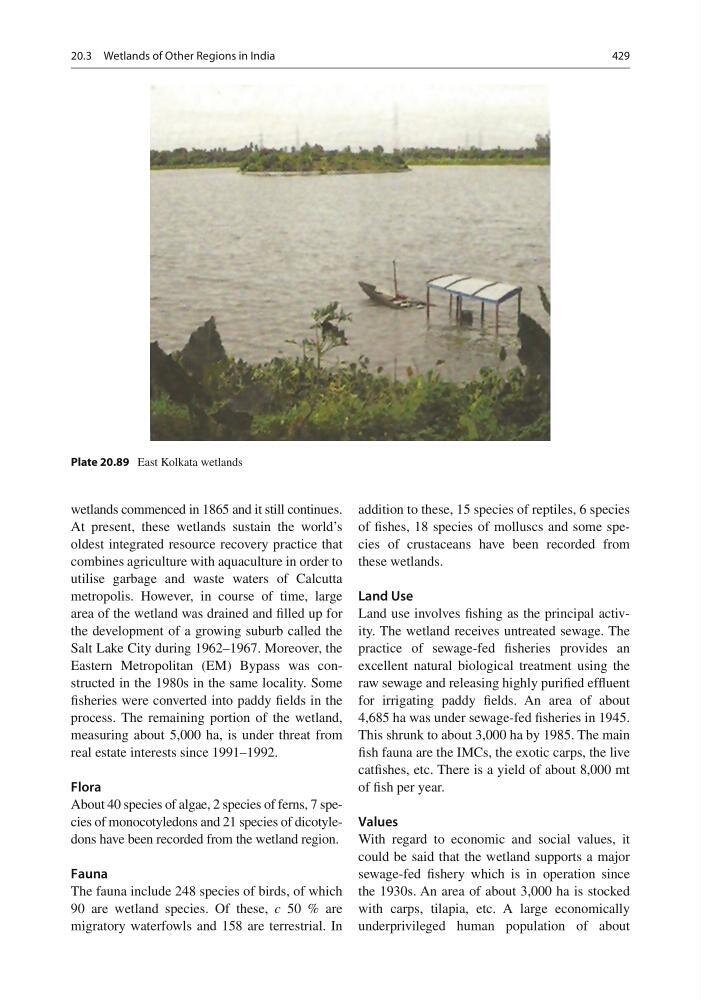
Plate 20.89 East Kolkata wetlands
20.3 Wetlands of Other Regions in India
wetlands commenced in 1865 and it still continues.
At present, these wetlands sustain the world’s
oldest integrated resource recovery practice that
combines agriculture with aquaculture in order to
utilise garbage and waste waters of Calcutta
metropolis. However, in course of time, large
area of the wetland was drained and fi lled up for
the development of a growing suburb called the
Salt Lake City during 1962–1967. Moreover, the
Eastern Metropolitan (EM) Bypass was constructed in the 1980s in the same locality. Some
fi sheries were converted into paddy fi elds in the
process. The remaining portion of the wetland,
measuring about 5,000 ha, is under threat from
real estate interests since 1991–1992.
Flora
About 40 species of algae, 2 species of ferns, 7 species of monocotyledons and 21 species of dicotyledons have been recorded from the wetland region.
Fauna
The fauna include 248 species of birds, of which
90 are wetland species. Of these, c 50 % are
migratory waterfowls and 158 are terrestrial. In
addition to these, 15 species of reptiles, 6 species
of fi shes, 18 species of molluscs and some species of crustaceans have been recorded from
these wetlands.
Land Use
Land use involves fi shing as the principal activity. The wetland receives untreated sewage. The
practice of sewage-fed fi sheries provides an
excellent natural biological treatment using the
raw sewage and releasing highly purifi ed effl uent
for irrigating paddy fi elds. An area of about
4,685 ha was under sewage-fed fi sheries in 1945.
This shrunk to about 3,000 ha by 1985. The main
fi sh fauna are the IMCs, the exotic carps, the live
catfi shes, etc. There is a yield of about 8,000 mt
of fi sh per year.
Values
With regard to economic and social values, it
could be said that the wetland supports a major
sewage-fed fi shery which is in operation since
the 1930s. An area of about 3,000 ha is stocked
with carps, tilapia, etc. A large economically
underprivileged human population of about
Plate 20.89 East Kolkata wetlands
20.3 Wetlands of Other Regions in India