

331
Navicula sp., Arcella sp ., Brachionus sp .,
Keratella sp ., Lecane sp ., Trichocerca sp ., Filinia
sp ., Daphnia sp ., Ceriodaphnia sp ., Alona sp .,
Bosmina sp ., Chydorus sp ., Macrothrix sp .,
Simocephalus sp ., Cyclops sp . and Diaptomus sp.
Fish Diversity
Amblypharyngodon mola , Puntius ticto, Mystus vittatus, Parambassis baculis, Xenentodon cancila,
Channa punctatus, Chanda nama, Parambassis
ranga, Trichogaster, sp., Macrognathus aculeatus
and Macrognathus pancalus.
FY
Puntius generally shows the highest yield (72 %)
followed by Trichogaster, Chanda, etc.
Sundarkuri Beel
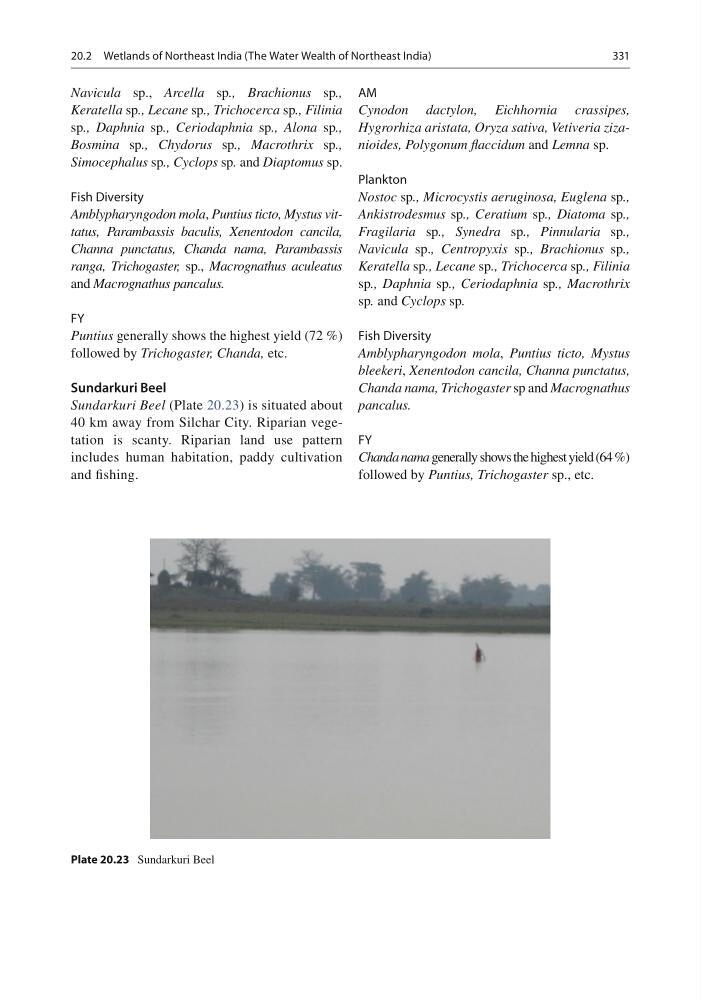
Sundarkuri Beel (Plate 20.23 ) is situated about
40 km away from Silchar City. Riparian vegetation is scanty. Riparian land use pattern
includes human habitation, paddy cultivation
and fi shing.
AM
Cynodon dactylon, Eichhornia crassipes,
Hygrorhiza aristata, Oryza sativa, Vetiveria zizanioides, Polygonum fl accidum and Lemna sp.
Plankton
Nostoc sp ., Microcystis aeruginosa, Euglena sp .,
Ankistrodesmus sp ., Ceratium sp ., Diatoma sp .,
Fragilaria sp ., Synedra sp ., Pinnularia sp .,
Navicula sp. , Centropyxis sp ., Brachionus sp .,
Keratella sp ., Lecane sp ., Trichocerca sp ., Filinia
sp ., Daphnia sp ., Ceriodaphnia sp ., Macrothrix
sp . and Cyclops sp .
Fish Diversity
Amblypharyngodon mola , Puntius ticto, Mystus
bleekeri , Xenentodon cancila, Channa punctatus,
Chanda nama, Trichogaster sp and Macrognathus
pancalus.
FY
Chanda nama generally shows the highest yield (64 %)
followed by Puntius, Trichogaster sp., etc.
Plate 20.23 Sundarkuri Beel
20.2 Wetlands of Northeast India (The Water Wealth of Northeast India)
Navicula sp., Arcella sp ., Brachionus sp .,
Keratella sp ., Lecane sp ., Trichocerca sp ., Filinia
sp ., Daphnia sp ., Ceriodaphnia sp ., Alona sp .,
Bosmina sp ., Chydorus sp ., Macrothrix sp .,
Simocephalus sp ., Cyclops sp . and Diaptomus sp.
Fish Diversity
Amblypharyngodon mola , Puntius ticto, Mystus vittatus, Parambassis baculis, Xenentodon cancila,
Channa punctatus, Chanda nama, Parambassis
ranga, Trichogaster, sp., Macrognathus aculeatus
and Macrognathus pancalus.
FY
Puntius generally shows the highest yield (72 %)
followed by Trichogaster, Chanda, etc.
Sundarkuri Beel
Sundarkuri Beel (Plate 20.23 ) is situated about
40 km away from Silchar City. Riparian vegetation is scanty. Riparian land use pattern
includes human habitation, paddy cultivation
and fi shing.
AM
Cynodon dactylon, Eichhornia crassipes,
Hygrorhiza aristata, Oryza sativa, Vetiveria zizanioides, Polygonum fl accidum and Lemna sp.
Plankton
Nostoc sp ., Microcystis aeruginosa, Euglena sp .,
Ankistrodesmus sp ., Ceratium sp ., Diatoma sp .,
Fragilaria sp ., Synedra sp ., Pinnularia sp .,
Navicula sp. , Centropyxis sp ., Brachionus sp .,
Keratella sp ., Lecane sp ., Trichocerca sp ., Filinia
sp ., Daphnia sp ., Ceriodaphnia sp ., Macrothrix
sp . and Cyclops sp .
Fish Diversity
Amblypharyngodon mola , Puntius ticto, Mystus
bleekeri , Xenentodon cancila, Channa punctatus,
Chanda nama, Trichogaster sp and Macrognathus
pancalus.
FY
Chanda nama generally shows the highest yield (64 %)
followed by Puntius, Trichogaster sp., etc.
Plate 20.23 Sundarkuri Beel
20.2 Wetlands of Northeast India (The Water Wealth of Northeast India)