

74
acid-producing reactions:
NH4 + + 202 --~ NO3- + H~O + 2H +
H2S + 202 -~ SO4 " + 2H
R-SH + 202 --~ R-OH + SO42" + 2H +
S ~ + 312 02 + H20 -~ SO42" + 2H +
FeS2 + 1514 02 + 7/2 H20 --~ Fe(OH)3 + 2 SO42" +.4H +
FeS + 9/4 02 + 5/2 H20 --~ Fe(OH)3 § SO42" + 2 H
Fe 2+ + 1/4 02 + 5t2 H20 --~ Fe(OH)3 + 2H §
acid neutralizing reactions (pH > 5):
HCO 3" + H + -.9, CO 2 + H20
CaCO 3 + 2 H + ~ CO2 + H20 + Ca 2+
The ANC and the APC can then be calculated by
APC = APCaq+ APC s
=d~ZfiCP a i*(1 ~)p Ef. CP 9
,,,.q*N" s- s j sj
ANC= ANC a- +
_ =, .Zf i ~naq i + (1-d~) Ps Z fj Cnsj
where
t: stoiclaiometnc acid producing (neutralizing) coefficient of the reaction,
Caq: average dissolved concentrations in the uppermost 20 cm depth,
Cs: average particulate concentrations m the uppermost 20 cm depth,
d0 : porosity of the sediments,
p: density of the sediments.
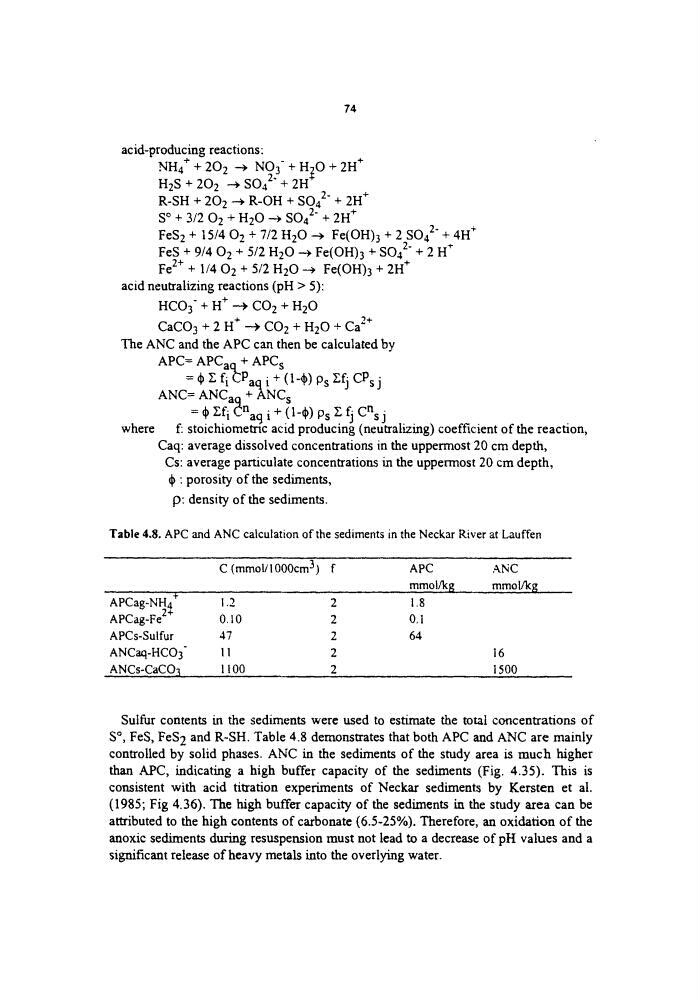
Table 4.8. APC and ANC calculation of the sediments in the Neckar River at Lauffen
APCag-NH4 +
1.2
2
1.8
APCag-Fe 2+
0.10
2
0.1
APCs-Sulfur
47
2
64
ANCaq-HCO 3"
11
2
ANCs-CaCO 3
1.100
2
C (mmol/1000cm 3) f
APC
ANC
_
mmol/k~
mmol/kg .
16
1500
Sulfur contents in the sediments were used to estimate the total concentrations of
S ~ FeS, FeS 2 and R-SH. Table 4.8 demonstrates that both APC and ANC are mainly
controlled by solid phases. ANC in the sediments of the study area is much higher
than APC, indicating a high buffer capacity of the sediments (Fig. 4.35). This is
consistent with acid titration experiments of Neckar sediments by Kersten et al.
(1985; Fig 4.36). The high buffer capacity of the sediments in the study area can be
attributed to the high contents of carbonate (6.5-25%). Therefore, an oxidation of the
anoxic sediments during resuspension must not lead to a decrease of pH values and a
significant release of heavy metals into the overlying water.
acid-producing reactions:
NH4 + + 202 --~ NO3- + H~O + 2H +
H2S + 202 -~ SO4 " + 2H
R-SH + 202 --~ R-OH + SO42" + 2H +
S ~ + 312 02 + H20 -~ SO42" + 2H +
FeS2 + 1514 02 + 7/2 H20 --~ Fe(OH)3 + 2 SO42" +.4H +
FeS + 9/4 02 + 5/2 H20 --~ Fe(OH)3 § SO42" + 2 H
Fe 2+ + 1/4 02 + 5t2 H20 --~ Fe(OH)3 + 2H §
acid neutralizing reactions (pH > 5):
HCO 3" + H + -.9, CO 2 + H20
CaCO 3 + 2 H + ~ CO2 + H20 + Ca 2+
The ANC and the APC can then be calculated by
APC = APCaq+ APC s
=d~ZfiCP a i*(1 ~)p Ef. CP 9
,,,.q*N" s- s j sj
ANC= ANC a- +
_ =, .Zf i ~naq i + (1-d~) Ps Z fj Cnsj
where
t: stoiclaiometnc acid producing (neutralizing) coefficient of the reaction,
Caq: average dissolved concentrations in the uppermost 20 cm depth,
Cs: average particulate concentrations m the uppermost 20 cm depth,
d0 : porosity of the sediments,
p: density of the sediments.
Table 4.8. APC and ANC calculation of the sediments in the Neckar River at Lauffen
APCag-NH4 +
1.2
2
1.8
APCag-Fe 2+
0.10
2
0.1
APCs-Sulfur
47
2
64
ANCaq-HCO 3"
11
2
ANCs-CaCO 3
1.100
2
C (mmol/1000cm 3) f
APC
ANC
_
mmol/k~
mmol/kg .
16
1500
Sulfur contents in the sediments were used to estimate the total concentrations of
S ~ FeS, FeS 2 and R-SH. Table 4.8 demonstrates that both APC and ANC are mainly
controlled by solid phases. ANC in the sediments of the study area is much higher
than APC, indicating a high buffer capacity of the sediments (Fig. 4.35). This is
consistent with acid titration experiments of Neckar sediments by Kersten et al.
(1985; Fig 4.36). The high buffer capacity of the sediments in the study area can be
attributed to the high contents of carbonate (6.5-25%). Therefore, an oxidation of the
anoxic sediments during resuspension must not lead to a decrease of pH values and a
significant release of heavy metals into the overlying water.