

84
a diverse array of pollutants to the river network (Wohl 2004). Combined with widespread drainage of floodplain wetlands and removal of floodplain forests and riparian buffer strips, the river’s capacity to metabolize nutrients and store organic carbon
and other dissolved and particulate materials has been severely reduced. Hanberry
et al. (2015) estimate that the lower Mississippi River alluvial valley historically
stored 234 Tg of organic carbon in floodplain forest vegetation and soils, whereas
contemporary storage is estimated at 97 Tg.
In addition to reduced storage of organic carbon, the cumulative effects of this
long history of intensive and spatially extensive alteration of the Mississippi River
drainage basin manifests in several ways. In the World Wildlife Fund’s 2013
assessment of the conservation status of freshwater ecoregions in North America,
the central upper and lower portions of the basin are rated as endangered overall,
with greater than 50% of the catchment affected by altered land cover, degraded
surface water quality, altered flow regime, and very high habitat fragmentation
(WWF 2013). This is especially unfortunate given that much of the ecoregion
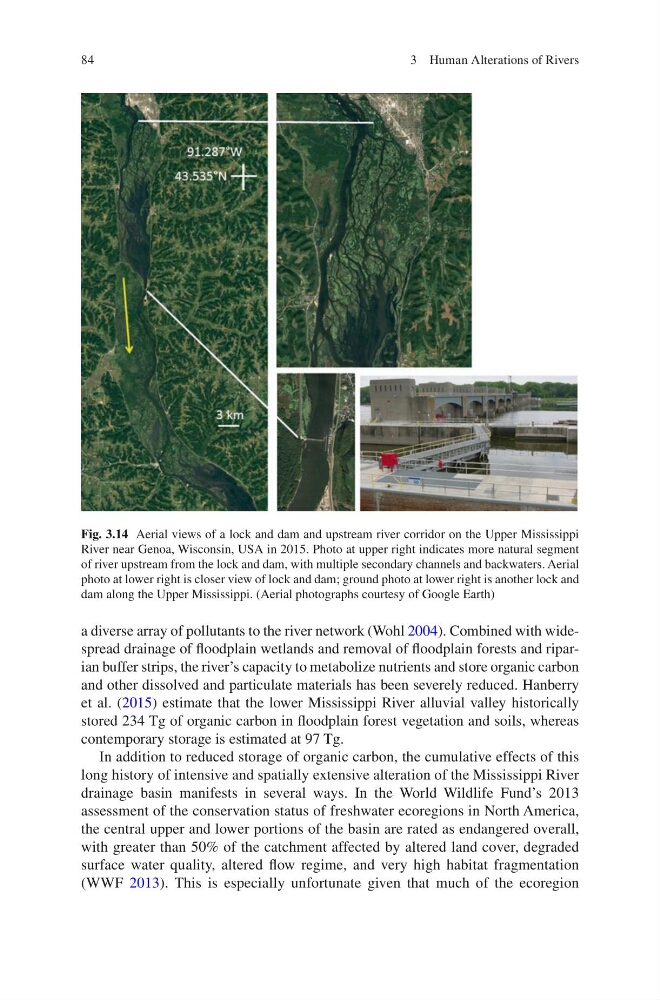
Fig. 3.14 Aerial views of a lock and dam and upstream river corridor on the Upper Mississippi
River near Genoa, Wisconsin, USA in 2015. Photo at upper right indicates more natural segment
of river upstream from the lock and dam, with multiple secondary channels and backwaters. Aerial
photo at lower right is closer view of lock and dam; ground photo at lower right is another lock and
dam along the Upper Mississippi. (Aerial photographs courtesy of Google Earth)
3 Human Alterations of Rivers
a diverse array of pollutants to the river network (Wohl 2004). Combined with widespread drainage of floodplain wetlands and removal of floodplain forests and riparian buffer strips, the river’s capacity to metabolize nutrients and store organic carbon
and other dissolved and particulate materials has been severely reduced. Hanberry
et al. (2015) estimate that the lower Mississippi River alluvial valley historically
stored 234 Tg of organic carbon in floodplain forest vegetation and soils, whereas
contemporary storage is estimated at 97 Tg.
In addition to reduced storage of organic carbon, the cumulative effects of this
long history of intensive and spatially extensive alteration of the Mississippi River
drainage basin manifests in several ways. In the World Wildlife Fund’s 2013
assessment of the conservation status of freshwater ecoregions in North America,
the central upper and lower portions of the basin are rated as endangered overall,
with greater than 50% of the catchment affected by altered land cover, degraded
surface water quality, altered flow regime, and very high habitat fragmentation
(WWF 2013). This is especially unfortunate given that much of the ecoregion
Fig. 3.14 Aerial views of a lock and dam and upstream river corridor on the Upper Mississippi
River near Genoa, Wisconsin, USA in 2015. Photo at upper right indicates more natural segment
of river upstream from the lock and dam, with multiple secondary channels and backwaters. Aerial
photo at lower right is closer view of lock and dam; ground photo at lower right is another lock and
dam along the Upper Mississippi. (Aerial photographs courtesy of Google Earth)
3 Human Alterations of Rivers