

23
fungi, protozoans, and micrometazoans (Lock et al. 1984) that coat solid surfaces
within the channel. These communities of tiny organisms create the slick surfaces
that make walking on the cobbles of a small river so challenging. Biofilms are of
particular importance because they drive crucial processes within river ecosystems,
including cycling of organic matter and primary production (Battin et al. 2016).
Environmental heterogeneity of substrate and hydraulics increases the diversity and
function of biofilms, providing an example of the interconnections between physical and biogeochemical processes in river ecosystems.
Macroinvertebrates include aquatic insects, crustaceans, mollusks, leeches,
amphipods, and nematodes, which collectively typically constitute 98% of the biomass within the channel (Ward 1992). Different macroinvertebrate communities
occupy the hyporheic zone, the streambed, the water column, and the air-water interface. Similarly, different species of fish, amphibians, or other aquatic organisms, or
different life stages of a single species, occupy different portions of the river corridor. Fish, for example, are commonly migratory on daily and seasonal timespans.
Primary consumers of organic matter in the floodplain include macroinvertebrates and fish that live within floodplain water bodies or migrate onto the floodplain during overbank flooding. Primary consumers also include species that live
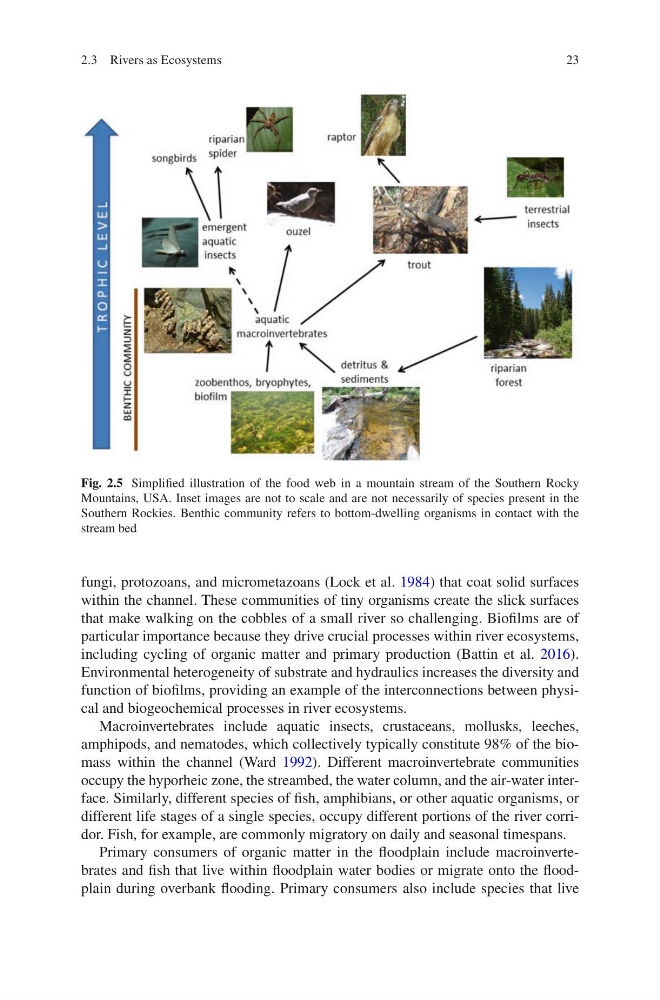
Fig. 2.5 Simplified illustration of the food web in a mountain stream of the Southern Rocky
Mountains, USA. Inset images are not to scale and are not necessarily of species present in the
Southern Rockies. Benthic community refers to bottom-dwelling organisms in contact with the
stream bed
2.3 Rivers as Ecosystems
fungi, protozoans, and micrometazoans (Lock et al. 1984) that coat solid surfaces
within the channel. These communities of tiny organisms create the slick surfaces
that make walking on the cobbles of a small river so challenging. Biofilms are of
particular importance because they drive crucial processes within river ecosystems,
including cycling of organic matter and primary production (Battin et al. 2016).
Environmental heterogeneity of substrate and hydraulics increases the diversity and
function of biofilms, providing an example of the interconnections between physical and biogeochemical processes in river ecosystems.
Macroinvertebrates include aquatic insects, crustaceans, mollusks, leeches,
amphipods, and nematodes, which collectively typically constitute 98% of the biomass within the channel (Ward 1992). Different macroinvertebrate communities
occupy the hyporheic zone, the streambed, the water column, and the air-water interface. Similarly, different species of fish, amphibians, or other aquatic organisms, or
different life stages of a single species, occupy different portions of the river corridor. Fish, for example, are commonly migratory on daily and seasonal timespans.
Primary consumers of organic matter in the floodplain include macroinvertebrates and fish that live within floodplain water bodies or migrate onto the floodplain during overbank flooding. Primary consumers also include species that live
Fig. 2.5 Simplified illustration of the food web in a mountain stream of the Southern Rocky
Mountains, USA. Inset images are not to scale and are not necessarily of species present in the
Southern Rockies. Benthic community refers to bottom-dwelling organisms in contact with the
stream bed
2.3 Rivers as Ecosystems