

17
transporting sediment supplied to the river corridor, sediment will accumulate along
the river, causing bed sedimentation, floodplain aggradation, or channel avulsion.
Sediment entering the river corridor can serve multiple functions. Sediment in
transport requires some minimum level of flow energy to remain mobile, but also
acts as a tool to erode the channel boundary through abrasion if the sediment is sand
sized or larger (Sklar and Dietrich 2004). High concentrations of suspended sediment can increase flow viscosity and dampen turbulence and erosion (Kuhnle
2013), and large amounts of coarse sediment supplied to the river corridor can
exceed river transport capacity and form a depositional layer that covers the bed and
protects it from erosion (Sklar and Dietrich 2004). Sediment can come from adjacent uplands and enter the river corridor in abrupt, episodic mass movements such
as landslides or debris flows (Benda 1990; Korup 2013). Sediment can also move
into the river corridor in a more gradual, diffuse fashion with widespread surface
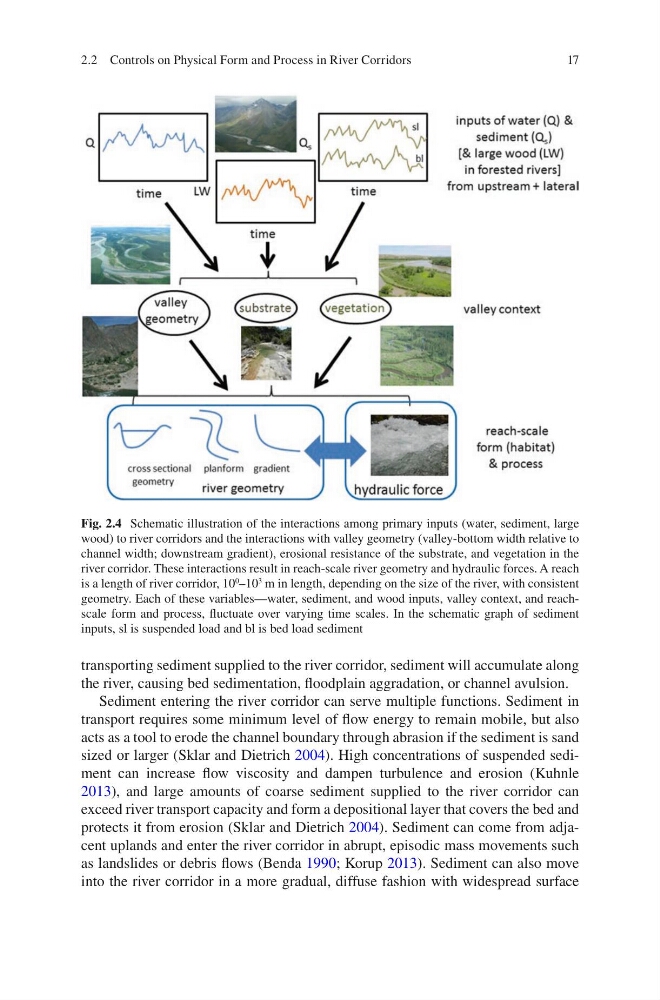
Fig. 2.4 Schematic illustration of the interactions among primary inputs (water, sediment, large
wood) to river corridors and the interactions with valley geometry (valley-bottom width relative to
channel width; downstream gradient), erosional resistance of the substrate, and vegetation in the
river corridor. These interactions result in reach-scale river geometry and hydraulic forces. A reach
is a length of river corridor, 10
0 –10
3
m in length, depending on the size of the river, with consistent
geometry. Each of these variables—water, sediment, and wood inputs, valley context, and reachscale form and process, fluctuate over varying time scales. In the schematic graph of sediment
inputs, sl is suspended load and bl is bed load sediment
2.2 Controls on Physical Form and Process in River Corridors
transporting sediment supplied to the river corridor, sediment will accumulate along
the river, causing bed sedimentation, floodplain aggradation, or channel avulsion.
Sediment entering the river corridor can serve multiple functions. Sediment in
transport requires some minimum level of flow energy to remain mobile, but also
acts as a tool to erode the channel boundary through abrasion if the sediment is sand
sized or larger (Sklar and Dietrich 2004). High concentrations of suspended sediment can increase flow viscosity and dampen turbulence and erosion (Kuhnle
2013), and large amounts of coarse sediment supplied to the river corridor can
exceed river transport capacity and form a depositional layer that covers the bed and
protects it from erosion (Sklar and Dietrich 2004). Sediment can come from adjacent uplands and enter the river corridor in abrupt, episodic mass movements such
as landslides or debris flows (Benda 1990; Korup 2013). Sediment can also move
into the river corridor in a more gradual, diffuse fashion with widespread surface
Fig. 2.4 Schematic illustration of the interactions among primary inputs (water, sediment, large
wood) to river corridors and the interactions with valley geometry (valley-bottom width relative to
channel width; downstream gradient), erosional resistance of the substrate, and vegetation in the
river corridor. These interactions result in reach-scale river geometry and hydraulic forces. A reach
is a length of river corridor, 10
0 –10
3
m in length, depending on the size of the river, with consistent
geometry. Each of these variables—water, sediment, and wood inputs, valley context, and reachscale form and process, fluctuate over varying time scales. In the schematic graph of sediment
inputs, sl is suspended load and bl is bed load sediment
2.2 Controls on Physical Form and Process in River Corridors