

115
‘Beads’ was first used in connection with rivers by Stanford et al. (1996), who
describe floodplains in bedrock canyons as resembling beads on a string when
viewed in planform. Beads are the relatively wide, low gradient river segments with
well-developed floodplains. Strings are the intervening steep, narrow segments with
minimal floodplains. The pattern of longitudinal variations in valley and channel
geometry is quite common along many rivers and has been used in the Upper
Mississippi and Illinois River basins in the United States to target sites for restoration. Beads tend to be especially ecologically rich: these segments provide more
abundant and diverse channel and floodplain habitat, have greater hyporheic
exchange, and support greater biodiversity (Bellmore and Baxter 2014; Hauer et al.
2016). Beads are also agriculturally rich sites with intensive land use, but individual
beads can be acquired and restored by notching levees and allowing riparian water
tables to rise and native plant communities to regrow (Florsheim and Mount 2002).
The spatially limited characteristics of beads makes it more feasible to acquire them
for national wildlife refuges such as the Upper Mississippi River National Fish and
Wildlife Refuge or private reserves such as The Nature Conservancy’s Spunky
Bottoms and Emiquon preserves on the Illinois River. Although the beads are of
limited spatial extent, the cumulative effect of restoring multiple beads throughout
a river network can substantially increase ecosystem services (Stanford et al. 1996;
Galat et al. 1998).
Integrative planning that considers changes through time is equally important for
at least three reasons. First, river networks can require centuries to recover from
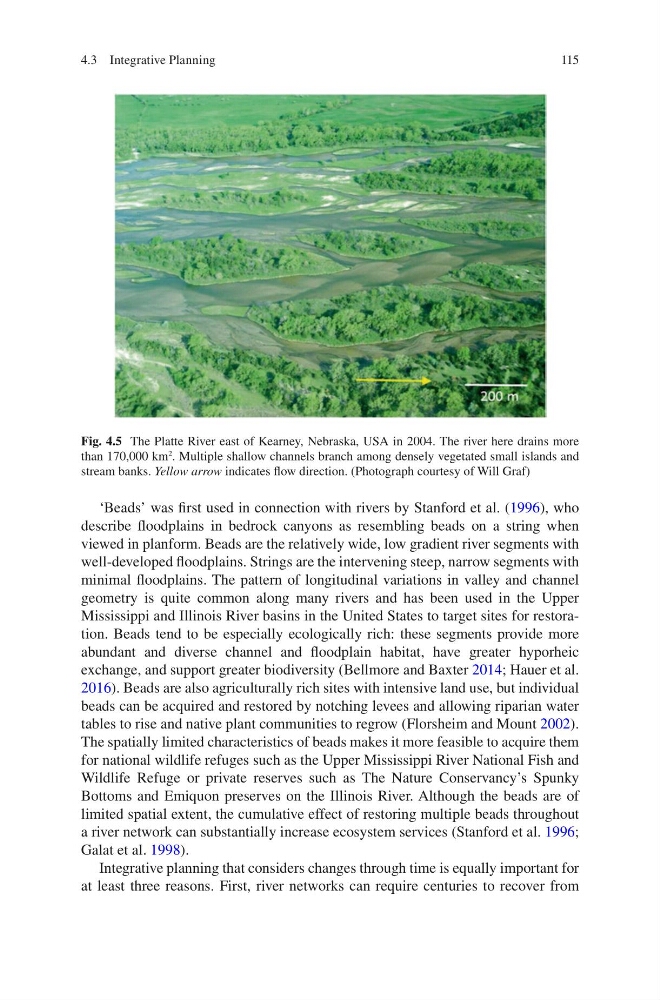
Fig. 4.5 The Platte River east of Kearney, Nebraska, USA in 2004. The river here drains more
than 170,000 km
2 . Multiple shallow channels branch among densely vegetated small islands and
stream banks. Yellow arrow indicates flow direction. (Photograph courtesy of Will Graf)
4.3 Integrative Planning
‘Beads’ was first used in connection with rivers by Stanford et al. (1996), who
describe floodplains in bedrock canyons as resembling beads on a string when
viewed in planform. Beads are the relatively wide, low gradient river segments with
well-developed floodplains. Strings are the intervening steep, narrow segments with
minimal floodplains. The pattern of longitudinal variations in valley and channel
geometry is quite common along many rivers and has been used in the Upper
Mississippi and Illinois River basins in the United States to target sites for restoration. Beads tend to be especially ecologically rich: these segments provide more
abundant and diverse channel and floodplain habitat, have greater hyporheic
exchange, and support greater biodiversity (Bellmore and Baxter 2014; Hauer et al.
2016). Beads are also agriculturally rich sites with intensive land use, but individual
beads can be acquired and restored by notching levees and allowing riparian water
tables to rise and native plant communities to regrow (Florsheim and Mount 2002).
The spatially limited characteristics of beads makes it more feasible to acquire them
for national wildlife refuges such as the Upper Mississippi River National Fish and
Wildlife Refuge or private reserves such as The Nature Conservancy’s Spunky
Bottoms and Emiquon preserves on the Illinois River. Although the beads are of
limited spatial extent, the cumulative effect of restoring multiple beads throughout
a river network can substantially increase ecosystem services (Stanford et al. 1996;
Galat et al. 1998).
Integrative planning that considers changes through time is equally important for
at least three reasons. First, river networks can require centuries to recover from
Fig. 4.5 The Platte River east of Kearney, Nebraska, USA in 2004. The river here drains more
than 170,000 km
2 . Multiple shallow channels branch among densely vegetated small islands and
stream banks. Yellow arrow indicates flow direction. (Photograph courtesy of Will Graf)
4.3 Integrative Planning