

109
agricultural chemicals in runoff. Restoration of channelized streams includes remeandering (Wade et al. 2002; Lorenz et al. 2009) by artificially creating a sinuous
channel that is then allowed to adjust to some degree. Restoration can also involve
cessation of dredging and bank stabilization (Rhoads and Herricks 1996). These
activities can result in limited restoration of ecological function, but continued
inputs of contaminants may limit the ecological benefits of reconfiguration activities (Roley et al. 2012). Reduction or elimination of riparian grazing in agricultural
areas has been a particularly successful approach to restoring diverse riparian vegetation, stream bank stability, water quality, and aquatic communities (Rhodes et al.
2007; Hickford and Schiel 2014). Reintroduction of wood in agricultural streams
with historically forested catchments can enhance macroinvertebrate and fish diversity, increase sediment and organic matter storage, and improve bed and bank stability (Lester and Boulton 2008).
Restoration on medium-sized to large rivers can involve reconfiguration that creates reconnection, such as levee setbacks or notching (Florsheim and Mount 2002;
Hughes and Rood 2003; Zhang and Mitsch 2007; Konrad et al. 2008; Marks et al.
2014; Nakamura et al. 2014). Removal of structures that block access to secondary
channels or creating structures to block flow from channelized sections and redirect
flow toward naturally created meanders (Koebel and Bousquin 2014) can also
reconnect river corridors. Removing dams (Major et al. 2012; Wilcox et al. 2014;
East et al. 2015; O’Connor et al. 2015) or changing water and sediment releases
from the dam (Galat et al. 1998; Ortlepp and Murle 2003; Konrad et al. 2011; Melis
2011; Flessa et al. 2013; Mueller et al. 2014) can strongly increase longitudinal
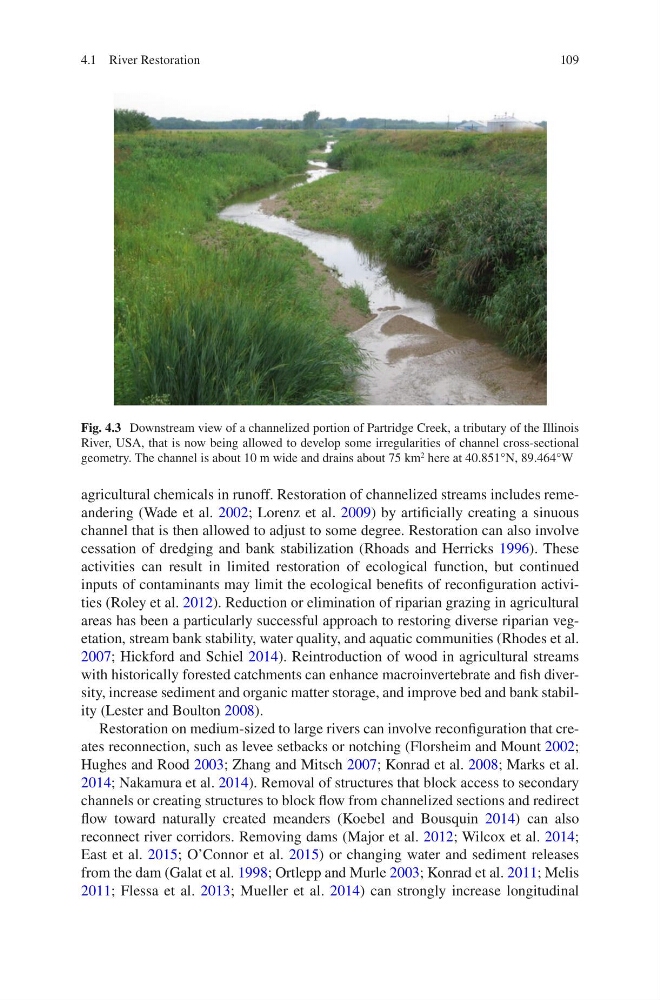
Fig. 4.3 Downstream view of a channelized portion of Partridge Creek, a tributary of the Illinois
River, USA, that is now being allowed to develop some irregularities of channel cross-sectional
geometry. The channel is about 10 m wide and drains about 75 km
2 here at 40.851°N, 89.464°W
4.1 River Restoration
agricultural chemicals in runoff. Restoration of channelized streams includes remeandering (Wade et al. 2002; Lorenz et al. 2009) by artificially creating a sinuous
channel that is then allowed to adjust to some degree. Restoration can also involve
cessation of dredging and bank stabilization (Rhoads and Herricks 1996). These
activities can result in limited restoration of ecological function, but continued
inputs of contaminants may limit the ecological benefits of reconfiguration activities (Roley et al. 2012). Reduction or elimination of riparian grazing in agricultural
areas has been a particularly successful approach to restoring diverse riparian vegetation, stream bank stability, water quality, and aquatic communities (Rhodes et al.
2007; Hickford and Schiel 2014). Reintroduction of wood in agricultural streams
with historically forested catchments can enhance macroinvertebrate and fish diversity, increase sediment and organic matter storage, and improve bed and bank stability (Lester and Boulton 2008).
Restoration on medium-sized to large rivers can involve reconfiguration that creates reconnection, such as levee setbacks or notching (Florsheim and Mount 2002;
Hughes and Rood 2003; Zhang and Mitsch 2007; Konrad et al. 2008; Marks et al.
2014; Nakamura et al. 2014). Removal of structures that block access to secondary
channels or creating structures to block flow from channelized sections and redirect
flow toward naturally created meanders (Koebel and Bousquin 2014) can also
reconnect river corridors. Removing dams (Major et al. 2012; Wilcox et al. 2014;
East et al. 2015; O’Connor et al. 2015) or changing water and sediment releases
from the dam (Galat et al. 1998; Ortlepp and Murle 2003; Konrad et al. 2011; Melis
2011; Flessa et al. 2013; Mueller et al. 2014) can strongly increase longitudinal
Fig. 4.3 Downstream view of a channelized portion of Partridge Creek, a tributary of the Illinois
River, USA, that is now being allowed to develop some irregularities of channel cross-sectional
geometry. The channel is about 10 m wide and drains about 75 km
2 here at 40.851°N, 89.464°W
4.1 River Restoration