

U sing Phages for Characterization of Effluent Quality in a Stabilization Pond
423
higher than for the other ponds. It is probable that the less difference in
temperature between winter and summer, in this pond it does not show a clear
effect of this parameter in microorganisms removal. The main cause of microbial
removal in these ponds is probably the adsorption onto the settling solids (Almasi
and Pescod, 1996).
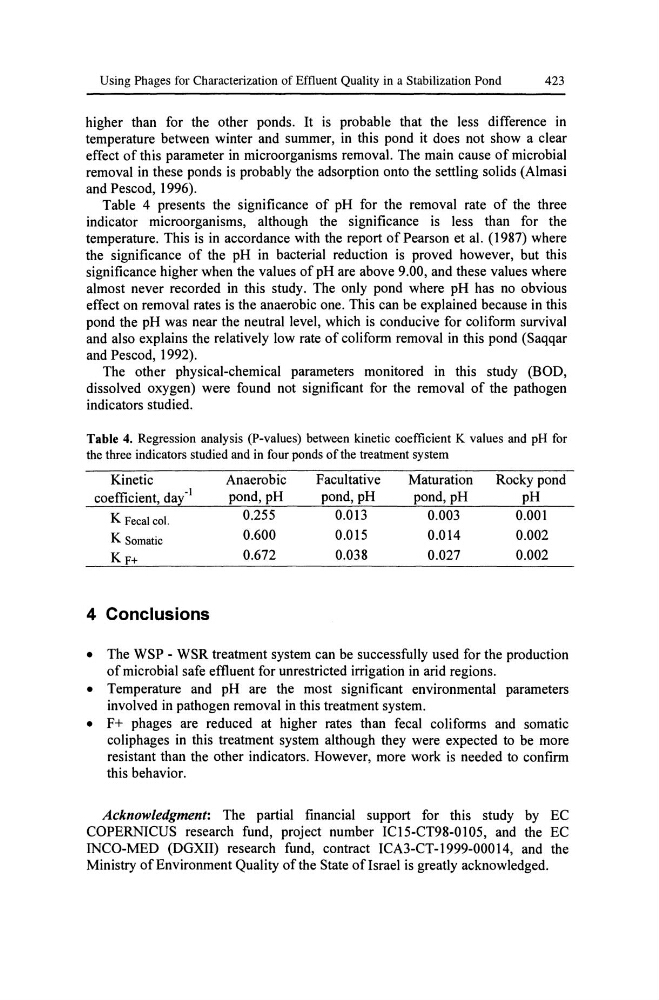
Table 4 presents the significance of pH for the removal rate of the three
indicator microorganisms, although the significance is less than for the
temperature. This is in accordance with the report of Pearson et al. (1987) where
the significance of the pH in bacterial reduction is proved however, but this
significance higher when the values of pH are above 9.00, and these values where
almost never recorded in this study. The only pond where pH has no obvious
effect on removal rates is the anaerobic one. This can be explained because in this
pond the pH was near the neutral level, which is conducive for coliform survival
and also explains the relatively low rate of coliform removal in this pond (Saqqar
and Pescod, 1992).
The other physical-chemical parameters monitored in this study (BOD,
dissolved oxygen) were found not significant for the removal of the pathogen
indicators studied.
Table 4. Regression analysis (P-values) between kinetic coefficient K values and pH for
the three indicators studied and in four ponds of the treatment system
Kinetic
Anaerobic
Facultative
Maturation
Rocky pond
coefficient, day
-\
pond, pH
pond, pH
pond, pH
pH
K Fecal col.
0.255
0.013
0.003
0.001
K Somatic
0.600
0.015
0.014
0.002
KF+
0.672
0.038
0.027
0.002
4 Conclusions
• The WSP - WSR treatment system can be successfully used for the production
of microbial safe effluent for unrestricted irrigation in arid regions.
• Temperature and pH are the most significant environmental parameters
involved in pathogen removal in this treatment system.
• F+ phages are reduced at higher rates than fecal coliforms and somatic
coliphages in this treatment system although they were expected to be more
resistant than the other indicators. However, more work is needed to confirm
this behavior.
Acknowledgment: The partial financial support for this study by EC
COPERNICUS research fund, project number IC15-CT98-0105, and the EC
INCO-MED (DGXII) research fund, contract ICA3-CT-1999-00014, and the
Ministry of Environment Quality of the State ofIsrael is greatly acknowledged.
423
higher than for the other ponds. It is probable that the less difference in
temperature between winter and summer, in this pond it does not show a clear
effect of this parameter in microorganisms removal. The main cause of microbial
removal in these ponds is probably the adsorption onto the settling solids (Almasi
and Pescod, 1996).
Table 4 presents the significance of pH for the removal rate of the three
indicator microorganisms, although the significance is less than for the
temperature. This is in accordance with the report of Pearson et al. (1987) where
the significance of the pH in bacterial reduction is proved however, but this
significance higher when the values of pH are above 9.00, and these values where
almost never recorded in this study. The only pond where pH has no obvious
effect on removal rates is the anaerobic one. This can be explained because in this
pond the pH was near the neutral level, which is conducive for coliform survival
and also explains the relatively low rate of coliform removal in this pond (Saqqar
and Pescod, 1992).
The other physical-chemical parameters monitored in this study (BOD,
dissolved oxygen) were found not significant for the removal of the pathogen
indicators studied.
Table 4. Regression analysis (P-values) between kinetic coefficient K values and pH for
the three indicators studied and in four ponds of the treatment system
Kinetic
Anaerobic
Facultative
Maturation
Rocky pond
coefficient, day
-\
pond, pH
pond, pH
pond, pH
pH
K Fecal col.
0.255
0.013
0.003
0.001
K Somatic
0.600
0.015
0.014
0.002
KF+
0.672
0.038
0.027
0.002
4 Conclusions
• The WSP - WSR treatment system can be successfully used for the production
of microbial safe effluent for unrestricted irrigation in arid regions.
• Temperature and pH are the most significant environmental parameters
involved in pathogen removal in this treatment system.
• F+ phages are reduced at higher rates than fecal coliforms and somatic
coliphages in this treatment system although they were expected to be more
resistant than the other indicators. However, more work is needed to confirm
this behavior.
Acknowledgment: The partial financial support for this study by EC
COPERNICUS research fund, project number IC15-CT98-0105, and the EC
INCO-MED (DGXII) research fund, contract ICA3-CT-1999-00014, and the
Ministry of Environment Quality of the State ofIsrael is greatly acknowledged.