

Chemical Pre-Treatment of Sewage - A Cost-Benefit Method
383
case, in spite of the removal rate being 75%, residual concentration remained high.
However, in most of the cases, residual CODer values were less than 200 mgrl.
The residual BODs concentrations changed in the range of 100 - 120 mgr 1 (Fig.
5). Consequently, in general the residual organic content exceeded the required
concentration by only a few times.
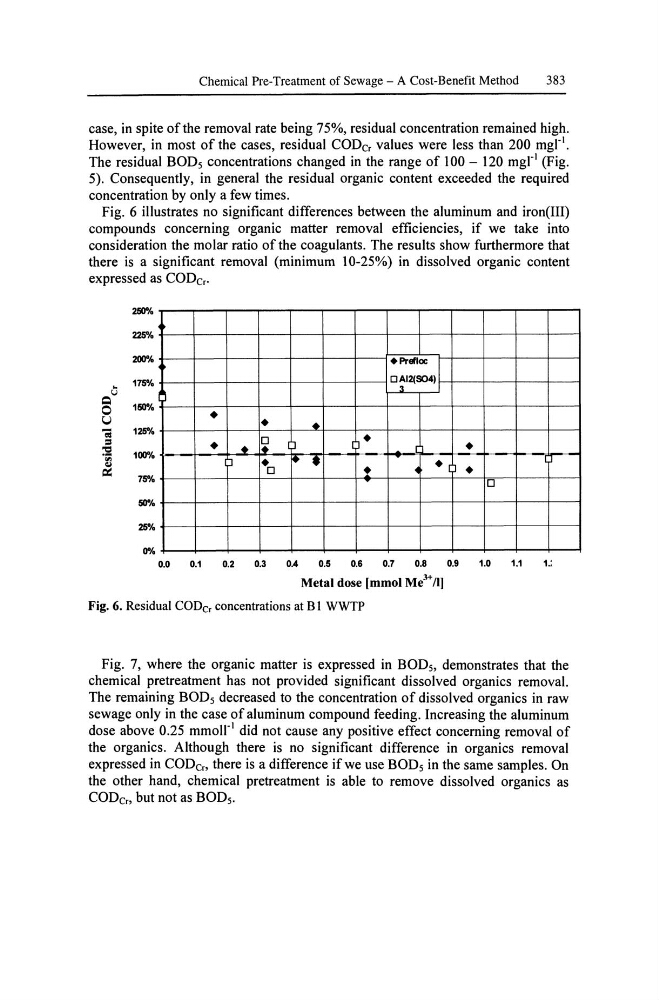
Fig. 6 illustrates no significant differences between the aluminum and iron(III)
compounds concerning organic matter removal efficiencies, if we take into
consideration the molar ratio of the coagulants. The results show furthermore that
there is a significant removal (minimum 10-25%) in dissolved organic content
expressed as CODer.
250%
225%
200"k
U
175%
+Prefloc \ I
D~I2(S04)
§ 150%
U
-;
125%
=
:s!
100"/.
'" ~
CII::
75%
• • •
• • ~
]
~.
r
•
~
• • •
• ~ .
;r
0
•
~
0
50%
25%
0%
0.0
0.1
0.2
0.3
0.4
0.5
0.6
0.7
0.8
0.9
1.0
1.1
1.:
Metal dose [mmol Me 3 +/l1
Fig. 6. Residual CODer concentrations at B I WWTP
Fig. 7, where the organic matter is expressed in BODs, demonstrates that the
chemical pretreatment has not provided significant dissolved organics removal.
The remaining BODs decreased to the concentration of dissolved organics in raw
sewage only in the case of aluminum compound feeding. Increasing the aluminum
dose above 0.25 mmolr 1 did not cause any positive effect concerning removal of
the organics. Although there is no significant difference in organics removal
expressed in CODe" there is a difference if we use BODs in the same samples. On
the other hand, chemical pretreatment is able to remove dissolved organics as
CODe" but not as BODs.
383
case, in spite of the removal rate being 75%, residual concentration remained high.
However, in most of the cases, residual CODer values were less than 200 mgrl.
The residual BODs concentrations changed in the range of 100 - 120 mgr 1 (Fig.
5). Consequently, in general the residual organic content exceeded the required
concentration by only a few times.
Fig. 6 illustrates no significant differences between the aluminum and iron(III)
compounds concerning organic matter removal efficiencies, if we take into
consideration the molar ratio of the coagulants. The results show furthermore that
there is a significant removal (minimum 10-25%) in dissolved organic content
expressed as CODer.
250%
225%
200"k
U
175%
+Prefloc \ I
D~I2(S04)
§ 150%
U
-;
125%
=
:s!
100"/.
'" ~
CII::
75%
• • •
• • ~
]
~.
r
•
~
• • •
• ~ .
;r
0
•
~
0
50%
25%
0%
0.0
0.1
0.2
0.3
0.4
0.5
0.6
0.7
0.8
0.9
1.0
1.1
1.:
Metal dose [mmol Me 3 +/l1
Fig. 6. Residual CODer concentrations at B I WWTP
Fig. 7, where the organic matter is expressed in BODs, demonstrates that the
chemical pretreatment has not provided significant dissolved organics removal.
The remaining BODs decreased to the concentration of dissolved organics in raw
sewage only in the case of aluminum compound feeding. Increasing the aluminum
dose above 0.25 mmolr 1 did not cause any positive effect concerning removal of
the organics. Although there is no significant difference in organics removal
expressed in CODe" there is a difference if we use BODs in the same samples. On
the other hand, chemical pretreatment is able to remove dissolved organics as
CODe" but not as BODs.