

368
W. Neubrand et al.
membrane fouling and performance loss at the beginning. This has been met by
optimization of pretreatment (flocculation) and an adapted cleaning strategy.
The recovery ratio of the NF varies in the range of 50 - 65%. Similar values
have been obtained for a greywater system based on reverse osmosis (Plum
1997).
6.4 Economic Aspects
Although the main objective of the overall project is environmentally sustainable
housing, economic consideration is important. Both sites were installed in an
urban region with a rather high cost for water and sewerage of around 2.5 - 3
Euro.
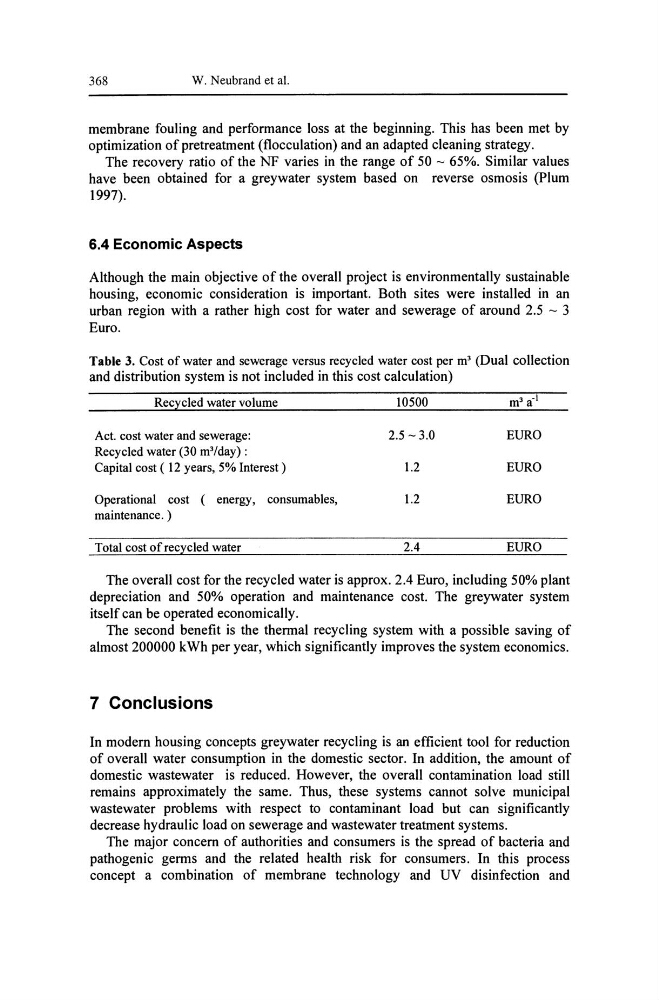
Table 3. Cost of water and sewerage versus recycled water cost per m 3 (Dual collection
and distribution system is not included in this cost calculation)
Recycled water volume
Act. cost water and sewerage:
Recycled water (30 m 3 /day) :
Capital cost ( 12 years, 5% Interest)
Operational cost ( energy, consumables,
maintenance. )
Total cost of recycled water
10500
2.5 - 3.0
EURO
1.2
EURO
1.2
EURO
2.4
EURO
The overall cost for the recycled water is approx. 2.4 Euro, including 50% plant
depreciation and 50% operation and maintenance cost. The greywater system
itself can be operated economically.
The second benefit is the thermal recycling system with a possible saving of
almost 200000 kWh per year, which significantly improves the system economics.
7 Conclusions
In modem housing concepts greywater recycling is an efficient tool for reduction
of overall water consumption in the domestic sector. In addition, the amount of
domestic wastewater is reduced. However, the overall contamination load still
remains approximately the same. Thus, these systems cannot solve municipal
wastewater problems with respect to contaminant load but can significantly
decrease hydraulic load on sewerage and wastewater treatment systems.
The major concern of authorities and consumers is the spread of bacteria and
pathogenic germs and the related health risk for consumers. In this process
concept a combination of membrane technology and UV disinfection and
W. Neubrand et al.
membrane fouling and performance loss at the beginning. This has been met by
optimization of pretreatment (flocculation) and an adapted cleaning strategy.
The recovery ratio of the NF varies in the range of 50 - 65%. Similar values
have been obtained for a greywater system based on reverse osmosis (Plum
1997).
6.4 Economic Aspects
Although the main objective of the overall project is environmentally sustainable
housing, economic consideration is important. Both sites were installed in an
urban region with a rather high cost for water and sewerage of around 2.5 - 3
Euro.
Table 3. Cost of water and sewerage versus recycled water cost per m 3 (Dual collection
and distribution system is not included in this cost calculation)
Recycled water volume
Act. cost water and sewerage:
Recycled water (30 m 3 /day) :
Capital cost ( 12 years, 5% Interest)
Operational cost ( energy, consumables,
maintenance. )
Total cost of recycled water
10500
2.5 - 3.0
EURO
1.2
EURO
1.2
EURO
2.4
EURO
The overall cost for the recycled water is approx. 2.4 Euro, including 50% plant
depreciation and 50% operation and maintenance cost. The greywater system
itself can be operated economically.
The second benefit is the thermal recycling system with a possible saving of
almost 200000 kWh per year, which significantly improves the system economics.
7 Conclusions
In modem housing concepts greywater recycling is an efficient tool for reduction
of overall water consumption in the domestic sector. In addition, the amount of
domestic wastewater is reduced. However, the overall contamination load still
remains approximately the same. Thus, these systems cannot solve municipal
wastewater problems with respect to contaminant load but can significantly
decrease hydraulic load on sewerage and wastewater treatment systems.
The major concern of authorities and consumers is the spread of bacteria and
pathogenic germs and the related health risk for consumers. In this process
concept a combination of membrane technology and UV disinfection and