

364
W. Neubrand et al.
collected because of frequent oil and grease content. In addition, also a dual
distribution system for toilet flush is required.
The hydraulic design of the system has to manage the imbalance between
greywater "production" and recycled water consumption. Thus, buffer tanks are
included for greywater and recycled water.
Greywater also provides a potential for heat recovery. Usually this kind of
wastewater has a temperature of 25 - 30°C. The water-recycling system has thus
been combined with a heat-recovery system.
HeatTo Boiler
Recycled
Water
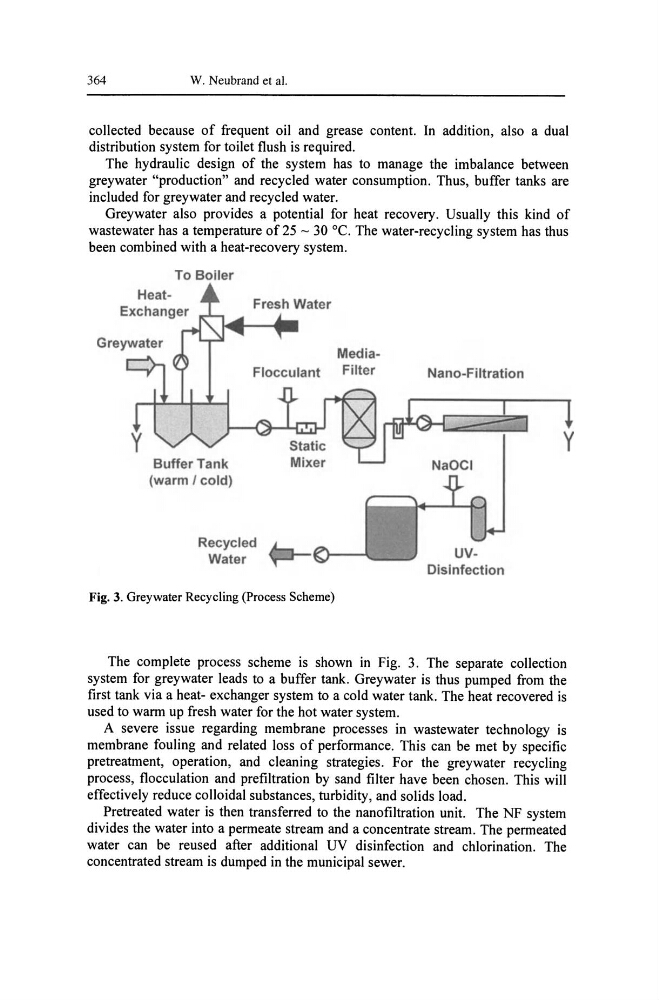
Fig. 3. Greywater Recycling (Process Scheme)
MediaFilter
Nano-Filtration
The complete process scheme is shown in Fig. 3. The separate collection
system for greywater leads to a buffer tank. Greywater is thus pumped from the
first tank via a heat- exchanger system to a cold water tank. The heat recovered is
used to warm up fresh water for the hot water system.
A severe issue regarding membrane processes in wastewater technology is
membrane fouling and related loss of performance. This can be met by specific
pretreatment, operation, and cleaning strategies. For the greywater recycling
process, flocculation and prefiltration by sand filter have been chosen. This will
effectively reduce colloidal substances, turbidity, and solids load.
Pretreated water is then transferred to the nanofiltration unit. The NF system
divides the water into a permeate stream and a concentrate stream. The permeated
water can be reused after additional UV disinfection and chlorination. The
concentrated stream is dumped in the municipal sewer.
W. Neubrand et al.
collected because of frequent oil and grease content. In addition, also a dual
distribution system for toilet flush is required.
The hydraulic design of the system has to manage the imbalance between
greywater "production" and recycled water consumption. Thus, buffer tanks are
included for greywater and recycled water.
Greywater also provides a potential for heat recovery. Usually this kind of
wastewater has a temperature of 25 - 30°C. The water-recycling system has thus
been combined with a heat-recovery system.
HeatTo Boiler
Recycled
Water
Fig. 3. Greywater Recycling (Process Scheme)
MediaFilter
Nano-Filtration
The complete process scheme is shown in Fig. 3. The separate collection
system for greywater leads to a buffer tank. Greywater is thus pumped from the
first tank via a heat- exchanger system to a cold water tank. The heat recovered is
used to warm up fresh water for the hot water system.
A severe issue regarding membrane processes in wastewater technology is
membrane fouling and related loss of performance. This can be met by specific
pretreatment, operation, and cleaning strategies. For the greywater recycling
process, flocculation and prefiltration by sand filter have been chosen. This will
effectively reduce colloidal substances, turbidity, and solids load.
Pretreated water is then transferred to the nanofiltration unit. The NF system
divides the water into a permeate stream and a concentrate stream. The permeated
water can be reused after additional UV disinfection and chlorination. The
concentrated stream is dumped in the municipal sewer.