

342
N.r. Oatil and Y. Levinsky
FROM AERATED PONDS > FIXED FILM
.
INTENSIVE
BIOTREATMENT
REcmCULARED
COOLING
1..o< .. ~''V'o.''''-_1
SYSTEM
(RCS)
CHEMICAL
CLARIFICA nON
and
SOFTENING
(CCS2)
BIOSOLIDS
SEPARATION
FILTRATION
CONCENTRATEI REVERSE I
T~ THE
. OSMOSIS. I------------..!.....'::T:-:::O""S=T"'E,...,.A~M:--··
SEA
PRODUCTION
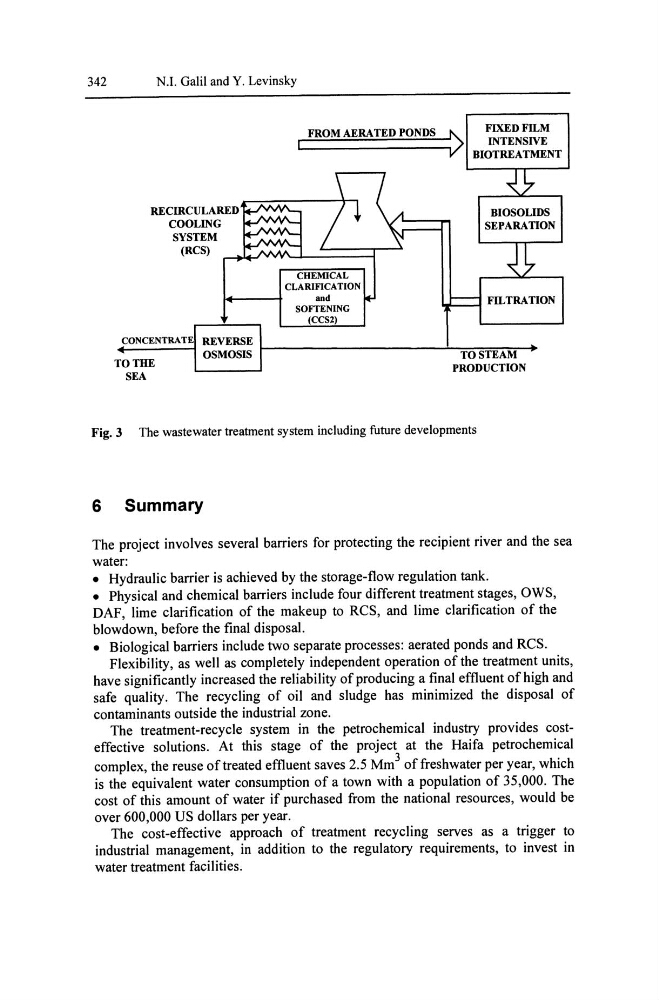
Fig. 3 The wastewater treatment system including future developments
6 Summary
The project involves several barriers for protecting the recipient river and the sea
water:
• Hydraulic barrier is achieved by the storage-flow regulation tank.
• Physical and chemical barriers include four different treatment stages, OWS,
DAF, lime clarification of the makeup to RCS, and lime clarification of the
blowdown, before the final disposal.
• Biological barriers include two separate processes: aerated ponds and RCS.
Flexibility, as well as completely independent operation of the treatment units,
have significantly increased the reliability of producing a final effluent of high and
safe quality. The recycling of oil and sludge has minimized the disposal of
contaminants outside the industrial zone.
The treatment-recycle system in the petrochemical industry provides costeffective solutions. At this stage of the project at the Haifa petrochemical
complex, the reuse of treated effluent saves 2.5 Mm 3 of freshwater per year, which
is the equivalent water consumption of a town with a population of 35,000. The
cost of this amount of water if purchased from the national resources, would be
over 600,000 US dollars per year.
The cost-effective approach of treatment recycling serves as a trigger to
industrial management, in addition to the regulatory requirements, to invest in
water treatment facilities.
N.r. Oatil and Y. Levinsky
FROM AERATED PONDS > FIXED FILM
.
INTENSIVE
BIOTREATMENT
REcmCULARED
COOLING
1..o< .. ~''V'o.''''-_1
SYSTEM
(RCS)
CHEMICAL
CLARIFICA nON
and
SOFTENING
(CCS2)
BIOSOLIDS
SEPARATION
FILTRATION
CONCENTRATEI REVERSE I
T~ THE
. OSMOSIS. I------------..!.....'::T:-:::O""S=T"'E,...,.A~M:--··
SEA
PRODUCTION
Fig. 3 The wastewater treatment system including future developments
6 Summary
The project involves several barriers for protecting the recipient river and the sea
water:
• Hydraulic barrier is achieved by the storage-flow regulation tank.
• Physical and chemical barriers include four different treatment stages, OWS,
DAF, lime clarification of the makeup to RCS, and lime clarification of the
blowdown, before the final disposal.
• Biological barriers include two separate processes: aerated ponds and RCS.
Flexibility, as well as completely independent operation of the treatment units,
have significantly increased the reliability of producing a final effluent of high and
safe quality. The recycling of oil and sludge has minimized the disposal of
contaminants outside the industrial zone.
The treatment-recycle system in the petrochemical industry provides costeffective solutions. At this stage of the project at the Haifa petrochemical
complex, the reuse of treated effluent saves 2.5 Mm 3 of freshwater per year, which
is the equivalent water consumption of a town with a population of 35,000. The
cost of this amount of water if purchased from the national resources, would be
over 600,000 US dollars per year.
The cost-effective approach of treatment recycling serves as a trigger to
industrial management, in addition to the regulatory requirements, to invest in
water treatment facilities.