

Integrated Water Resources Management (IWRM) for the Preservation
203
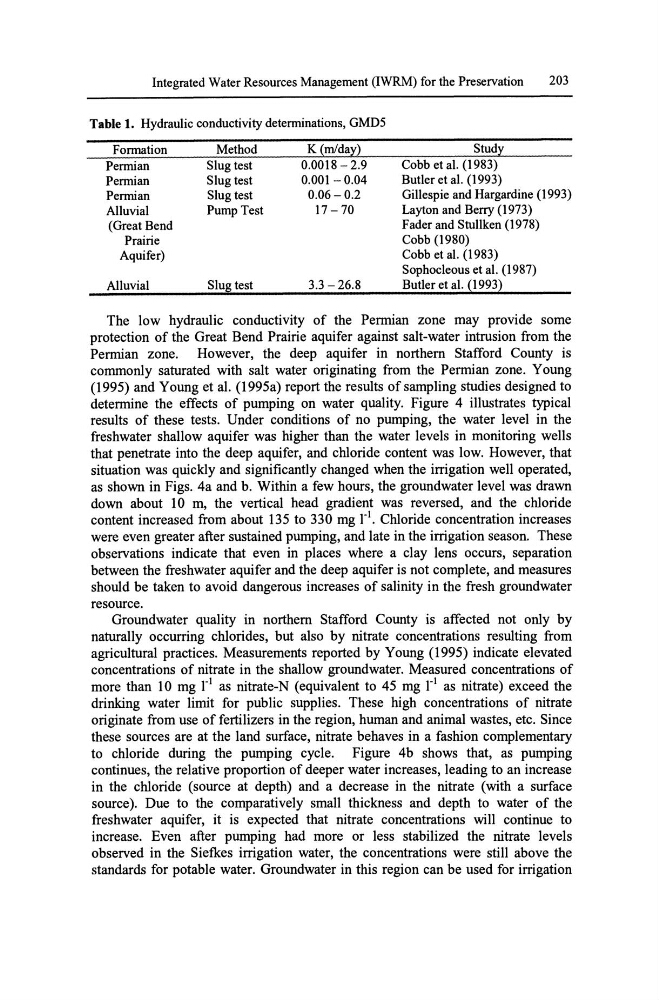
Table 1. Hydraulic conductivity determinations, GMD5
Formation
Method
K(m/dax}
Studr
Permian
Slug test
0.0018 - 2.9
Cobb et al. (1983)
Permian
Slug test
0.001 - 0.04
Butler et al. (1993)
Permian
Slug test
0.06 - 0.2
Gillespie and Hargardine (1993)
Alluvial
Pump Test
17 -70
Layton and Berry (1973)
(Great Bend
Fader and Stullken (1978)
Prairie
Cobb (1980)
Aquifer)
Cobb et al. (1983)
Sophoc1eous et al. (1987)
Alluvial
Slug test
3.3 -26.8
Butler et al. (1993)
The low hydraulic conductivity of the Permian zone may provide some
protection of the Great Bend Prairie aquifer against salt-water intrusion from the
Permian zone. However, the deep aquifer in northern Stafford County is
commonly saturated with salt water originating from the Permian zone. Young
(1995) and Young et al. (1995a) report the results of sampling studies designed to
determine the effects of pumping on water quality. Figure 4 illustrates typical
results of these tests. Under conditions of no pumping, the water level in the
freshwater shallow aquifer was higher than the water levels in monitoring wells
that penetrate into the deep aquifer, and chloride content was low. However, that
situation was quickly and significantly changed when the irrigation well operated,
as shown in Figs. 4a and b. Within a few hours, the groundwater level was drawn
down about 10m, the vertical head gradient was reversed, and the chloride
content increased from about 135 to 330 mg rl. Chloride concentration increases
were even greater after sustained pumping, and late in the irrigation season. These
observations indicate that even in places where a clay lens occurs, separation
between the freshwater aquifer and the deep aquifer is not complete, and measures
should be taken to avoid dangerous increases of salinity in the fresh groundwater
resource.
Groundwater quality in northern Stafford County is affected not only by
naturally occurring chlorides, but also by nitrate concentrations reSUlting from
agricultural practices. Measurements reported by Young (1995) indicate elevated
concentrations of nitrate in the shallow groundwater. Measured concentrations of
more than 10 mg rl as nitrate-N (equivalent to 45 mg rl as nitrate) exceed the
drinking water limit for public supplies. These high concentrations of nitrate
originate from use of fertilizers in the region, human and animal wastes, etc. Since
these sources are at the land surface, nitrate behaves in a fashion complementary
to chloride during the pumping cycle. Figure 4b shows that, as pumping
continues, the relative proportion of deeper water increases, leading to an increase
in the chloride (source at depth) and a decrease in the nitrate (with a surface
source). Due to the comparatively small thickness and depth to water of the
freshwater aquifer, it is expected that nitrate concentrations will continue to
increase. Even after pumping had more or less stabilized the nitrate levels
observed in the Siefkes irrigation water, the concentrations were still above the
standards for potable water. Groundwater in this region can be used for irrigation
203
Table 1. Hydraulic conductivity determinations, GMD5
Formation
Method
K(m/dax}
Studr
Permian
Slug test
0.0018 - 2.9
Cobb et al. (1983)
Permian
Slug test
0.001 - 0.04
Butler et al. (1993)
Permian
Slug test
0.06 - 0.2
Gillespie and Hargardine (1993)
Alluvial
Pump Test
17 -70
Layton and Berry (1973)
(Great Bend
Fader and Stullken (1978)
Prairie
Cobb (1980)
Aquifer)
Cobb et al. (1983)
Sophoc1eous et al. (1987)
Alluvial
Slug test
3.3 -26.8
Butler et al. (1993)
The low hydraulic conductivity of the Permian zone may provide some
protection of the Great Bend Prairie aquifer against salt-water intrusion from the
Permian zone. However, the deep aquifer in northern Stafford County is
commonly saturated with salt water originating from the Permian zone. Young
(1995) and Young et al. (1995a) report the results of sampling studies designed to
determine the effects of pumping on water quality. Figure 4 illustrates typical
results of these tests. Under conditions of no pumping, the water level in the
freshwater shallow aquifer was higher than the water levels in monitoring wells
that penetrate into the deep aquifer, and chloride content was low. However, that
situation was quickly and significantly changed when the irrigation well operated,
as shown in Figs. 4a and b. Within a few hours, the groundwater level was drawn
down about 10m, the vertical head gradient was reversed, and the chloride
content increased from about 135 to 330 mg rl. Chloride concentration increases
were even greater after sustained pumping, and late in the irrigation season. These
observations indicate that even in places where a clay lens occurs, separation
between the freshwater aquifer and the deep aquifer is not complete, and measures
should be taken to avoid dangerous increases of salinity in the fresh groundwater
resource.
Groundwater quality in northern Stafford County is affected not only by
naturally occurring chlorides, but also by nitrate concentrations reSUlting from
agricultural practices. Measurements reported by Young (1995) indicate elevated
concentrations of nitrate in the shallow groundwater. Measured concentrations of
more than 10 mg rl as nitrate-N (equivalent to 45 mg rl as nitrate) exceed the
drinking water limit for public supplies. These high concentrations of nitrate
originate from use of fertilizers in the region, human and animal wastes, etc. Since
these sources are at the land surface, nitrate behaves in a fashion complementary
to chloride during the pumping cycle. Figure 4b shows that, as pumping
continues, the relative proportion of deeper water increases, leading to an increase
in the chloride (source at depth) and a decrease in the nitrate (with a surface
source). Due to the comparatively small thickness and depth to water of the
freshwater aquifer, it is expected that nitrate concentrations will continue to
increase. Even after pumping had more or less stabilized the nitrate levels
observed in the Siefkes irrigation water, the concentrations were still above the
standards for potable water. Groundwater in this region can be used for irrigation