

16
River and Stream Sediments
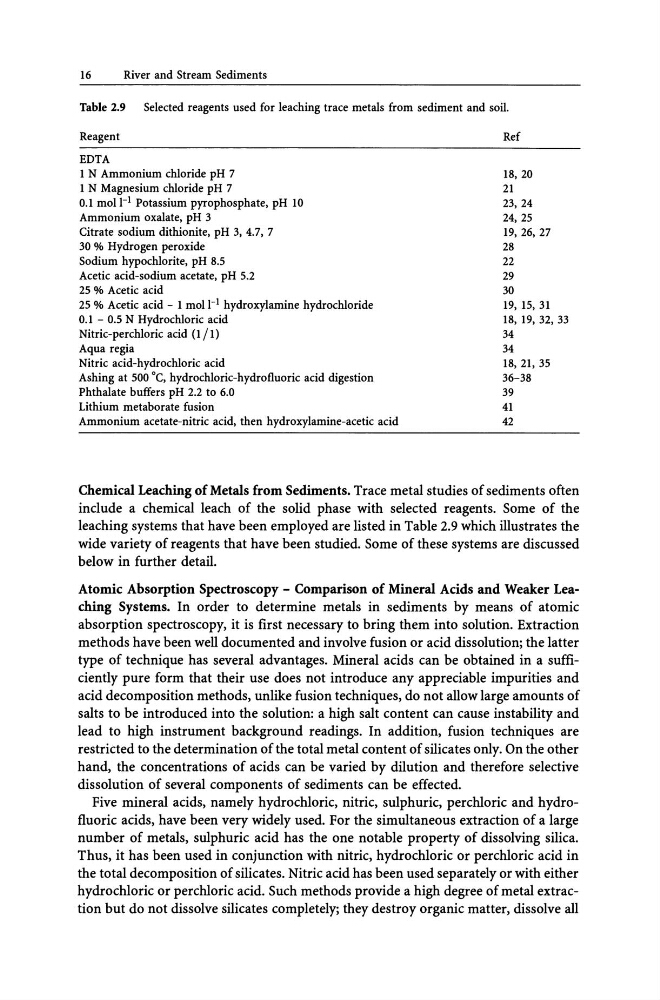
Table 2.9 Selected reagents used for leaching trace metals from sediment and soil.
Reagent
Ref
EDTA
1 N Ammonium chloride pH 7
1 N Magnesium chloride pH 7
0.1 mol 1-1 Potassium pyrophosphate, pH 10
Ammonium oxalate, pH 3
Citrate sodium dithionite, pH 3, 4.7, 7
30 % Hydrogen peroxide
Sodium hypochlorite, pH 8.5
Acetic acid-sodium acetate, pH 5.2
25 % Acetic acid
25 % Acetic acid - 1 mol 1-1 hydroxylamine hydrochloride
0.1 - 0.5 N Hydrochloric acid
Nitric-perchloric acid (I / 1)
Aqua regia
Nitric acid-hydrochloric acid
Ashing at 500 ·C, hydrochloric-hydrofluoric acid digestion
Phthalate buffers pH 2.2 to 6.0
Lithium metaborate fusion
Ammonium acetate-nitric acid, then hydroxylamine-acetic acid
18,20
21
23,24
24,25
19,26,27
28
22
29
30
19, 15, 31
18, 19, 32, 33
34
34
18,21,35
36-38
39
41
42
Chemical Leaching of Metals from Sediments. Trace metal studies of sediments often
include a chemical leach of the solid phase with selected reagents. Some of the
leaching systems that have been employed are listed in Table 2.9 which illustrates the
wide variety of reagents that have been studied. Some of these systems are discussed
below in further detail.
Atomic Absorption Spectroscopy - Comparison of Mineral Acids and Weaker Leaching Systems. In order to determine metals in sediments by means of atomic
absorption spectroscopy, it is first necessary to bring them into solution. Extraction
methods have been well documented and involve fusion or acid dissolution; the latter
type of technique has several advantages. Mineral acids can be obtained in a sufficiently pure form that their use does not introduce any appreciable impurities and
acid decomposition methods, unlike fusion techniques, do not allow large amounts of
salts to be introduced into the solution: a high salt content can cause instability and
lead to high instrument background readings. In addition, fusion techniques are
restricted to the determination of the total metal content of silicates only. On the other
hand, the concentrations of acids can be varied by dilution and therefore selective
dissolution of several components of sediments can be effected.
Five mineral acids, namely hydrochloric, nitric, sulphuric, perchloric and hydrofluoric acids, have been very widely used. For the simultaneous extraction of a large
number of metals, sulphuric acid has the one notable property of dissolving silica.
Thus, it has been used in conjunction with nitric, hydrochloric or perchloric acid in
the total decomposition of silicates. Nitric acid has been used separately or with either
hydrochloric or perchloric acid. Such methods provide a high degree of metal extraction but do not dissolve silicates completely; they destroy organic matter, dissolve all
River and Stream Sediments
Table 2.9 Selected reagents used for leaching trace metals from sediment and soil.
Reagent
Ref
EDTA
1 N Ammonium chloride pH 7
1 N Magnesium chloride pH 7
0.1 mol 1-1 Potassium pyrophosphate, pH 10
Ammonium oxalate, pH 3
Citrate sodium dithionite, pH 3, 4.7, 7
30 % Hydrogen peroxide
Sodium hypochlorite, pH 8.5
Acetic acid-sodium acetate, pH 5.2
25 % Acetic acid
25 % Acetic acid - 1 mol 1-1 hydroxylamine hydrochloride
0.1 - 0.5 N Hydrochloric acid
Nitric-perchloric acid (I / 1)
Aqua regia
Nitric acid-hydrochloric acid
Ashing at 500 ·C, hydrochloric-hydrofluoric acid digestion
Phthalate buffers pH 2.2 to 6.0
Lithium metaborate fusion
Ammonium acetate-nitric acid, then hydroxylamine-acetic acid
18,20
21
23,24
24,25
19,26,27
28
22
29
30
19, 15, 31
18, 19, 32, 33
34
34
18,21,35
36-38
39
41
42
Chemical Leaching of Metals from Sediments. Trace metal studies of sediments often
include a chemical leach of the solid phase with selected reagents. Some of the
leaching systems that have been employed are listed in Table 2.9 which illustrates the
wide variety of reagents that have been studied. Some of these systems are discussed
below in further detail.
Atomic Absorption Spectroscopy - Comparison of Mineral Acids and Weaker Leaching Systems. In order to determine metals in sediments by means of atomic
absorption spectroscopy, it is first necessary to bring them into solution. Extraction
methods have been well documented and involve fusion or acid dissolution; the latter
type of technique has several advantages. Mineral acids can be obtained in a sufficiently pure form that their use does not introduce any appreciable impurities and
acid decomposition methods, unlike fusion techniques, do not allow large amounts of
salts to be introduced into the solution: a high salt content can cause instability and
lead to high instrument background readings. In addition, fusion techniques are
restricted to the determination of the total metal content of silicates only. On the other
hand, the concentrations of acids can be varied by dilution and therefore selective
dissolution of several components of sediments can be effected.
Five mineral acids, namely hydrochloric, nitric, sulphuric, perchloric and hydrofluoric acids, have been very widely used. For the simultaneous extraction of a large
number of metals, sulphuric acid has the one notable property of dissolving silica.
Thus, it has been used in conjunction with nitric, hydrochloric or perchloric acid in
the total decomposition of silicates. Nitric acid has been used separately or with either
hydrochloric or perchloric acid. Such methods provide a high degree of metal extraction but do not dissolve silicates completely; they destroy organic matter, dissolve all