

to vocal production. This point is well-illustrated in the relation between
activation of song and volume of song-control nuclei.
As we have seen, circulating levels of T reliably correlate with male song,
and androgen controls the volume of song-control nuclei (Smith et al. 1995,
1997b; Bernard et al. 1996; Brenowitz et al. 1998). The size of song nuclei
also correlates well with song production. For example, in two different
morphs of white-throated sparrows that differ in the rate of song production, the sizes of two song-control nuclei also covary (DeVoogd et al. 1995).
Because of the remarkable correlation between size of song nuclei and
singing rates across species, it is plausible to deduce a causal relation
between them. However, some studies suggest that increased volume is not
required for song production in all species. Castrating male zebra finches
decreases the singing rate without changing the size of song-control nuclei
(Arnold 1975, 1980b). Male white-crowned sparrows exposed to different
photoperiods have different singing rates but maintain the same size of
song-control nuclei (Baker et al. 1984; Smith et al. 1995). Adolescent male
dark-eyed juncos begin to increase singing rates as they mature without
increasing the volume of vocal nuclei (Gulledge and Deviche 1998). Thus,
androgen-dependent size modulation of vocal control nuclei is not a general
requirement for activation of song despite the reliable correlation observed
in many species.
The difficulty of relating physiological and structural changes in the CNS
to behavior arises because our understanding of how the brain produces
290
A. Yamaguchi and D.B. Kelley
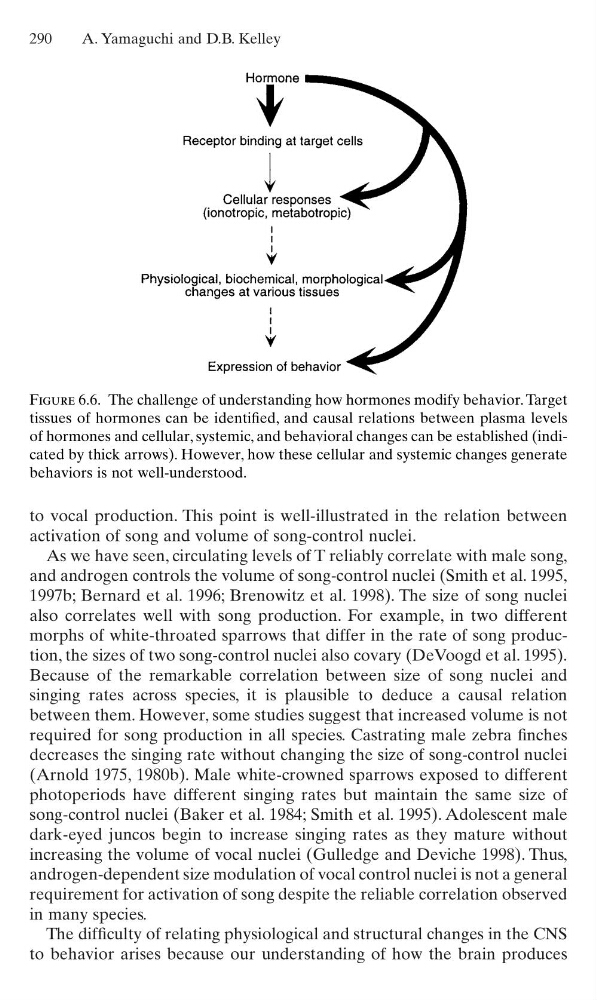
Figure 6.6. The challenge of understanding how hormones modify behavior. Target
tissues of hormones can be identified, and causal relations between plasma levels
of hormones and cellular, systemic, and behavioral changes can be established (indicated by thick arrows). However, how these cellular and systemic changes generate
behaviors is not well-understood.
activation of song and volume of song-control nuclei.
As we have seen, circulating levels of T reliably correlate with male song,
and androgen controls the volume of song-control nuclei (Smith et al. 1995,
1997b; Bernard et al. 1996; Brenowitz et al. 1998). The size of song nuclei
also correlates well with song production. For example, in two different
morphs of white-throated sparrows that differ in the rate of song production, the sizes of two song-control nuclei also covary (DeVoogd et al. 1995).
Because of the remarkable correlation between size of song nuclei and
singing rates across species, it is plausible to deduce a causal relation
between them. However, some studies suggest that increased volume is not
required for song production in all species. Castrating male zebra finches
decreases the singing rate without changing the size of song-control nuclei
(Arnold 1975, 1980b). Male white-crowned sparrows exposed to different
photoperiods have different singing rates but maintain the same size of
song-control nuclei (Baker et al. 1984; Smith et al. 1995). Adolescent male
dark-eyed juncos begin to increase singing rates as they mature without
increasing the volume of vocal nuclei (Gulledge and Deviche 1998). Thus,
androgen-dependent size modulation of vocal control nuclei is not a general
requirement for activation of song despite the reliable correlation observed
in many species.
The difficulty of relating physiological and structural changes in the CNS
to behavior arises because our understanding of how the brain produces
290
A. Yamaguchi and D.B. Kelley
Figure 6.6. The challenge of understanding how hormones modify behavior. Target
tissues of hormones can be identified, and causal relations between plasma levels
of hormones and cellular, systemic, and behavioral changes can be established (indicated by thick arrows). However, how these cellular and systemic changes generate
behaviors is not well-understood.