

from their group (Snowdon and Hodun 1985; Maeda and Masataka 1987;
Masataka 1988) and are thought to facilitate cohesion within the group as
it travels through the forest (Waser and Waser 1977). Long calls also function in territory defense during encounters between groups at feeding trees
(Waser and Waser 1977; Garber et al. 1993). Females will respond to the
calls of an intruder male unless her mate evicts him (Masataka 1988).
Studies of vocal learning in the saddle-back tamarin, S. fuscicollis
(Cheverud et al. 1993) and the red-chested moustached tamarin, S. labiatus, have focused mainly on comparing calls from different populations
(Hodun et al. 1981; Maeda and Masataka 1987; Masataka 1988). Contiguous populations of S. fuscicollis subspecies (S. fuscicollis nigrifrons and S.
fuscicollis illigeri) differed in one temporal variable and three frequency
variables (Hodun et al. 1981). One individual resembled S. f. nigrifrons morphologically, but was intermediate between S. f. nigrifrons and S. f. illigeri in
long-call features. Comparison of long calls from captive hybrids between
these two subspecies revealed that their long calls resembled S. f. nigrifrons
with the exception of one frequency variable that most closely resembled
the subspecies with which they were housed, S. f. fuscicollis. Hodun et al.
(1981) suggested that learning must have taken place at least in this one
variable. However, inspection of sonograms of these three subspecies’ calls
indicates that S. f. fuscicollis calls were not close matches to either subspecies but were intermediate between S. f. nigrifrons and S. f. illigeri, which
is expected in hybrids if calls are heritable.
Populations of red-moustached tamarins (S. labiatus) only 27 km apart
differ in frequency characteristics (Maeda and Masataka 1987). The proximity of these populations led the authors to suggest that they are not genetically isolated from one another but that the differences resulted
from learning. Masataka (1988) subsequently determined that individuals
responded differently to calls from their own and a foreign dialect, sug196
J.W. Boughman and C.F. Moss
1 s
16
12
8
4
0
Frequency (kHz)
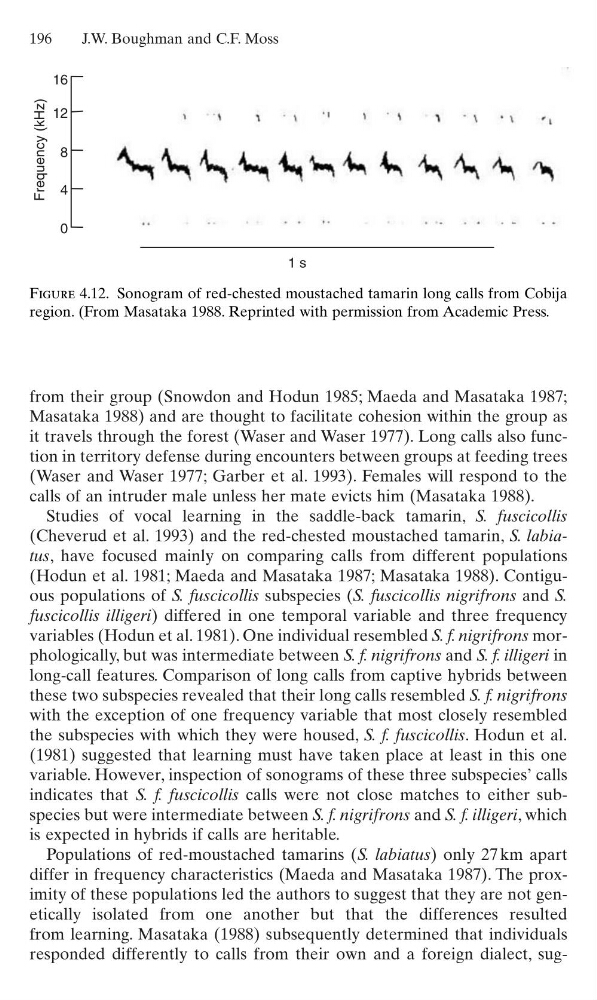
Figure 4.12. Sonogram of red-chested moustached tamarin long calls from Cobija
region. (From Masataka 1988. Reprinted with permission from Academic Press.
Masataka 1988) and are thought to facilitate cohesion within the group as
it travels through the forest (Waser and Waser 1977). Long calls also function in territory defense during encounters between groups at feeding trees
(Waser and Waser 1977; Garber et al. 1993). Females will respond to the
calls of an intruder male unless her mate evicts him (Masataka 1988).
Studies of vocal learning in the saddle-back tamarin, S. fuscicollis
(Cheverud et al. 1993) and the red-chested moustached tamarin, S. labiatus, have focused mainly on comparing calls from different populations
(Hodun et al. 1981; Maeda and Masataka 1987; Masataka 1988). Contiguous populations of S. fuscicollis subspecies (S. fuscicollis nigrifrons and S.
fuscicollis illigeri) differed in one temporal variable and three frequency
variables (Hodun et al. 1981). One individual resembled S. f. nigrifrons morphologically, but was intermediate between S. f. nigrifrons and S. f. illigeri in
long-call features. Comparison of long calls from captive hybrids between
these two subspecies revealed that their long calls resembled S. f. nigrifrons
with the exception of one frequency variable that most closely resembled
the subspecies with which they were housed, S. f. fuscicollis. Hodun et al.
(1981) suggested that learning must have taken place at least in this one
variable. However, inspection of sonograms of these three subspecies’ calls
indicates that S. f. fuscicollis calls were not close matches to either subspecies but were intermediate between S. f. nigrifrons and S. f. illigeri, which
is expected in hybrids if calls are heritable.
Populations of red-moustached tamarins (S. labiatus) only 27 km apart
differ in frequency characteristics (Maeda and Masataka 1987). The proximity of these populations led the authors to suggest that they are not genetically isolated from one another but that the differences resulted
from learning. Masataka (1988) subsequently determined that individuals
responded differently to calls from their own and a foreign dialect, sug196
J.W. Boughman and C.F. Moss
1 s
16
12
8
4
0
Frequency (kHz)
Figure 4.12. Sonogram of red-chested moustached tamarin long calls from Cobija
region. (From Masataka 1988. Reprinted with permission from Academic Press.