

The structure of J-calls makes them easy to localize (Snowdon and Hodun
1981). Group mates respond antiphonally to both types of contact calls and
may also orient toward and approach an animal producing J-calls. The calls
are used primarily in intragroup situations, but may also be used in encounters between groups. Thus, both calls are used to maintain contact between
the members of a family group (Snowdon and Hodun 1981). These calls
function as group signatures, yet most variation is among individuals. Individual vocalizations differ in several temporal and frequency characteristics for both types of contact calls. These differences do not appear to
depend on either familial relationships or sex (Snowdon and Cleveland
1980). There is some evidence that individuals are recognized by their calls,
although this conclusion is weakened because of small sample size and
because statistical significance rests on responses of two males to their own
calls (Snowdon and Cleveland 1980). Calls played from an unfamiliar
location elicit very low responses, suggesting that a combination of vocal
4. Comparative Vocal Learning
181
0.1
0.2
0.3
0.4
0.5
16
12
8
4
kHz
Seconds
15
14
13
12
11
10
Quarantine
1-4
6-10
Post Quarantine (weeks)
A)
B)
Mean peak frequency (kHz)
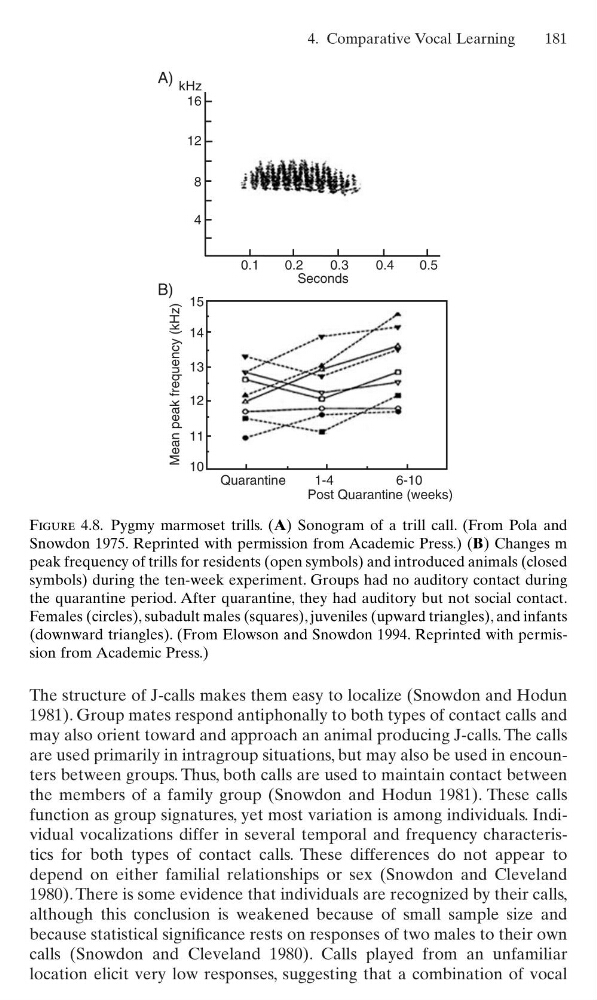
Figure 4.8. Pygmy marmoset trills. (A) Sonogram of a trill call. (From Pola and
Snowdon 1975. Reprinted with permission from Academic Press.) (B) Changes m
peak frequency of trills for residents (open symbols) and introduced animals (closed
symbols) during the ten-week experiment. Groups had no auditory contact during
the quarantine period. After quarantine, they had auditory but not social contact.
Females (circles), subadult males (squares), juveniles (upward triangles), and infants
(downward triangles). (From Elowson and Snowdon 1994. Reprinted with permission from Academic Press.)
1981). Group mates respond antiphonally to both types of contact calls and
may also orient toward and approach an animal producing J-calls. The calls
are used primarily in intragroup situations, but may also be used in encounters between groups. Thus, both calls are used to maintain contact between
the members of a family group (Snowdon and Hodun 1981). These calls
function as group signatures, yet most variation is among individuals. Individual vocalizations differ in several temporal and frequency characteristics for both types of contact calls. These differences do not appear to
depend on either familial relationships or sex (Snowdon and Cleveland
1980). There is some evidence that individuals are recognized by their calls,
although this conclusion is weakened because of small sample size and
because statistical significance rests on responses of two males to their own
calls (Snowdon and Cleveland 1980). Calls played from an unfamiliar
location elicit very low responses, suggesting that a combination of vocal
4. Comparative Vocal Learning
181
0.1
0.2
0.3
0.4
0.5
16
12
8
4
kHz
Seconds
15
14
13
12
11
10
Quarantine
1-4
6-10
Post Quarantine (weeks)
A)
B)
Mean peak frequency (kHz)
Figure 4.8. Pygmy marmoset trills. (A) Sonogram of a trill call. (From Pola and
Snowdon 1975. Reprinted with permission from Academic Press.) (B) Changes m
peak frequency of trills for residents (open symbols) and introduced animals (closed
symbols) during the ten-week experiment. Groups had no auditory contact during
the quarantine period. After quarantine, they had auditory but not social contact.
Females (circles), subadult males (squares), juveniles (upward triangles), and infants
(downward triangles). (From Elowson and Snowdon 1994. Reprinted with permission from Academic Press.)