

458
J.L. Aroyan et at.
160
140
120
80
100
distance (m)
. . /./;/~
.
.:/ .. j.\.~
I
....
:.... J
.. :..1
r
: .
I.
/
·30
g.4O
~
~.50
'0
·60
·70
-80
·90
20
40
0
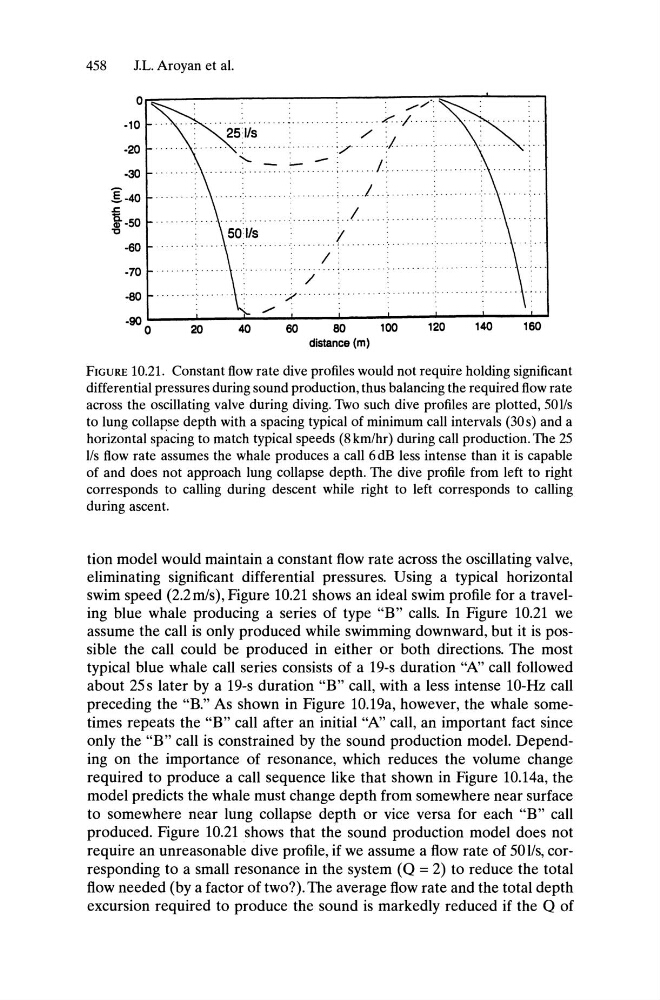
FIGURE 10.21. Constant flow rate dive profiles would not require holding significant
differential pressures during sound production, thus balancing the required flow rate
across the oscillating valve during diving. Two such dive profiles are plotted, 50 lIs
to lung collapse depth with a spacing typical of minimum call intervals (30s) and a
horizontal spacing to match typical speeds (8km/hr) during call production. The 25
lis flow rate assumes the whale produces a call 6dB less intense than it is capable
of and does not approach lung collapse depth. The dive profile from left to right
corresponds to calling during descent while right to left corresponds to calling
during ascent.
tion model would maintain a constant flow rate across the oscillating valve,
eliminating significant differential pressures. Using a typical horizontal
swim speed (2.2m/s), Figure 10.21 shows an ideal swim profile for a traveling blue whale producing a series of type "B" calls. In Figure 10.21 we
assume the call is only produced while swimming downward, but it is possible the call could be produced in either or both directions. The most
typical blue whale call series consists of a 19-s duration "A" call followed
about 25s later by a 19-s duration "B" call, with a less intense 10-Hz call
preceding the "B." As shown in Figure 1O.19a, however, the whale sometimes repeats the "B" call after an initial "A" call, an important fact since
only the "B" call is constrained by the sound production model. Depending on the importance of resonance, which reduces the volume change
required to produce a call sequence like that shown in Figure 1O.14a, the
model predicts the whale must change depth from somewhere near surface
to somewhere near lung collapse depth or vice versa for each "B" call
produced. Figure 10.21 shows that the sound production model does not
require an unreasonable dive profile, if we assume a flow rate of 50 lis, corresponding to a small resonance in the system (Q = 2) to reduce the total
flow needed (by a factor of two?). The average flow rate and the total depth
excursion required to produce the sound is markedly reduced if the Q of
J.L. Aroyan et at.
160
140
120
80
100
distance (m)
. . /./;/~
.
.:/ .. j.\.~
I
....
:.... J
.. :..1
r
: .
I.
/
·30
g.4O
~
~.50
'0
·60
·70
-80
·90
20
40
0
FIGURE 10.21. Constant flow rate dive profiles would not require holding significant
differential pressures during sound production, thus balancing the required flow rate
across the oscillating valve during diving. Two such dive profiles are plotted, 50 lIs
to lung collapse depth with a spacing typical of minimum call intervals (30s) and a
horizontal spacing to match typical speeds (8km/hr) during call production. The 25
lis flow rate assumes the whale produces a call 6dB less intense than it is capable
of and does not approach lung collapse depth. The dive profile from left to right
corresponds to calling during descent while right to left corresponds to calling
during ascent.
tion model would maintain a constant flow rate across the oscillating valve,
eliminating significant differential pressures. Using a typical horizontal
swim speed (2.2m/s), Figure 10.21 shows an ideal swim profile for a traveling blue whale producing a series of type "B" calls. In Figure 10.21 we
assume the call is only produced while swimming downward, but it is possible the call could be produced in either or both directions. The most
typical blue whale call series consists of a 19-s duration "A" call followed
about 25s later by a 19-s duration "B" call, with a less intense 10-Hz call
preceding the "B." As shown in Figure 1O.19a, however, the whale sometimes repeats the "B" call after an initial "A" call, an important fact since
only the "B" call is constrained by the sound production model. Depending on the importance of resonance, which reduces the volume change
required to produce a call sequence like that shown in Figure 1O.14a, the
model predicts the whale must change depth from somewhere near surface
to somewhere near lung collapse depth or vice versa for each "B" call
produced. Figure 10.21 shows that the sound production model does not
require an unreasonable dive profile, if we assume a flow rate of 50 lis, corresponding to a small resonance in the system (Q = 2) to reduce the total
flow needed (by a factor of two?). The average flow rate and the total depth
excursion required to produce the sound is markedly reduced if the Q of