

75
not be predicted without data from more species (Fig. 8b ). This points to the need
for studies on Prognathodes (the sister genus to Chaetodon ), coralfi shes
( Amphichaetodon , Coradion , Chemonops , and Chelmon ), and chaetodontid outgroups such as the pomacanthids (angelfi shes) and ephippids (spadefi shes).
4 The Butterfl yfi sh Ear and Lateral Line in the Reception
of Acoustic Stimuli
The discovery and characterization of natural sounds produced by chaetodontids
make it possible to form and test hypotheses about how these stimuli are encoded by
the ear and/or lateral line, and to evaluate the effect of the swim bladder horns on
0
10 10
20 20
30 30
Chaetodon
ornatissimus
C. auriga
C. multicinctus
C. unimaculatus
C. kleinii
Forcipiger
flavissimus
F. longirostris
Hemitaurichthys
polylepis
Heniochus
chrysostomus
E p a x ia
l m
u s c le
H e a d
B o b T a il S la
p
B o d y
M
o ti o n
A n a l F in
R e tr a c t
H y p a x ia
l m
u s c le
?
?
?
?
?
?
?
?
S B
B u c k li n g
C3
C4
C2
MYA
J a w
P r o tr u s io
n
?
L a te
r o p h y s ic
C o n
?
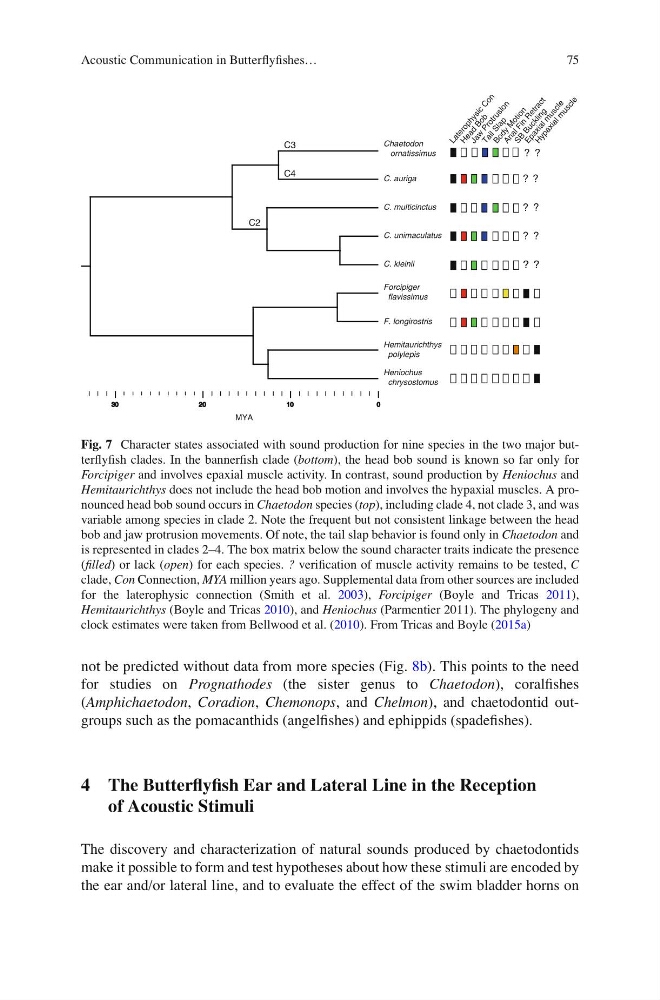
Fig. 7 Character states associated with sound production for nine species in the two major butterfl yfi sh clades. In the bannerfi sh clade ( bottom ), the head bob sound is known so far only for
Forcipiger and involves epaxial muscle activity. In contrast, sound production by Heniochus and
Hemitaurichthys does not include the head bob motion and involves the hypaxial muscles. A pronounced head bob sound occurs in Chaetodon species ( top ), including clade 4, not clade 3, and was
variable among species in clade 2. Note the frequent but not consistent linkage between the head
bob and jaw protrusion movements. Of note, the tail slap behavior is found only in Chaetodon and
is represented in clades 2–4. The box matrix below the sound character traits indicate the presence
( fi lled ) or lack ( open ) for each species. ? verifi cation of muscle activity remains to be tested, C
clade, Con Connection, MYA million years ago. Supplemental data from other sources are included
for the laterophysic connection (Smith et al. 2003 ), Forcipiger (Boyle and Tricas 2011 ),
Hemitaurichthys (Boyle and Tricas 2010 ), and Heniochus (Parmentier 2011). The phylogeny and
clock estimates were taken from Bellwood et al. ( 2010 ). From Tricas and Boyle ( 2015a )
Acoustic Communication in Butterfl yfi shes…
not be predicted without data from more species (Fig. 8b ). This points to the need
for studies on Prognathodes (the sister genus to Chaetodon ), coralfi shes
( Amphichaetodon , Coradion , Chemonops , and Chelmon ), and chaetodontid outgroups such as the pomacanthids (angelfi shes) and ephippids (spadefi shes).
4 The Butterfl yfi sh Ear and Lateral Line in the Reception
of Acoustic Stimuli
The discovery and characterization of natural sounds produced by chaetodontids
make it possible to form and test hypotheses about how these stimuli are encoded by
the ear and/or lateral line, and to evaluate the effect of the swim bladder horns on
0
10 10
20 20
30 30
Chaetodon
ornatissimus
C. auriga
C. multicinctus
C. unimaculatus
C. kleinii
Forcipiger
flavissimus
F. longirostris
Hemitaurichthys
polylepis
Heniochus
chrysostomus
E p a x ia
l m
u s c le
H e a d
B o b T a il S la
p
B o d y
M
o ti o n
A n a l F in
R e tr a c t
H y p a x ia
l m
u s c le
?
?
?
?
?
?
?
?
S B
B u c k li n g
C3
C4
C2
MYA
J a w
P r o tr u s io
n
?
L a te
r o p h y s ic
C o n
?
Fig. 7 Character states associated with sound production for nine species in the two major butterfl yfi sh clades. In the bannerfi sh clade ( bottom ), the head bob sound is known so far only for
Forcipiger and involves epaxial muscle activity. In contrast, sound production by Heniochus and
Hemitaurichthys does not include the head bob motion and involves the hypaxial muscles. A pronounced head bob sound occurs in Chaetodon species ( top ), including clade 4, not clade 3, and was
variable among species in clade 2. Note the frequent but not consistent linkage between the head
bob and jaw protrusion movements. Of note, the tail slap behavior is found only in Chaetodon and
is represented in clades 2–4. The box matrix below the sound character traits indicate the presence
( fi lled ) or lack ( open ) for each species. ? verifi cation of muscle activity remains to be tested, C
clade, Con Connection, MYA million years ago. Supplemental data from other sources are included
for the laterophysic connection (Smith et al. 2003 ), Forcipiger (Boyle and Tricas 2011 ),
Hemitaurichthys (Boyle and Tricas 2010 ), and Heniochus (Parmentier 2011). The phylogeny and
clock estimates were taken from Bellwood et al. ( 2010 ). From Tricas and Boyle ( 2015a )
Acoustic Communication in Butterfl yfi shes…