

367
It is noteworthy that the inner ears in Amia and Lepisosteus are very similar
(Mathiesen and Popper 1987 ) and that the taxon “Holostei,” comprising bowfi ns
and gars, has recently been re-erected and confi rmed by molecular analyses
(Betancur-R. et al. 2013 ; Broughton et al. 2013 ).
So far, hearing abilities were evaluated for two chondrostean species, the paddlefi sh
Polyodon spathula and the lake sturgeon Acipenser fulvescens (Lovell et al. 2005b ).
Both species detected sounds between 100 and 500 Hz. Audiograms indicate—although
given in sound pressure units—that these fi shes are most likely only particle motion
sensitive (Ladich and Fay 2013 ) and that they lack ancillary auditory structures.
2.3 Teleostei
In most teleosts, saccule and lagena are located in two pouches that communicate
via a more or less wide opening. A macula neglecta is present in some species (for
details and references see Table 2 ). The macula of the end organs are overlain by
massive calcium carbonate biomineralisates, the otoliths that appose material
according to a daily rhythm (Pannella 1971 ). The simultaneous presence of otoconia has been reported in only a few species (Gauldie et al. 1986b ).
2.3.1 Basal Teleosts: Elopomorpha and Osteoglossomorpha
Within elopomorph fi shes (Anguillliformes, Notacanthiformes, Elopiformes), ciliary bundle orientation patterns on the macula sacculi are rather uniform, displaying
the alternating pattern that is characterized by three horizontal groups in the anterior
macula portion (Popper 1979 , 1981 ; Mathiesen 1984 ; Buran et al. 2005 ). More variability of orientation patterns is found on the macula lagenae, especially in deep-sea
species (Buran et al. 2005 ). In some members such as species of the genus Elops ,
anterior swim bladder extensions approach the ears; despite the swim bladder modifi cation, the macula sacculi in E. hawaiensis did not show any deviations from the
alternating pattern (Popper 1981 ).
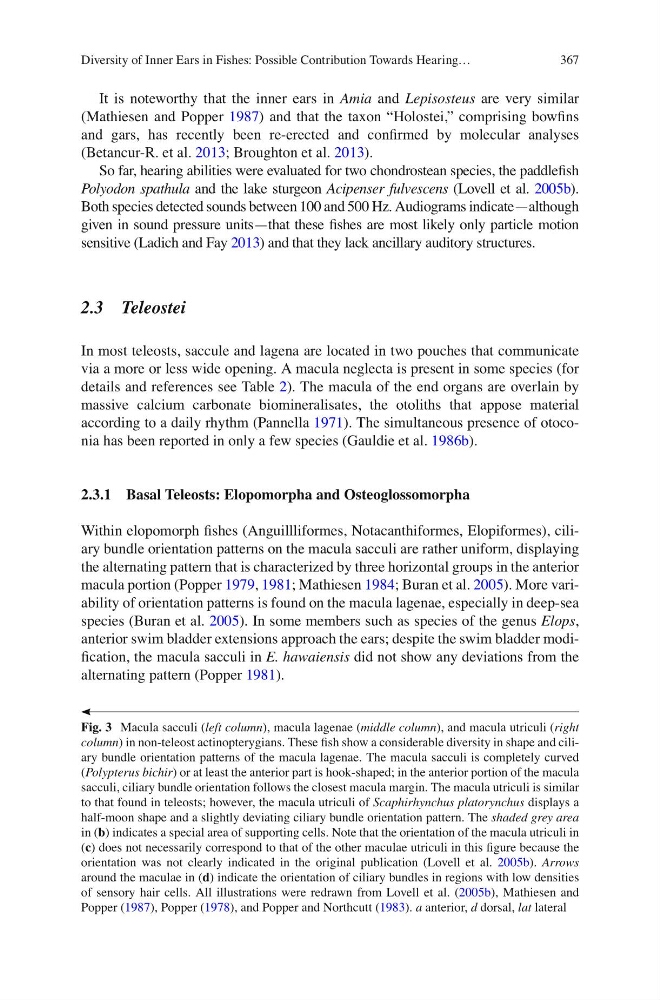
Fig. 3 Macula sacculi ( left column ), macula lagenae ( middle column ), and macula utriculi ( right
column ) in non-teleost actinopterygians. These fi sh show a considerable diversity in shape and ciliary bundle orientation patterns of the macula lagenae. The macula sacculi is completely curved
( Polypterus bichir ) or at least the anterior part is hook-shaped; in the anterior portion of the macula
sacculi, ciliary bundle orientation follows the closest macula margin. The macula utriculi is similar
to that found in teleosts; however, the macula utriculi of Scaphirhynchus platorynchus displays a
half-moon shape and a slightly deviating ciliary bundle orientation pattern. The shaded grey area
in ( b ) indicates a special area of supporting cells. Note that the orientation of the macula utriculi in
( c ) does not necessarily correspond to that of the other maculae utriculi in this fi gure because the
orientation was not clearly indicated in the original publication (Lovell et al. 2005b ). Arrows
around the maculae in ( d ) indicate the orientation of ciliary bundles in regions with low densities
of sensory hair cells. All illustrations were redrawn from Lovell et al. ( 2005b ), Mathiesen and
Popper ( 1987 ), Popper ( 1978 ), and Popper and Northcutt ( 1983 ). a anterior, d dorsal, lat lateral
Diversity of Inner Ears in Fishes: Possible Contribution Towards Hearing…
It is noteworthy that the inner ears in Amia and Lepisosteus are very similar
(Mathiesen and Popper 1987 ) and that the taxon “Holostei,” comprising bowfi ns
and gars, has recently been re-erected and confi rmed by molecular analyses
(Betancur-R. et al. 2013 ; Broughton et al. 2013 ).
So far, hearing abilities were evaluated for two chondrostean species, the paddlefi sh
Polyodon spathula and the lake sturgeon Acipenser fulvescens (Lovell et al. 2005b ).
Both species detected sounds between 100 and 500 Hz. Audiograms indicate—although
given in sound pressure units—that these fi shes are most likely only particle motion
sensitive (Ladich and Fay 2013 ) and that they lack ancillary auditory structures.
2.3 Teleostei
In most teleosts, saccule and lagena are located in two pouches that communicate
via a more or less wide opening. A macula neglecta is present in some species (for
details and references see Table 2 ). The macula of the end organs are overlain by
massive calcium carbonate biomineralisates, the otoliths that appose material
according to a daily rhythm (Pannella 1971 ). The simultaneous presence of otoconia has been reported in only a few species (Gauldie et al. 1986b ).
2.3.1 Basal Teleosts: Elopomorpha and Osteoglossomorpha
Within elopomorph fi shes (Anguillliformes, Notacanthiformes, Elopiformes), ciliary bundle orientation patterns on the macula sacculi are rather uniform, displaying
the alternating pattern that is characterized by three horizontal groups in the anterior
macula portion (Popper 1979 , 1981 ; Mathiesen 1984 ; Buran et al. 2005 ). More variability of orientation patterns is found on the macula lagenae, especially in deep-sea
species (Buran et al. 2005 ). In some members such as species of the genus Elops ,
anterior swim bladder extensions approach the ears; despite the swim bladder modifi cation, the macula sacculi in E. hawaiensis did not show any deviations from the
alternating pattern (Popper 1981 ).
Fig. 3 Macula sacculi ( left column ), macula lagenae ( middle column ), and macula utriculi ( right
column ) in non-teleost actinopterygians. These fi sh show a considerable diversity in shape and ciliary bundle orientation patterns of the macula lagenae. The macula sacculi is completely curved
( Polypterus bichir ) or at least the anterior part is hook-shaped; in the anterior portion of the macula
sacculi, ciliary bundle orientation follows the closest macula margin. The macula utriculi is similar
to that found in teleosts; however, the macula utriculi of Scaphirhynchus platorynchus displays a
half-moon shape and a slightly deviating ciliary bundle orientation pattern. The shaded grey area
in ( b ) indicates a special area of supporting cells. Note that the orientation of the macula utriculi in
( c ) does not necessarily correspond to that of the other maculae utriculi in this fi gure because the
orientation was not clearly indicated in the original publication (Lovell et al. 2005b ). Arrows
around the maculae in ( d ) indicate the orientation of ciliary bundles in regions with low densities
of sensory hair cells. All illustrations were redrawn from Lovell et al. ( 2005b ), Mathiesen and
Popper ( 1987 ), Popper ( 1978 ), and Popper and Northcutt ( 1983 ). a anterior, d dorsal, lat lateral
Diversity of Inner Ears in Fishes: Possible Contribution Towards Hearing…