

189
morphological differences between the sagittal otoliths of cave- and surface-dwelling
mollies, with cave forms having heavier otoliths and a deeper auditory sulcus than
surface forms. In a follow-up study, Schulz-Mirbach et al. ( 2010 ) examined the
morphology of all three inner ear otoliths (saccule, utricle, and lagena) and hearing
sensitivities between cave and surface ecotypes and found differences in shape of all
three otoliths between the cave and surface form, while the otoliths of the lagena
and utricle were heavier in the cave form. The fi rst microanatomical study of the
inner ear by Schulz-Mirbach et al. ( 2011a ) using a combination of micro-CT analyses, scanning electron microscopy and immunocytochemical methods also revealed
differences between cave and surface ecotypes, including the shape and curvature of
the macula lagenae, curvature of the macula sacculi, and a much thicker otolith
membrane housed in a deep sulcus of the sagittae. However, hearing sensitivities,
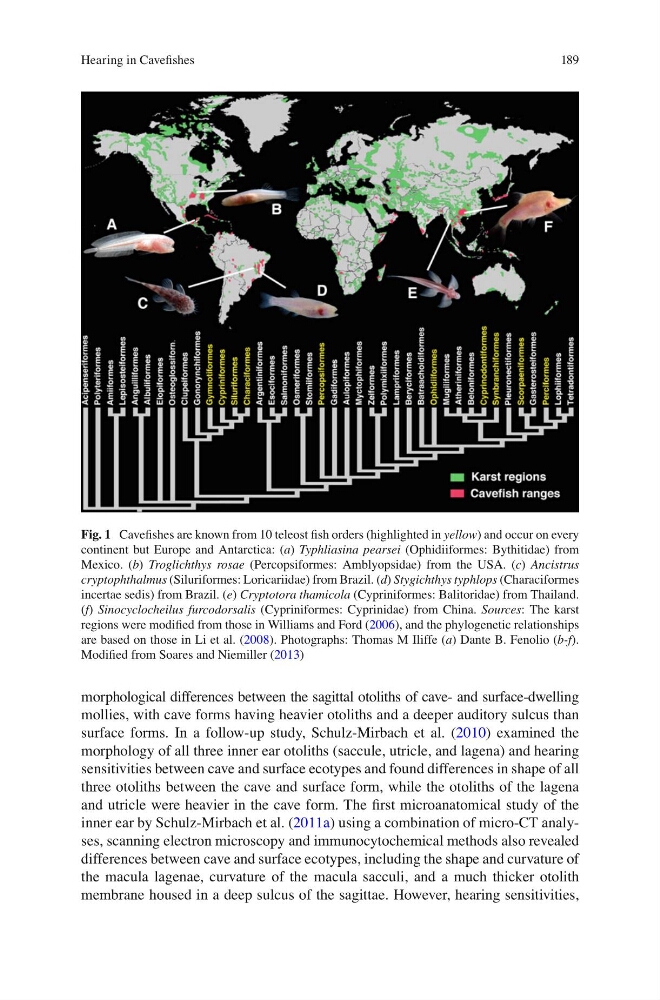
Fig. 1 Cavefi shes are known from 10 teleost fi sh orders (highlighted in yellow ) and occur on every
continent but Europe and Antarctica: ( a ) Typhliasina pearsei (Ophidiiformes: Bythitidae) from
Mexico. ( b ) Troglichthys rosae (Percopsiformes: Amblyopsidae) from the USA. ( c ) Ancistrus
cryptophthalmus (Siluriformes: Loricariidae) from Brazil. ( d ) Stygichthys typhlops (Characiformes
incertae sedis) from Brazil. ( e ) Cryptotora thamicola (Cypriniformes: Balitoridae) from Thailand.
( f ) Sinocyclocheilus furcodorsalis (Cypriniformes: Cyprinidae) from China. Sources : The karst
regions were modifi ed from those in Williams and Ford ( 2006 ), and the phylogenetic relationships
are based on those in Li et al. ( 2008 ). Photographs: Thomas M Iliffe ( a ) Dante B. Fenolio (b-f).
Modifi ed from Soares and Niemiller ( 2013 )
Hearing in Cavefi shes
morphological differences between the sagittal otoliths of cave- and surface-dwelling
mollies, with cave forms having heavier otoliths and a deeper auditory sulcus than
surface forms. In a follow-up study, Schulz-Mirbach et al. ( 2010 ) examined the
morphology of all three inner ear otoliths (saccule, utricle, and lagena) and hearing
sensitivities between cave and surface ecotypes and found differences in shape of all
three otoliths between the cave and surface form, while the otoliths of the lagena
and utricle were heavier in the cave form. The fi rst microanatomical study of the
inner ear by Schulz-Mirbach et al. ( 2011a ) using a combination of micro-CT analyses, scanning electron microscopy and immunocytochemical methods also revealed
differences between cave and surface ecotypes, including the shape and curvature of
the macula lagenae, curvature of the macula sacculi, and a much thicker otolith
membrane housed in a deep sulcus of the sagittae. However, hearing sensitivities,
Fig. 1 Cavefi shes are known from 10 teleost fi sh orders (highlighted in yellow ) and occur on every
continent but Europe and Antarctica: ( a ) Typhliasina pearsei (Ophidiiformes: Bythitidae) from
Mexico. ( b ) Troglichthys rosae (Percopsiformes: Amblyopsidae) from the USA. ( c ) Ancistrus
cryptophthalmus (Siluriformes: Loricariidae) from Brazil. ( d ) Stygichthys typhlops (Characiformes
incertae sedis) from Brazil. ( e ) Cryptotora thamicola (Cypriniformes: Balitoridae) from Thailand.
( f ) Sinocyclocheilus furcodorsalis (Cypriniformes: Cyprinidae) from China. Sources : The karst
regions were modifi ed from those in Williams and Ford ( 2006 ), and the phylogenetic relationships
are based on those in Li et al. ( 2008 ). Photographs: Thomas M Iliffe ( a ) Dante B. Fenolio (b-f).
Modifi ed from Soares and Niemiller ( 2013 )
Hearing in Cavefi shes